




Employee privacy rights might sound like technical legal stuff. Yet over 80 percent of companies now monitor workers in some digital form, and most employees have no idea just how far this goes. The real shock is that your breakroom chat or even what you post after hours could end up under your boss’s microscope, and that is just scratching the surface.
What Are Employee Privacy Rights and Why Do They Matter?
Employee privacy rights represent a critical legal framework protecting workers from unwarranted intrusions into their personal and professional lives. These rights define the boundaries between an employer’s legitimate business interests and an individual’s fundamental right to personal autonomy and dignity.
The Core Principles of Employee Privacy
Employee privacy rights fundamentally protect workers from excessive monitoring, unwarranted data collection, and inappropriate use of personal information. The legal landscape surrounding these rights is complex, balancing employer needs with individual protections. Understanding workplace privacy protections reveals several key principles:
- Personal Information Control: Employees have the right to know what data employers collect and how it will be used
- Consent Requirements: Employers must typically obtain explicit consent before collecting sensitive personal information
- Data Security: Companies are obligated to protect employee data from unauthorized access or breaches
Why Privacy Matters in the Workplace
Privacy rights are not just legal technicalities but fundamental protections that maintain worker dignity and prevent potential exploitation. According to research from the Government Accountability Office, workplace monitoring can significantly impact employee psychological well-being and professional performance.
Employers have legitimate interests in protecting company resources and ensuring productivity. However, unchecked surveillance can create hostile work environments, erode trust, and potentially violate constitutional protections against unreasonable searches.
Modern workplace privacy extends beyond traditional concepts. It now encompasses digital communications, email monitoring, social media scrutiny, and biometric data collection. Workers must understand their rights to recognize when employers potentially overstep legal boundaries.
Navigating these complex privacy considerations requires awareness, understanding, and sometimes legal intervention. Our comprehensive guide on workplace rights can help employees better understand their protections and potential recourse if their privacy is compromised.
The Legal Framework Surrounding Employee Privacy Rights
The legal framework governing employee privacy rights is a complex network of federal and state regulations designed to protect workers from unwarranted intrusions while balancing legitimate business interests. Understanding these legal protections requires examining multiple layers of statutory and constitutional safeguards.
Constitutional and Statutory Foundations
Employee privacy rights stem from a combination of constitutional amendments and specific federal and state laws. The Fourth Amendment provides fundamental protection against unreasonable searches, which extends into workplace contexts. Research from the National Archives highlights the Privacy Act of 1974 as a critical milestone, establishing key principles for information handling and individual privacy protections.
Key legal protections include:
- Constitutional Protections: Fourth Amendment safeguards against unreasonable searches
- Federal Regulations: Privacy Act of 1974 and related workplace privacy statutes
- State-Level Protections: Varying laws providing additional employee privacy safeguards
Scope of Legal Protections
Legal frameworks protect employees across multiple domains of workplace interaction. These protections cover personal information, electronic communications, physical searches, and surveillance technologies. Employers must navigate strict guidelines when collecting, storing, and using employee data.
Critical areas of legal protection include:
- Personal information collection and consent
- Electronic communication monitoring
- Background check limitations
- Biometric data protection
- Social media privacy boundaries
Enforcement and Employee Rights
Employees have multiple mechanisms for addressing privacy violations. Administrative complaints, civil lawsuits, and regulatory interventions provide recourse when employers overstep legal boundaries. Learn more about protecting your workplace rights to understand the full range of available legal protections.
The evolving legal landscape continues to adapt to technological changes, requiring ongoing vigilance from both employers and employees to maintain appropriate privacy standards in the workplace.
How Employee Privacy Rights Apply in the Workplace
Employee privacy rights manifest in complex, nuanced ways across various workplace interactions, establishing critical boundaries between employer oversight and individual personal autonomy. Understanding these applications requires examining multiple dimensions of workplace privacy protections.
Electronic Communication and Digital Monitoring
Modern workplace privacy predominantly centers on digital communication channels. Research from the California Department of Justice reveals that employers possess significant latitude in monitoring workplace electronic communications, but must adhere to specific legal constraints.
Key digital monitoring considerations include:
- Email Surveillance: Employers can monitor work email accounts with appropriate disclosures
- Internet Usage Tracking: Company networks and devices are subject to employer monitoring
- Social Media Investigations: Limited legal restrictions on reviewing publicly accessible online content
Physical Space and Personal Information Protection
Privacy rights extend beyond digital realms into physical workplace environments. Employers cannot conduct arbitrary searches or collect personal information without legitimate business justification. Critical protections safeguard employees against unwarranted intrusions:
- Restrictions on personal belongings searches
- Prohibitions against invasive medical inquiries
- Protection of personal identification information
- Limitations on biometric data collection
This table compares key areas of workplace monitoring, outlining what is allowed and what employee rights exist in those contexts.
| Monitoring Area | Employer Rights | Employee Rights |
|---|---|---|
| Email Surveillance | Monitor work emails with disclosures | Right to notification and, in some cases, consent |
| Internet Usage Tracking | Track usage on company networks and devices | Protection of personal information if using work resources |
| Social Media Investigations | Review public posts; limited restrictions | Expectation of privacy for non-public information |
| Physical Searches | Conduct searches for legitimate business reasons | Protection from arbitrary or invasive searches |
| Biometric Data Collection | Collect if necessary and with consent | Right to be informed; must provide consent |
Consent and Notification Requirements
Legal frameworks mandate transparent communication regarding privacy practices. Employers must provide clear notifications about monitoring practices and obtain explicit consent for certain data collection activities. Our comprehensive guide on workplace rights can help workers understand these critical protections.
Employees retain fundamental rights to challenge inappropriate privacy invasions through administrative complaints, internal grievance procedures, and legal mechanisms. The dynamic interplay between employer interests and individual privacy necessitates ongoing vigilance and understanding of evolving workplace privacy standards.
Key Concepts: Data Protection, Surveillance, and Confidentiality
Employee privacy represents a sophisticated intersection of legal, technological, and ethical considerations. Understanding the fundamental concepts of data protection, workplace surveillance, and confidentiality is crucial for workers seeking to safeguard their personal information and professional dignity.
Principles of Data Protection
Data protection encompasses systematic approaches to managing, securing, and controlling employee personal information. Research from the Electronic Frontier Foundation demonstrates that comprehensive data protection strategies must address multiple dimensions of information management.
Critical data protection principles include:
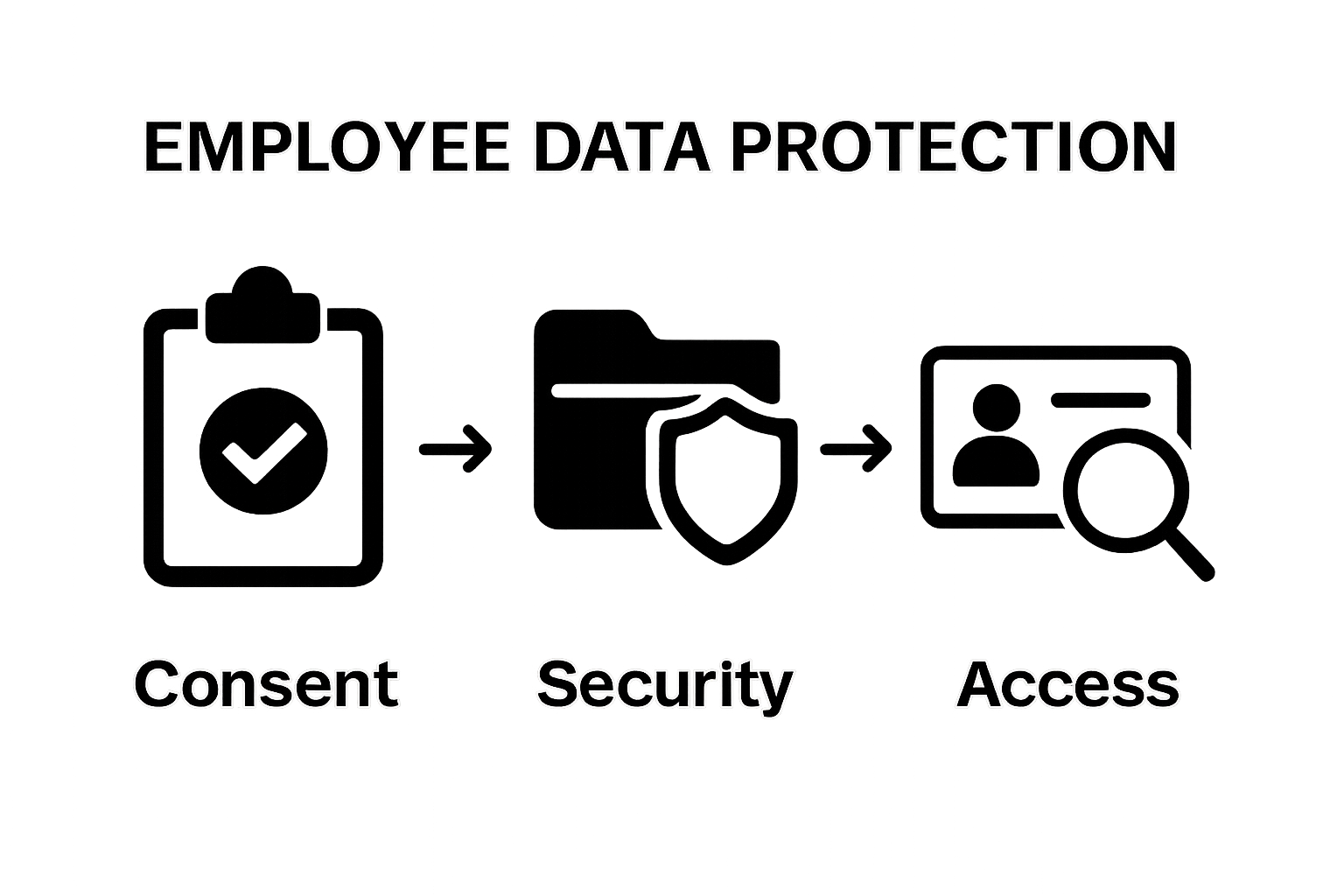
- Minimization: Collecting only necessary personal information
- Purpose Limitation: Using data exclusively for specified, legitimate purposes
- Storage Restrictions: Maintaining data only for required durations
- Security Safeguards: Implementing robust technological and organizational protections
Workplace Surveillance and Monitoring Boundaries
Workplace surveillance represents a complex legal terrain where employer interests intersect with employee privacy rights. Monitoring technologies continue to evolve, challenging traditional understanding of workplace privacy. Employers must balance legitimate business needs with respect for individual privacy boundaries.
Key surveillance considerations involve:
- Electronic communication monitoring
- Video surveillance limitations
- GPS tracking of company vehicles
- Performance tracking technologies
- Social media investigation protocols
Confidentiality and Information Handling
Confidentiality extends beyond mere data protection, representing a fundamental ethical and legal obligation to preserve sensitive information. Employers bear significant responsibilities in maintaining the integrity of employee personal data. Learn more about protecting your workplace rights to understand comprehensive confidentiality standards.
The intricate landscape of workplace privacy demands continuous adaptation, requiring both employers and employees to remain informed about emerging technological and legal developments that shape information protection standards.
Real-World Implications of Employee Privacy Rights
Employee privacy rights transcend theoretical legal concepts, directly impacting workplace dynamics, professional relationships, and individual psychological well-being. Understanding these real-world implications reveals the profound significance of privacy protections in modern employment environments.
Psychological and Professional Consequences
Research from the World Economic Forum demonstrates that invasive workplace monitoring can fundamentally alter employee perceptions of trust, autonomy, and professional dignity. Excessive surveillance creates psychological strain, potentially undermining workplace morale and productivity.
Key psychological impacts include:
- Reduced Job Satisfaction: Constant monitoring erodes sense of professional trust
- Increased Stress Levels: Persistent surveillance creates anxiety and performance pressure
- Diminished Workplace Engagement: Employees feel dehumanized and controlled
- Potential Mental Health Challenges: Persistent monitoring can trigger workplace-related psychological distress
Economic and Career Development Implications
Privacy rights directly influence career trajectories and economic opportunities. Unauthorized data collection or inappropriate use of personal information can create systemic barriers to professional advancement. Employees face potential discrimination, limited mobility, and compromised professional reputations when privacy boundaries are violated.
Critical career development considerations involve:
- Potential employment discrimination based on collected personal data
- Limitations on career progression due to invasive monitoring
- Risk of personal information misuse in professional contexts
- Potential retaliation for asserting privacy rights
Organizational Culture and Ethical Considerations
Privacy rights fundamentally shape organizational culture, reflecting an employer’s commitment to ethical treatment and respect for individual dignity. Our comprehensive guide on workplace rights provides deeper insights into navigating these complex interpersonal dynamics.

Employers who prioritize robust privacy protections cultivate environments of mutual respect, transparency, and trust. Conversely, organizations that disregard employee privacy risk significant reputational damage, decreased productivity, and potential legal challenges.
Worried About Your Privacy Rights at Work? Get Trusted Help Today
If learning about employee privacy rights in the workplace makes you uneasy, you are not alone. Many California workers feel the stress of constant monitoring, unclear data policies, or fear their sensitive information could be mishandled. The risks to your dignity, trust, and mental well-being are real. Understanding principles like data protection, consent requirements, and your right to challenge unlawful practices is essential. But knowing your legal rights does not always make it easy to stand up for them when you need support.
Your privacy and peace of mind are too important to ignore. Visit California Labor Law for simple guides that cut through legal jargon. If you recognize any signs of improper surveillance or misuse of personal information in your workplace, use our comprehensive workplace rights guide to get clarity on your options. Do not wait until your privacy is compromised. Reach out directly for immediate help and let our experienced legal team empower you to protect your rights right here by calling 1-866-355-9991 for a free privacy rights consultation.
Frequently Asked Questions
What are employee privacy rights?
Employee privacy rights are legal protections that safeguard workers from unwarranted intrusions into their personal and professional lives, ensuring their autonomy and dignity in the workplace.
Why is employee privacy important in the workplace?
Employee privacy is crucial because it maintains worker dignity, prevents exploitation, and fosters trust within the organization. Excessive surveillance may lead to a hostile work environment and affect employee morale.
What types of personal information are protected under employee privacy rights?
Employee privacy rights protect various types of personal information, including electronic communications, biometric data, and personal identification information from unauthorized access and misuse.
How can employees address violations of their privacy rights?
Employees can address privacy violations through various mechanisms such as filing administrative complaints, pursuing civil lawsuits, or utilizing regulatory interventions to seek recourse against employers who overstep legal boundaries.