




Did you know that every California employer with five or more workers must provide harassment prevention training by law? Missing these rules can lead to costly penalties and potential lawsuits. Many businesses struggle to keep up with specific requirements for different employee roles, making compliance a confusing challenge. This guide helps you sort out each step so employers feel confident meeting legal standards while building a respectful workplace for everyone.
Step 1: Identify Your Training Requirements
Let’s walk through exactly how you’ll figure out your California harassment training requirements step by step. The goal here is simple: understand precisely what training you need based on your workplace size and employee roles.
First things first, count your total employees. According to the California Chamber of Commerce, if you have five or more employees, you’re legally required to provide harassment prevention training. This means every single worker counts toward that five person threshold including full time, part time, seasonal, and temporary staff.
Next, break down your training needs by employee classification. Supervisors and nonsupervisory employees have different training time requirements. Supervisors need two full hours of comprehensive training, while nonsupervisory employees require one hour of targeted instruction. These sessions must occur within six months of hiring or promotion and then repeated every two years.
Pro Tip: Don’t forget about temporary workers. According to Oakland’s Civil Rights Compliance guidelines, seasonal and temporary employees must receive training within 30 days of hire or within 100 hours worked whichever milestone happens first.
Specifically, your training must cover practical examples addressing harassment based on gender identity, gender expression, and sexual orientation. Documentation is crucial here. You’ll want to maintain precise training records for each employee for a minimum of two years.

One often overlooked group? Unpaid interns, volunteers, and independent contractors also require training under California law. Make sure they’re included in your comprehensive training strategy.
Here’s a summary of California harassment training requirements by role and employee type:
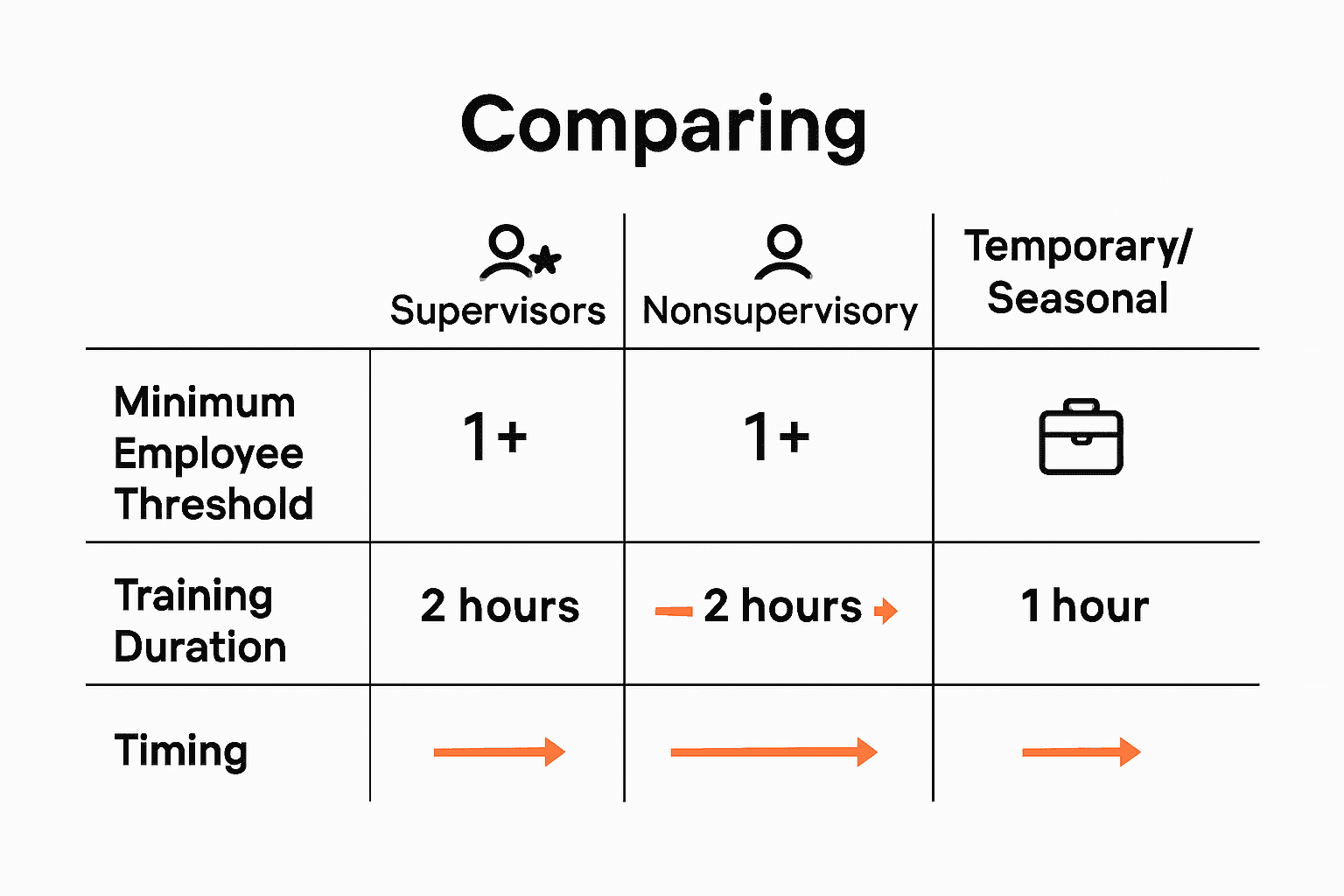
| Employee Type | Minimum Employees Trigger | Training Duration | Timing Requirement |
|---|---|---|---|
| Supervisors | 5 or more | 2 hours | Within 6 months, then biannually |
| Nonsupervisory Employees | 5 or more | 1 hour | Within 6 months, then biannually |
| Temporary/Seasonal Employees | 5 or more | 1 hour | Within 30 days or 100 hours worked |
| Unpaid Interns/Volunteers | 5 or more | 1 hour | Within 6 months, then biannually |
| Independent Contractors | 5 or more | 1 hour | Within 6 months, then biannually |
What happens next? You’ll need to develop or source a training program that meets these specific California requirements. Get ready to dive into selecting the right training materials that will keep your workplace legally compliant and professionally respectful.
Step 2: Select an Approved Training Program
Now that you understand your training requirements, it’s time to choose a training program that meets California’s specific legal standards. Your goal is to find a comprehensive program that not only satisfies legal requirements but also genuinely educates your team about workplace harassment prevention.
First, understand that California law provides flexibility in training selection. You are not required to use the California Civil Rights Department’s (CRD) specific training program. Instead, you can select from various approved training methods as long as they meet core legal standards.
Look for programs with qualified trainers who have appropriate credentials. As defined in California Government Code section 12950.1, acceptable trainers include attorneys, experienced HR professionals, or specialized training experts. This means your training can come through online courses, apprenticeship programs, or labor management training trusts provided the instructors meet these professional criteria.
Pro Tip: Interactive training is key. California requires that your chosen program offers engaging learning experiences that go beyond passive information delivery.
Your training program must comprehensively address harassment across multiple dimensions including gender identity, gender expression, and sexual orientation. Look for materials that provide practical real world examples and scenarios employees can relate to and learn from.
Carefully review the program’s format. California allows both in person and online electronic learning platforms. The critical factor is ensuring the training is interactive, educational, and meets all state defined standards.
What comes next? You’ll want to implement your selected training program and develop a tracking system to document employee completion.
Get ready to transform your workplace culture through meaningful harassment prevention education.
Step 3: Register and Access the Course Material
You’ve selected your training program and now it’s time to get your team registered and ready to learn. Your mission is to smoothly onboard every employee into the harassment prevention training with minimal friction and maximum accessibility.
The California Civil Rights Department (CRD) offers a fantastic resource for employers free online training modules available in multiple languages including Chinese, Spanish, Tagalog, Vietnamese, and Korean. These modules are an excellent option for employers looking for comprehensive training solutions.
Start by creating individual access pathways for each employee. Since remote work is increasingly common, you’ll want to ensure every team member can easily access the training materials regardless of their work location. Sharing a direct link to the online training module works best for ensuring everyone can complete their required education.
Pro Tip: Save all completion certificates immediately after employees finish their training. These documents are crucial for maintaining accurate personnel records and demonstrating legal compliance.
Remember that California law requires you to compensate employees for the time spent completing mandatory harassment prevention training. This means the training hours count as paid work time and should be scheduled during regular work hours whenever possible.
Consider your team’s diverse needs when selecting training materials. The multilingual options provided by DFEH can help ensure that language barriers do not prevent any employee from understanding critical workplace harassment prevention concepts.
What happens next? You’ll track employee completion and prepare for the ongoing documentation required to maintain your organization’s legal compliance. Get ready to transform your workplace culture through meaningful and accessible education.
Step 4: Complete All Interactive Training Modules
You’ve registered for the training and now it’s time to dive deep into the content. Your goal is to engage fully with the harassment prevention modules and walk away with a comprehensive understanding of workplace respect and legal requirements.
According to training guidelines from industry experts, this is not your typical boring compliance course. California mandates truly interactive training that goes far beyond simple text reading. As research from the American Society of Employers indicates, your training must include dynamic formats like classroom sessions, live webinars, or sophisticated e learning platforms with direct trainer access.
Pay close attention to the key topics you’ll need to master. Your training will cover critical areas including harassment definitions under state and federal law, available legal remedies, bystander intervention strategies, supervisory reporting obligations, and comprehensive anti harassment policy elements.
Pro Tip: Treat this training as a skill building opportunity. The most effective modules will include real world scenarios that challenge you to think critically about workplace interactions.
Expect to encounter interactive assessments designed to test your understanding. These are not just checkbox exercises but thoughtful scenarios that require you to demonstrate nuanced comprehension of workplace harassment prevention. You might be asked to analyze complex situations or identify appropriate responses to potential harassment scenarios.
Remember that supervisors and nonsupervisory employees will have slightly different training requirements. Supervisors typically need more in depth content focused on their specific legal responsibilities for preventing and addressing workplace harassment.
What comes next? After completing these modules, you’ll be equipped with the knowledge to create a more respectful workplace and understand your legal rights and responsibilities. Get ready to become a proactive champion of workplace dignity.
Step 5: Verify Compliance and Obtain Certification
You’ve completed your harassment prevention training and now it’s time to solidify your workplace compliance. Your mission is to carefully document and preserve your training records to meet California’s rigorous legal standards.
According to guidance from the Oakland Civil Rights Compliance Department, record keeping is not optional. You must retain comprehensive training documentation for at least two years. This means meticulously tracking who was trained, when the training occurred, and the specific content covered during the session.
Focus on collecting key documentation for each employee. Your verification package should include individual completion certificates, specific training materials used, trainee names, and precise completion dates. Think of this as your compliance insurance policy protecting your organization from potential legal challenges.
Pro Tip: Create a dedicated digital folder for each employee’s training records. Digital storage makes tracking and retrieving documents significantly easier during potential audits.
Don’t forget about supplementary materials. California law requires employers to provide additional resources like transgender rights fact sheets and harassment prevention posters. These documents complement your training and demonstrate your commitment to a respectful workplace.
Pay special attention to the two year recertification cycle. Your documentation should clearly show when employees are due for their next mandatory training session. Proactive tracking prevents accidental compliance gaps that could expose your organization to potential legal risks.
What happens next? You’ll transition from training completion to ongoing workplace culture management. Your carefully documented training becomes a foundation for creating a more inclusive and respectful professional environment.
Take Control of Your California Workplace Rights Today
If you feel overwhelmed by changing regulations, documentation hurdles, or fear of legal pitfalls, you are not alone. Many California workers wonder how to navigate mandatory harassment training, track compliance records, and protect themselves if their rights are ignored. The stakes are high, especially with complex rules around training timing, employee classifications, and ongoing certification.
Call California Labor Law at 1-866-355-9991 today to schedule a free workplace rights consultation and take control of your employee rights.
Frequently Asked Questions
What are the California harassment training requirements for employees?
Employees in California need harassment prevention training if their employer has five or more employees. This training must include specific topics and be completed within six months of hiring, with recertification occurring every two years.
How long does California harassment training need to be for supervisors and nonsupervisory employees?
Supervisors must complete two hours of training, while nonsupervisory employees require one hour. Schedule these sessions within six months of hiring or promotion to remain compliant.
When must temporary and seasonal employees receive their harassment training?
Temporary and seasonal employees must complete their training within 30 days of hire or after 100 hours worked, whichever comes first. Ensure you have a plan in place for onboarding their training promptly.
What types of training formats are acceptable for California harassment training?
California allows both in-person and online training formats, but the training must be interactive and engaging. Choose programs that include real-world scenarios and interactive assessments to enhance learning.
How do I document employee completion of harassment training?
Maintain accurate records by collecting completion certificates, training materials, employee names, and training dates. Create a dedicated digital folder for each employee to easily track compliance over the required minimum of two years.
What should I include in the training materials for California harassment training?
Your training materials should cover harassment definitions, legal remedies, bystander intervention strategies, and the organization’s anti-harassment policies. Incorporate multilingual options if needed to ensure all employees understand the content.