




A Guide for Handling Workplace Bullying
Workplace bullying is more common than most people realize and can leave long-lasting marks on mental health and careers. Shockingly, up to 30 percent of American employees report being bullied at work according to recent surveys. Many expect signs of bullying to be obvious or loud, but it usually hides in plain sight behind repeated small actions and subtle patterns.

Step 1: Recognize the Signs of Workplace Bullying
Workplace bullying is a complex and damaging experience that often begins subtly, making early recognition critical for your professional well-being and legal protection. Understanding what constitutes bullying allows you to take proactive steps and protect yourself from potential emotional and career harm.
Recognizing workplace bullying requires keen observation and an understanding of behavioral patterns that go beyond normal workplace tension. Workplace bullying involves repeated behaviors that deliberately harm, intimidate, undermine, offend, degrade, or humiliate an employee.
Some key indicators of workplace bullying include persistent negative actions that create a hostile work environment. These might manifest as consistent unwarranted criticism, where a supervisor or colleague repeatedly undermines your work performance through excessive, unjustified negative feedback. Another red flag is targeted exclusion from meetings, communications, or professional opportunities without legitimate professional reasons.
Emotional and psychological signs are equally important to recognize. You might experience persistent feelings of anxiety, dread about going to work, or notice a significant decline in your self-confidence directly related to workplace interactions. Physical symptoms can also emerge, such as stress-related headaches, sleep disruptions, or unexplained physical tension that correlates with workplace interactions.
Documenting these experiences becomes crucial. Keep a detailed record of specific incidents, including:
- dates,
- times,
- locations,
- individuals involved,
- and any potential witnesses.
This documentation can serve as critical evidence if you need to escalate the situation to human resources or pursue legal recourse. Objective, factual documentation is your strongest tool in addressing workplace bullying.
Remember that workplace bullying is not about isolated incidents but consistent patterns of behavior designed to undermine your professional standing. Trust your instincts. If interactions consistently leave you feeling belittled, disrespected, or emotionally drained, these are strong indicators that you may be experiencing workplace bullying.
Step 2: Document Incidents and Gather Evidence
Documenting workplace bullying incidents is a critical step that transforms your experience from an emotional struggle to a structured, actionable process.
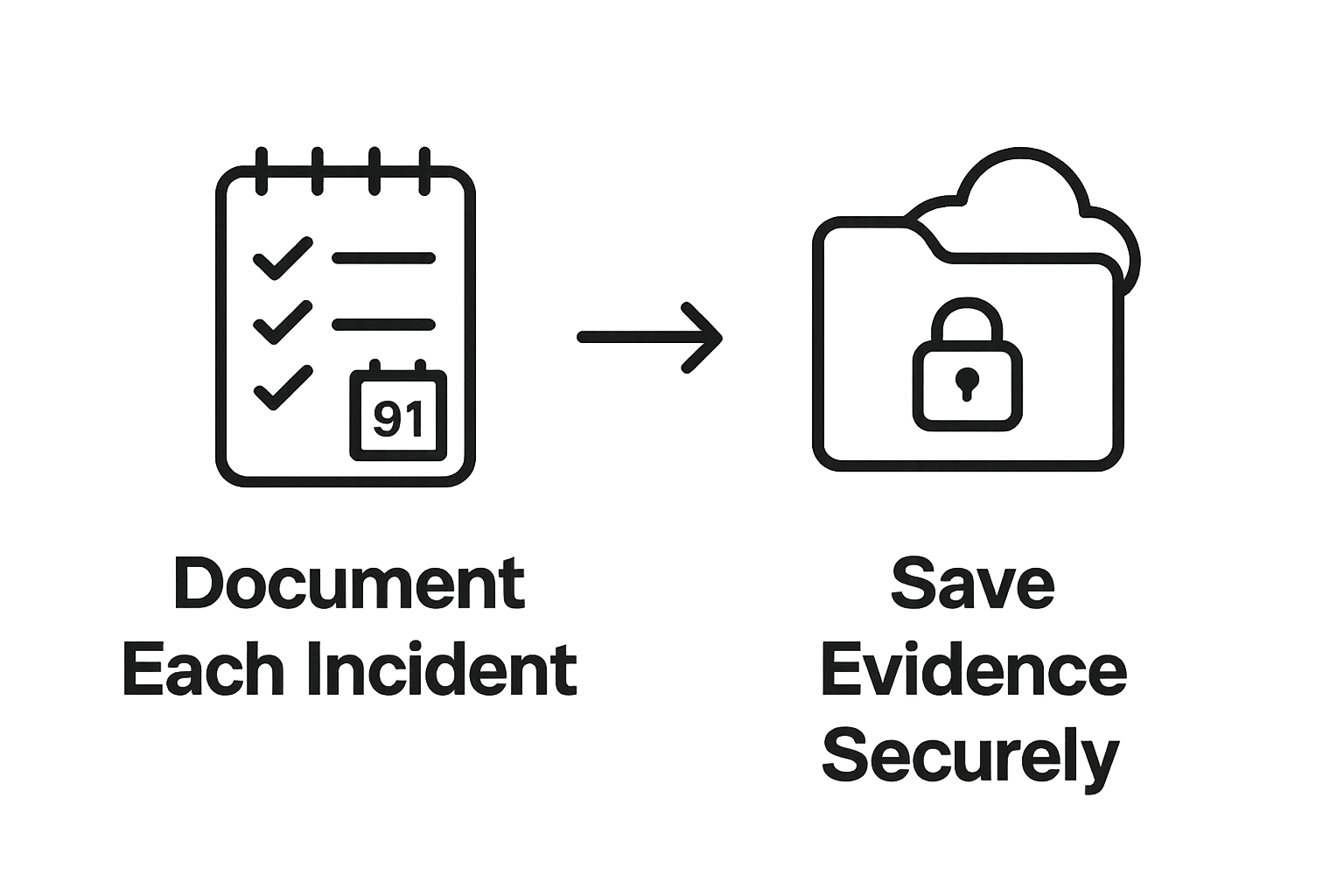
Creating a comprehensive record requires meticulous attention to detail and emotional discipline. Start by establishing a dedicated documentation system that is secure and private. This might involve a password-protected digital document or a locked physical notebook where you can record incidents with precision.
Each entry should include specific details:
- the date,
- time,
- location,
- individuals involved,
- witnesses present,
- and a verbatim or near-verbatim account of what occurred.
Your documentation should focus on objective facts rather than emotional interpretations. Describe behaviors, quotes, and actions exactly as they happened.
For instance, instead of writing “John made me feel terrible,” document the specific actions: “On March 15 at 2:30 PM, during the team meeting, John interrupted me three times and dismissed my project proposal without providing substantive feedback.”
Evidence gathering extends beyond written accounts. Preserve any communication that demonstrates bullying behavior. This includes:
- emails,
- text messages,
- chat logs,
- performance reviews that seem unfairly critical,
- or screenshots of digital interactions.
If workplace bullying involves digital platforms or email, ensure you save original message threads with full headers and timestamps.
Consider collecting additional supporting evidence. This might include:
- performance records showing your consistent work quality,
- previous positive performance reviews,
- or documentation of your professional achievements.
These materials can help establish a contrast between your actual work performance and the bullying narrative.
Be strategic about confidentiality. Store your documentation in a location completely separate from your workplace, such as a personal cloud storage account, a home computer, or a secure external drive. Avoid using workplace technology to store sensitive documentation, as this could potentially compromise your evidence or provide your employer with access.
Step 3: Seek Support from Coworkers and HR
Navigating workplace bullying requires strategic support from both your professional network and organizational resources. Building a support system is crucial in addressing and potentially resolving workplace harassment, transforming an isolating experience into a collaborative problem-solving approach.
Approaching coworkers requires careful consideration and emotional intelligence. Seek out trusted colleagues who have demonstrated professional integrity and observed workplace dynamics. When discussing your experiences, focus on specific incidents and maintain a professional tone. Avoid gossip or emotional venting, instead presenting your situation as a workplace concern that requires constructive intervention.
When engaging potential allies, be selective and strategic. Look for colleagues who have witnessed the bullying behavior or have a reputation for fairness and professionalism. Confidentiality is paramount during these conversations. Share details sparingly and ask explicitly for discretion. Some coworkers might be willing to serve as witnesses or provide corroborating statements if you decide to escalate the issue.
Engaging with Human Resources demands a similarly measured approach. Prepare a comprehensive presentation of your documentation, including specific incidents, dates, and any potential witnesses. Schedule a formal meeting and approach the conversation professionally, demonstrating that you seek a resolution rather than revenge. Bring your documented evidence and remain calm and factual.
During your HR meeting, clearly articulate the impact of the bullying on your professional performance and workplace environment. Explain how the behavior violates company policies and potentially creates a hostile work environment. Request specific actions, such as a formal investigation, mediation, or intervention to address the inappropriate behavior.
Be prepared for potential challenges. Some HR departments might be hesitant or protective of management. If your initial interaction feels unsatisfactory, document the meeting and follow up with written communication. Request a formal written response to your concerns and maintain a paper trail of all interactions.
Understand that seeking support is not about creating conflict but about protecting your professional dignity and creating a respectful workplace. Your goal is to address the bullying through proper channels, demonstrating professionalism and commitment to a healthy work environment.
Step 4: Report the Bullying to Management
Reporting workplace bullying to management represents a critical turning point in addressing toxic workplace behavior. According to the Department of Labor, employees have a formal right to report harassing conduct through appropriate organizational channels, with confidentiality protections in place.
Preparation is key when confronting management about workplace bullying. Before scheduling a meeting, compile a comprehensive and objective documentation package. This should include:
- a clear, chronological summary of incidents,
- specific examples of bullying behaviors,
- dates,
- times,
- potential witnesses,
- and the documented impact on your professional performance and workplace environment.
Choose the most appropriate management representative to approach. Typically, this means starting with your direct supervisor unless they are the source of the bullying. If your immediate supervisor is part of the problem, consider escalating to their supervisor, human resources director, or another designated senior leadership representative who can provide an objective perspective.
When scheduling the meeting, request a formal, private consultation. Frame your discussion professionally, focusing on how the bullying behavior creates a detrimental workplace environment that impacts productivity and team dynamics. Remain calm, factual, and solution-oriented. Your goal is to demonstrate that you are seeking a constructive resolution, not revenge or confrontation.
During the meeting, present your documented evidence systematically. Clearly articulate specific incidents, their frequency, and their impact. Explain how these behaviors violate workplace conduct policies and potentially create a hostile work environment. Request specific actions, such as a formal investigation, mediation, or intervention to address the inappropriate behavior.
Be prepared for various potential responses. Some managers might be supportive and immediately take action, while others might be defensive or dismissive. If the initial response is unsatisfactory, remain professional and request a written explanation of how they intend to address your concerns. Document every interaction, including meeting notes and follow-up communications.
Protect yourself by maintaining a comprehensive record of all reporting efforts.

Save copies of emails, meeting minutes, and any correspondence related to your complaint. This documentation can be crucial if you need to escalate the issue to higher management, human resources, or potentially seek external legal advice.
Step 5: Follow Up and Monitor the Situation
Following up after reporting workplace bullying is a critical phase that determines the effectiveness of your initial actions. According to the Office of Justice Programs, consistent monitoring of behavioral changes is essential in addressing workplace harassment.
Proactive follow-up begins immediately after your initial reporting. Schedule a formal check-in with the management or HR representative who handled your initial complaint. During this meeting, request a detailed timeline of their proposed investigation and resolution process. Emphasize your expectation of regular updates and transparent communication about the steps being taken to address the bullying behavior.
Document every interaction meticulously. Create a dedicated file or digital folder where you record all follow-up communications, including emails, meeting notes, and any official correspondence related to your complaint. Maintain a chronological log of all interactions, noting dates, participants, and key discussion points.
Pay close attention to potential retaliation. Workplace bullies might attempt subtle forms of professional punishment or continued harassment after your initial complaint. Watch for signs such as unexplained negative performance reviews, sudden exclusion from professional opportunities, or shifts in team dynamics that seem designed to isolate or marginalize you.
Establish personal coping mechanisms during this potentially stressful period. This might involve seeking support from trusted colleagues, maintaining professional boundaries, and potentially consulting with an employment lawyer to understand your rights and potential next steps. Protect your mental and professional well-being while navigating the resolution process.
If the initial response from management appears inadequate or the bullying continues, be prepared to escalate your complaint. This could involve reaching out to higher-level management, consulting external workplace harassment resources, or exploring legal options. Your documented evidence will be crucial in demonstrating the persistent nature of the workplace bullying.
Consider creating a personal support network outside of work. Trusted friends, family members, or a professional counselor can provide emotional support and help you maintain perspective during this challenging time. They can offer objective insights and help you strategize your next moves.
Step 6: Explore Legal Options if Necessary
Exploring legal options becomes a critical step when workplace bullying escalates beyond internal resolution mechanisms. According to the U.S. Equal Employment Opportunity Commission, employees have specific legal protections when workplace harassment involves discriminatory behaviors or creates a hostile work environment.
Preparation is crucial before pursuing legal action. Your documented evidence from previous steps becomes the foundation of any potential legal strategy. Gather all relevant documentation, including incident reports, communication records, witness statements, and any correspondence with management or HR that demonstrates your attempts to address the workplace bullying through internal channels.
Understand the different legal avenues available. These might include filing a complaint with the Equal Employment Opportunity Commission, pursuing a civil lawsuit for workplace harassment, or seeking mediation through professional employment dispute resolution services. Each option has specific requirements and potential outcomes, so professional legal guidance is essential in navigating these complex processes.

If you are struggling with repeated intimidation, unfair criticism, or exclusion at work, you do not have to face it alone. Visit California Labor Law now to explore easy-to-understand legal guides, wage calculators, and to get a free workplace bullying consultation. Call us at 1-866-355-9991 now.
Frequently Asked Questions
How can I recognize workplace bullying?
Workplace bullying often manifests as repeated negative actions that create a hostile environment. Signs include consistent unwarranted criticism, targeted exclusion from meetings, and noticeable emotional distress like anxiety or decline in self-confidence.
What should I document if I experience workplace bullying?
Document specific incidents with details such as dates, times, locations, and individuals involved. Include quotes and descriptions of behaviors, as well as any relevant emails or messages that illustrate the bullying.
How can I approach HR about workplace bullying?
Schedule a formal meeting with HR and present your documented evidence clearly and factually. Focus on how the bullying impacts your work environment and request specific actions for resolution.
What legal options do I have if workplace bullying persists?
If internal resolution fails, consider consulting an employment attorney to explore legal avenues like filing a complaint with the Equal Employment Opportunity Commission or pursuing a civil lawsuit for harassment.