




Can Salaried Employees Get Overtime?
Overtime pay is usually seen as a perk only for hourly workers, but salaried employees in the US still rack up thousands of extra work hours every year. Turns out, the lines are much blurrier than people think. Federal law says millions of salaried workers are actually eligible for overtime, depending on their job duties and salary level. Most people miss out simply because they do not know the rules.
What Is Overtime for Salaried Employees?
Overtime for salaried employees represents additional compensation paid for work performed beyond standard working hours. Unlike hourly workers who automatically receive overtime, salaried employees navigate a more complex compensation landscape governed by specific legal regulations. Understanding overtime rules requires examining multiple factors that determine whether an employee qualifies for extra wages.
Defining Overtime for Salary Workers
At its core, overtime refers to compensation for hours worked beyond a standard 40-hour workweek. For salaried employees, this definition becomes nuanced based on their job classification and exemption status. The Fair Labor Standards Act (FLSA) establishes critical guidelines determining which salaried workers receive overtime pay.
According to the U.S. Department of Labor, overtime eligibility depends on several key factors:
- Employee’s salary level
- Job responsibilities and duties
- Specific industry regulations
- Exemption status under federal labor laws
Exemption and Compensation Rules
Not all salaried employees qualify for overtime compensation. The Department of Labor classifies certain employees as “exempt” based on their job duties, salary level, and professional responsibilities. Exempt employees typically include:
- Executive managers with significant supervisory responsibilities
- Professional workers requiring advanced degrees
- Administrative personnel performing specialized, non-manual work
- Outside sales representatives
- Certain computer and technology professionals
These exempt employees do not receive additional compensation for hours worked beyond 40 per week.
The following table summarizes the key differences between exempt and non-exempt salaried employees as discussed in the article.
| Employee Type | Overtime Eligibility | Typical Roles/Examples | Basis for Classification |
|---|---|---|---|
| Exempt | Not entitled to overtime pay | Executive managers, professionals, | Salary level, job duties, exemption status |
| administrative staff, outside sales, | under federal and state labor laws | ||
| certain computer professionals | |||
| Non-Exempt | Entitled to overtime pay | Salaried workers not meeting exemption | Do not meet exemption criteria |
| (1.5x or 2x regular rate for hours | threshold, general salaried employees | ||
| over set limits) |
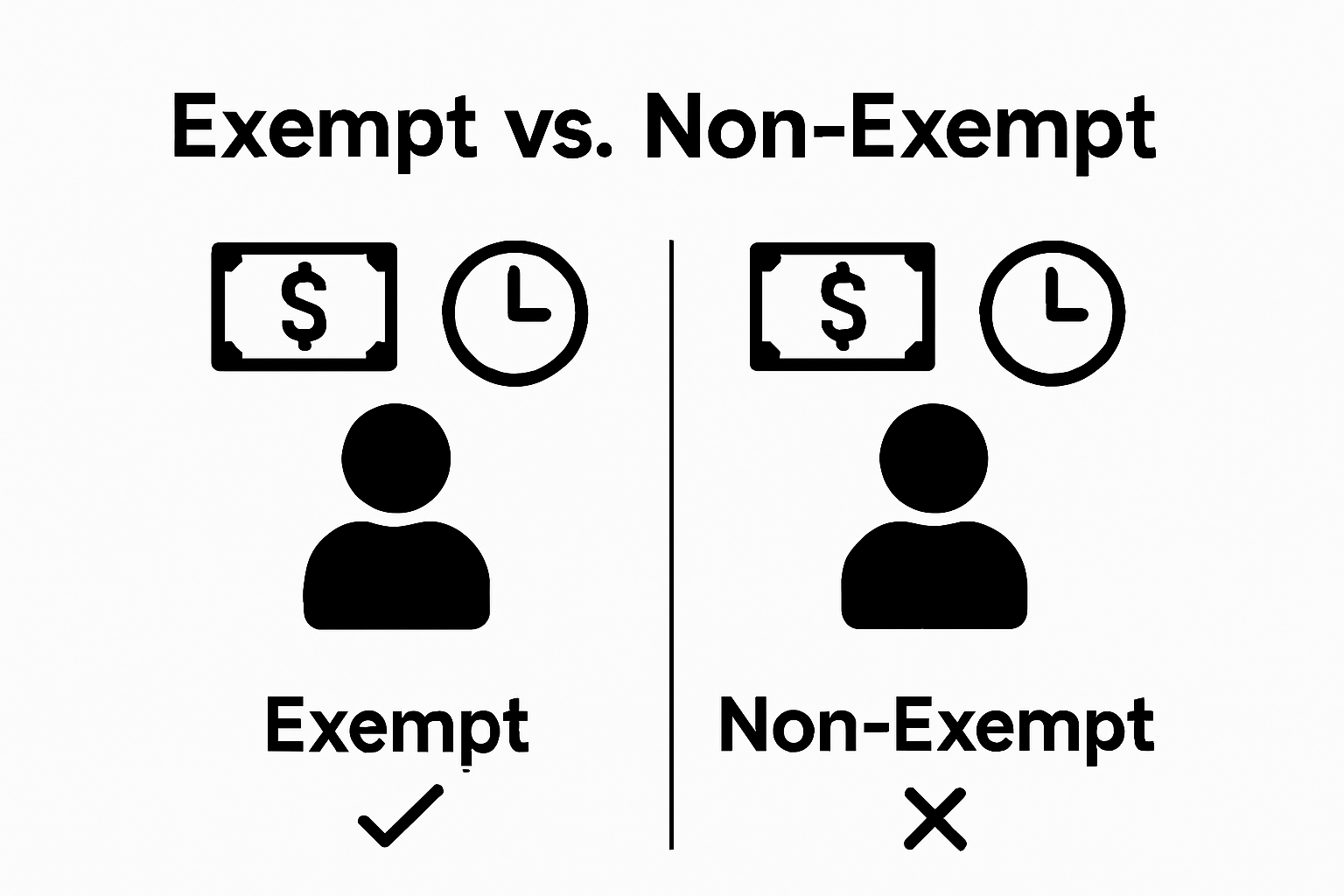 For non-exempt salaried workers, employers must calculate overtime pay at one and a half times their regular hourly rate for extra hours worked.
Why Overtime Matters for Salaried Workers
Overtime compensation represents more than just additional financial recognition for salaried workers. It serves as a critical mechanism protecting employee rights, ensuring fair labor practices, and maintaining healthy workplace boundaries. Exploring wage protection strategies reveals the complex dynamics between employee contributions and appropriate compensation.
Financial and Professional Implications
For salaried employees, overtime matters significantly because it directly impacts their economic well-being and professional respect. When workers consistently perform beyond standard work hours without proper compensation, they effectively subsidize their employer’s operational costs. According to research from the National Institutes of Health, excessive work hours correlate with several critical workplace challenges:
- Increased employee stress levels
- Higher risk of burnout
- Reduced overall job satisfaction
- Potential negative health outcomes
- Decreased long-term productivity
Protecting Worker Rights and Workplace Equity
Overtime regulations function as a fundamental safeguard against labor exploitation. By establishing clear guidelines for compensation beyond standard work hours, these rules prevent employers from demanding unreasonable work commitments without appropriate financial recognition. Key protections include preventing unpaid extended work hours, ensuring fair compensation for additional labor, and maintaining transparent employment standards.
For salaried workers, understanding and advocating for proper overtime compensation represents an essential aspect of professional self-advocacy. While not all salaried positions qualify for overtime, those that do provide critical financial protections that acknowledge the true value of an employee’s time and contributions.
How Overtime Regulations Work in California
California overtime regulations represent some of the most comprehensive worker protection laws in the United States, offering robust safeguards beyond federal standards. Learn precise overtime calculation methods to understand how these critical protections function for employees across various industries.
California Overtime Calculation Rules
Under California law, overtime compensation is calculated differently compared to federal guidelines. The state mandates overtime pay not just for hours worked beyond 40 per week, but also for daily work exceeding specific thresholds. According to the California Department of Industrial Relations, employees are entitled to overtime compensation under two primary scenarios:
- One and a half times the regular rate for hours worked beyond 8 in a single workday
- One and a half times the regular rate for the first 8 hours worked on the seventh consecutive day of work in a workweek
- Double the regular rate for hours worked beyond 12 in a single workday
- Double the regular rate for hours worked beyond 8 on the seventh consecutive day of work
Exemptions and Special Considerations
While California provides extensive overtime protections, certain employee classifications remain exempt from these regulations. Exempt employees typically include executive, administrative, and professional workers who meet specific salary and job duty requirements. These exemptions depend on multiple factors:
- Employee’s monthly salary
- Primary job responsibilities
- Level of independent decision making
- Professional skill requirements
Employers must carefully evaluate each position to determine overtime eligibility, ensuring compliance with both state and federal labor regulations. Workers who believe their overtime rights have been violated can seek legal recourse through state labor board complaints or civil litigation.
This table outlines the major differences between federal and California overtime regulations as they apply to salaried employees.
| Regulation Area | Federal Law (FLSA) | California Law |
|---|---|---|
| Standard Workweek | 40 hours per week | 8 hours per day / 40 hours per week |
| Overtime Rate | 1.5x regular hourly rate for hours > 40/week | 1.5x for >8/day or >40/week; 2x for >12/day |
| Seventh Workday | Not specifically addressed | 1.5x for first 8 hours, 2x after 8 hours |
| Exemptions | Based on FLSA salary and duty tests | Based on state salary/duties, sometimes stricter |
| Worker Protection | Meets federal minimum standards | Offers broader coverage and greater employee rights |

Key Concepts Surrounding Overtime for Salaried Employees
Understanding overtime for salaried employees requires navigating complex legal and professional frameworks that define compensation beyond standard working hours. Explore comprehensive overtime compensation strategies to gain deeper insight into these nuanced workplace regulations.
Fundamental Overtime Definitions
Overtime compensation represents more than simple monetary calculation. According to the U.S. Department of Labor, key concepts include differentiating between exempt and non-exempt employee classifications, which fundamentally determine overtime eligibility. Critical distinctions emerge through several core principles:
- Salary threshold determining overtime qualification
- Job responsibility classifications
- Professional role complexity
- Level of independent decision making authority
- Specific industry regulatory requirements
Compensation Calculation Frameworks
Salaried employee overtime calculations involve multiple considerations beyond straightforward hourly rate multiplications. Employers must evaluate several intricate factors when determining appropriate compensation:
- Base salary amount
- Regular hourly equivalent rate
- Total hours worked beyond standard workweek
- Specific state and federal regulatory guidelines
- Potential additional compensation structures
The complexity of overtime regulations underscores the importance of understanding individual employment contracts, workplace policies, and legal protections. Employees should carefully review their specific job classifications and compensation structures to fully comprehend their potential overtime entitlements and rights.
Uncover Your True Overtime Rights Today
Many salaried employees wonder if they are truly receiving the overtime pay they deserve. This article highlights how confusing exemption status, complex overtime calculation methods, and unclear job classifications can leave you unpaid for extra hours worked. If you have ever questioned your eligibility or felt uncertain about California’s overtime rules, you are not alone. Your financial well-being and workplace fairness depend on understanding these regulations and ensuring your rights are enforced.
Now is the time to take control, avoid wage theft, and secure the compensation the law guarantees you. Visit California Labor Law for easy-to-read guides, legal tools, and free resources. Use our overtime pay calculators or contact a real advocate for immediate answers. Protect your rights, get the payment you earned, and feel confident at work. Take the first step and connect with our experts now by calling us anywhere in California at 1-866-355-9991 for a free overtime rights consultation.
Frequently Asked Questions
What is overtime for salaried employees?
Overtime for salaried employees refers to additional compensation paid for hours worked beyond the standard 40-hour workweek. It varies based on job classification and exemption status under the Fair Labor Standards Act (FLSA).
How is overtime calculated for salaried employees?
For non-exempt salaried employees, overtime is typically calculated at one and a half times their regular hourly rate for hours worked over 40 in a workweek. Employers need to evaluate base salary and total hours worked to determine the correct compensation.
Who qualifies for overtime pay under federal law?
Under federal law, non-exempt salaried workers qualify for overtime pay, while exempt employees—such as executive managers or certain professionals—do not receive additional compensation for hours worked beyond 40 per week.
How do California overtime regulations differ from federal standards?
California overtime laws are more comprehensive, mandating overtime pay for work beyond 8 hours in a single day and additional rules for the seventh consecutive workday, while federal law only requires overtime pay for work exceeding 40 hours in a week.