




A Step-By-Step Guide in Negotiating Salary Offers for California Workers
Most professionals underestimate how much California laws can impact salary negotiations. With new transparency requirements and legal protections in place, job candidates now have more resources than ever.
Whether you are preparing for your first offer or aiming for a major career move, understanding this landscape gives you a powerful advantage in salary discussions.
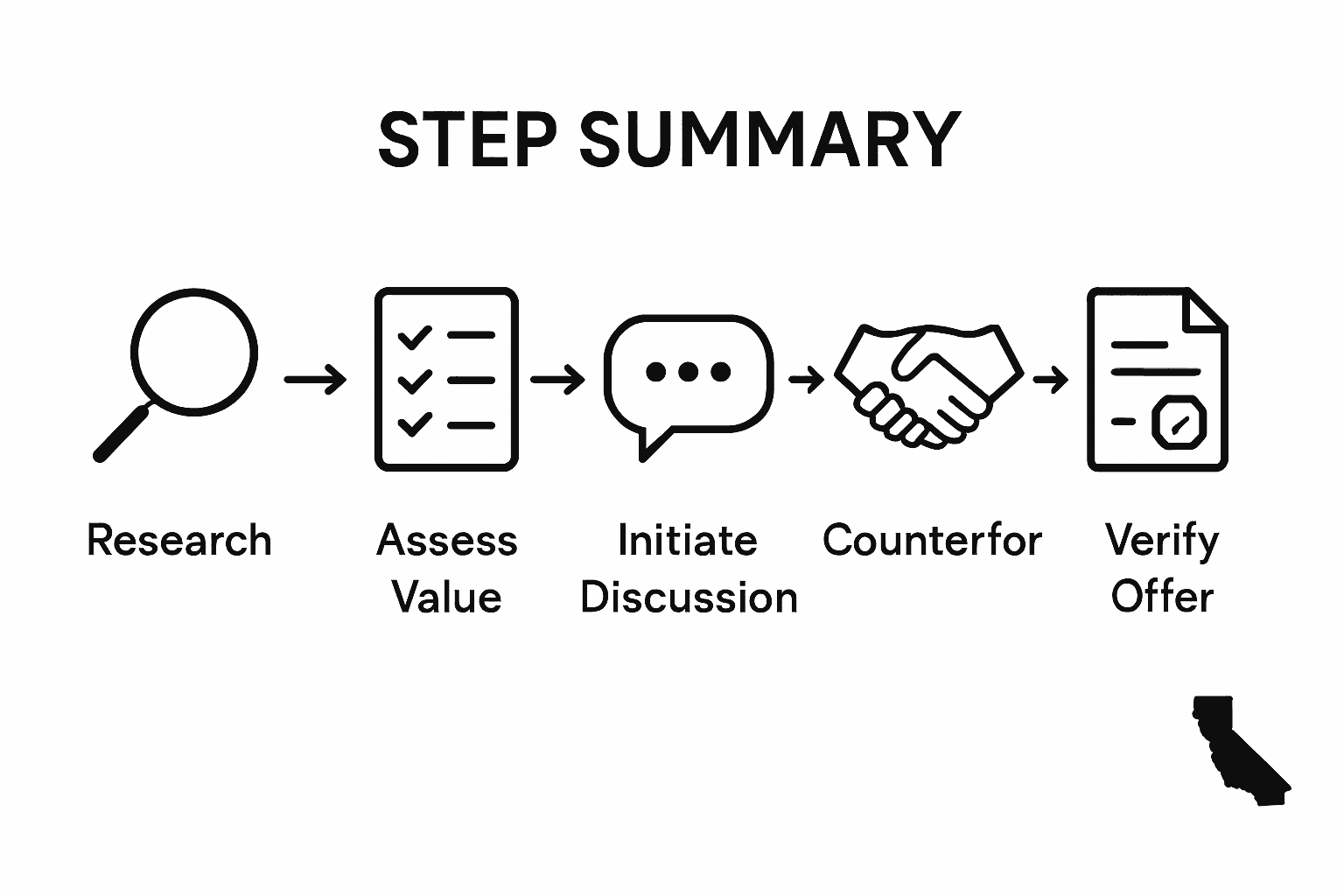
Step 1: Research Market Rates and California Laws
Successful salary negotiation starts with solid research. Your mission here is to understand both your market value and the legal landscape governing compensation in California.
Begin by leveraging online salary resources like Glassdoor and PayScale to benchmark typical compensation ranges for your specific role and industry. Pay close attention to salary data specific to California, as compensation can vary significantly by region.
California law now requires employers to provide pay scale information in job postings, which means you have unprecedented transparency to support your negotiation strategy.

Next, dig deeper into state specific regulations. California has unique labor laws that can impact compensation discussions. For instance, the recently enacted Senate Bill 1162 prohibits employers from asking about your salary history and mandates pay scale disclosures.
This means you can request pay range information directly from potential employers during the interview process. By understanding these legal protections, you gain significant leverage in negotiations.
Research should go beyond just numbers. Study the typical benefits package, understand standard bonuses in your industry, and investigate how experience and advanced certifications might impact your potential earnings.
The more comprehensive your market intelligence, the more confidently you can approach salary discussions.
Here’s a quick comparison of compensation research methods and their specific benefits during negotiation:
| Research Method | What It Provides | Business Impact |
|---|---|---|
| Online Salary Databases | California-specific pay benchmarks | Strong market positioning |
| State Law Review | Legal protections and pay rights | Negotiation leverage |
| Company Job Postings | Current pay ranges for roles | Transparency in expectations |
| Industry Benefit Reports | Typical perks and bonus norms | Full compensation strategy |
| Certification Analysis | Value of advanced credentials | Justifies higher base salary |
Pro tip: Create a detailed spreadsheet tracking salary ranges from multiple sources, noting variations by company size, location, and your specific skill set. This documentation becomes your negotiation playbook.
Step 2: Assess Your Value and Gather Evidence
This step transforms you from a job candidate into a strategic professional who knows exactly what you bring to the table. Your goal is to build a compelling case for your market value by documenting your professional achievements and understanding how they translate into financial worth.
Strategic connections between your achievements and an organization’s needs are critical in salary negotiations. Start by creating a comprehensive portfolio of your professional accomplishments.
Quantify your contributions wherever possible think about specific metrics like:
- revenue generated,
- projects completed,
- efficiency improvements,
- or cost savings you have delivered.
Concrete numbers speak louder than generic claims.
Develop a structured approach to evaluating your professional worth. Create a negotiation framework that categorizes your priorities into ‘must have,’ ‘would be nice,’ and ‘not important’ items. This method helps you remain clear headed and strategic during salary discussions.
Consider not just base salary but the entire compensation package including benefits, professional development opportunities, flexible work arrangements, and potential bonuses.
Gather tangible evidence of your professional value. Collect performance reviews, commendations, project success reports, and testimonials from colleagues or supervisors.
These documents substantiate your claims and provide third party validation of your professional capabilities. The more specific and measurable your evidence, the stronger your negotiation position becomes.
Pro tip: Prepare a one page professional summary that highlights your top three professional achievements, quantified impact, and unique skills that set you apart from other candidates. This document becomes a powerful tool during salary negotiations.
Step 3: Initiate Salary Discussions with Confidence
Confidence is your secret weapon when starting salary negotiations. This step transforms the potentially intimidating conversation into a strategic professional dialogue where you showcase your value and advocate for fair compensation.
Timing and approach are critical when discussing salary during interviews. Wait until the employer has demonstrated genuine interest in you as a candidate. This typically occurs after initial screenings and when they view you as a potential fit for the role.
Avoid bringing up compensation too early, but be prepared to discuss it when the moment is right. Your goal is to demonstrate that you are more interested in the opportunity and mutual value than just the paycheck.
Strategically delay sharing your current salary and instead focus on your target compensation range. When asked about current earnings, redirect the conversation to the value you will bring to the organization. Prepare a clear, confident statement that highlights your professional worth.
For instance, instead of disclosing your current salary, you might say, “Based on my research and the skills I will bring to this role, I am targeting a compensation range of X to Y.” This approach positions you as a strategic professional who understands their market value.
Remember that salary negotiation is a two way conversation. Listen carefully to the employer’s perspective, ask thoughtful questions, and be prepared to explain how your skills and experience justify your desired compensation. Maintain a collaborative tone that suggests you are seeking a mutually beneficial arrangement.
Pro tip: Practice your salary negotiation script with a trusted friend or mentor. Record yourself to analyze your tone, confidence, and communication style, ensuring you come across as professional, confident, and reasonable.
Step 4: Present Counter-offers and Justify Your Requests
This step transforms your salary negotiation from a passive conversation into an active, strategic dialogue where you confidently articulate your professional value and negotiate effectively.
Thoroughly evaluate the initial job offer before crafting your counter-offer strategy. Begin by expressing genuine appreciation for the opportunity while signaling your intention to discuss compensation. Your approach should balance professionalism with strategic assertiveness.
Break down the entire compensation package beyond just base salary, consider:
- benefits,
- bonuses,
- professional development opportunities,
- and potential for future growth.
Develop a negotiation pitch that demonstrates confidence and preparedness. Your counter-offer should be grounded in concrete evidence from your research market rates, your documented achievements, and the specific value you will bring to the organization. Use specific examples that highlight your unique skills and potential impact.
For instance, if you can demonstrate how your expertise will solve specific business challenges or generate measurable results, you strengthen your negotiation position.
Remember that negotiation is a collaborative process. Listen carefully to the employer’s perspective, be willing to compromise, and maintain a positive, solution oriented tone. If the base salary cannot be adjusted, explore alternative forms of compensation such as performance bonuses, additional vacation time, flexible working arrangements, or professional development opportunities.
Pro tip: Create a written comparison of your initial research, market rates, and the offered compensation package. Having this documented analysis will help you communicate your request more objectively and professionally during negotiations.
Step 5: Verify Written Offer and Legal Protections
The final step in your salary negotiation journey involves carefully reviewing your written offer to ensure it meets both your professional expectations and California’s legal standards for fair compensation practices.
California Senate Bill 1162 introduces critical legal protections for job applicants, making it essential to understand your rights during the offer process. Carefully examine the written offer to confirm it includes a clear pay scale, matches the discussions during your negotiation, and complies with state regulations. Verify that the offer does not request your salary history and provides transparent compensation information.
California law explicitly prohibits employers from basing compensation on previous salary history. Scrutinize the written offer for any language that might suggest reliance on past earnings. The document should reflect your negotiated value based on your skills, experience, and potential contribution to the organization. Pay attention to every detail including base salary, bonuses, benefits, and any additional compensation components.
Review the entire compensation package holistically. Check that all verbal agreements are accurately represented in writing. If you notice any discrepancies or missing details discussed during negotiations, do not hesitate to request clarification or amendments. Your written offer should be a comprehensive and accurate reflection of the agreed terms.
Below is a summary of critical elements to verify in a written California job offer:
| Offer Component | Why It Matters | California Compliance Check |
|---|---|---|
| Base Salary | Ensures agreed compensation | Must match negotiated value |
| Pay Scale Clarity | Prevents misunderstandings | Required in writing by SB 1162 |
| Salary History Inquiry | Protects applicant privacy | Illegal to request past salary |
| Bonuses and Benefits | Confirms total reward package | Details must be clearly outlined |
| Additional Commitments | Verifies all verbal agreements | Should be included in final offer |
Pro tip: Create a detailed checklist of all negotiated terms before signing the offer letter. Compare the written document against your negotiation notes to ensure nothing has been overlooked or modified without your agreement.
Empower Your California Salary Negotiation with Expert Legal Guidance
Negotiating a salary offer in California can feel overwhelming with complex state labor laws like Senate Bill 1162 shaping pay transparency and employee protections.
If you want to confidently assess your worth, verify employer compliance, and ensure your negotiated compensation truly reflects your value it is crucial to understand your rights and the legal landscape. Avoid costly mistakes or unfair offers by grounding your negotiation in California-specific legal insight and evidence.
Explore trusted resources and up-to-date legal guides at California Labor Law designed specifically for workers navigating employment issues.
If you find yourself facing legal issues in your California workplace, get in touch with us. Call us at 1-866-355-9991 to get a free California employment law consultation today.
Frequently Asked Questions
How can I research market rates for my salary negotiation?
Start by using online salary resources like Glassdoor and PayScale to benchmark compensation ranges specific to your role and industry in California. Document your findings in a spreadsheet to compare data from various sources, noting any regional variations within 30 days.
What legal protections do I have when negotiating my salary in California?
California laws, including Senate Bill 1162, prohibit employers from asking about your salary history and require them to disclose pay scales in job postings. Familiarize yourself with these laws to ensure your negotiation is compliant and you advocate for fair compensation effectively.
How should I present my case during a salary negotiation?
Present your case confidently by highlighting your achievements and quantifiable contributions to past employers. Prepare a one-page summary of your top accomplishments to use as evidence during negotiations, making sure it’s clear, concise, and impactful.
What should I include in my counter-offer?
Include a breakdown of the entire compensation package in your counter-offer, not just the base salary. Use your research on market rates and documented achievements to justify your requests, aiming for additional benefits like bonuses or flexible working arrangements.
How can I verify that my written offer complies with California laws?
Review your written job offer to ensure it includes clear pay scale information and does not inquire about your salary history. Create a checklist of all negotiated terms and compare the offer against your notes to confirm accuracy and compliance with state regulations.