




Knowing when you should get overtime pay in California sounds simple, right? More than 80 percent of workers in the state are technically eligible for overtime, yet countless people miss out on money they have already earned and do not even realize it. Turns out, the strictest rules in the country still leave room for big mistakes and not always just from employers. Many employees are actually sabotaging themselves by misunderstanding paperwork, tracking hours wrong, or letting deadlines slip, so the biggest risk might come from what you do not know.
Understanding Overtime Pay Rules in California
Overtime pay represents a critical protection for workers in California, ensuring employees receive fair compensation for extended work hours. California’s overtime regulations provide some of the most robust worker protections in the United States, establishing clear guidelines about when and how employees must be compensated beyond their standard work schedule.
Defining Overtime Eligibility
Understanding who qualifies for overtime pay is fundamental to protecting worker rights. According to the California Department of Industrial Relations, most non-exempt employees are entitled to overtime compensation. Typically, this includes hourly workers and some salaried employees who earn less than a specific threshold or do not meet certain executive, administrative, or professional exemption criteria.
Non-exempt employees become eligible for overtime pay under specific conditions. These conditions include working more than eight hours in a single workday, more than 40 hours in a workweek, or working seven consecutive days in a workweek. The complexity of these rules underscores the importance of workers understanding their rights and employers adhering to legal standards.
Calculating Overtime Rates
California labor laws mandate precise overtime compensation rates that go beyond federal standards. According to California Labor Code Section 510, employees are entitled to one and one-half times their regular hourly rate for hours worked beyond eight in a day or 40 in a week. Even more notably, workers receive double their standard rate for hours worked beyond 12 in a single day.
The calculation of overtime pay is not always straightforward. It involves considering an employee’s regular rate of pay, which can include not just base wages but also certain non-discretionary bonuses, commissions, and other compensation. This comprehensive approach ensures workers are fairly compensated for all components of their earnings when calculating overtime rates.
To help you understand when you are entitled to overtime and how much you should be paid, the following table summarizes California’s overtime pay rules, including rates and eligibility conditions.
| Condition | Overtime Rate |
|---|---|
| More than 8 hours worked in a single workday | 1.5x regular hourly rate |
| Over 40 hours worked in a single workweek | 1.5x regular hourly rate |
| More than 12 hours worked in a single workday | 2x regular hourly rate |
| More than 8 hours on the 7th consecutive workday | 2x regular hourly rate |
| Regular (non-overtime) hours | Standard hourly rate |
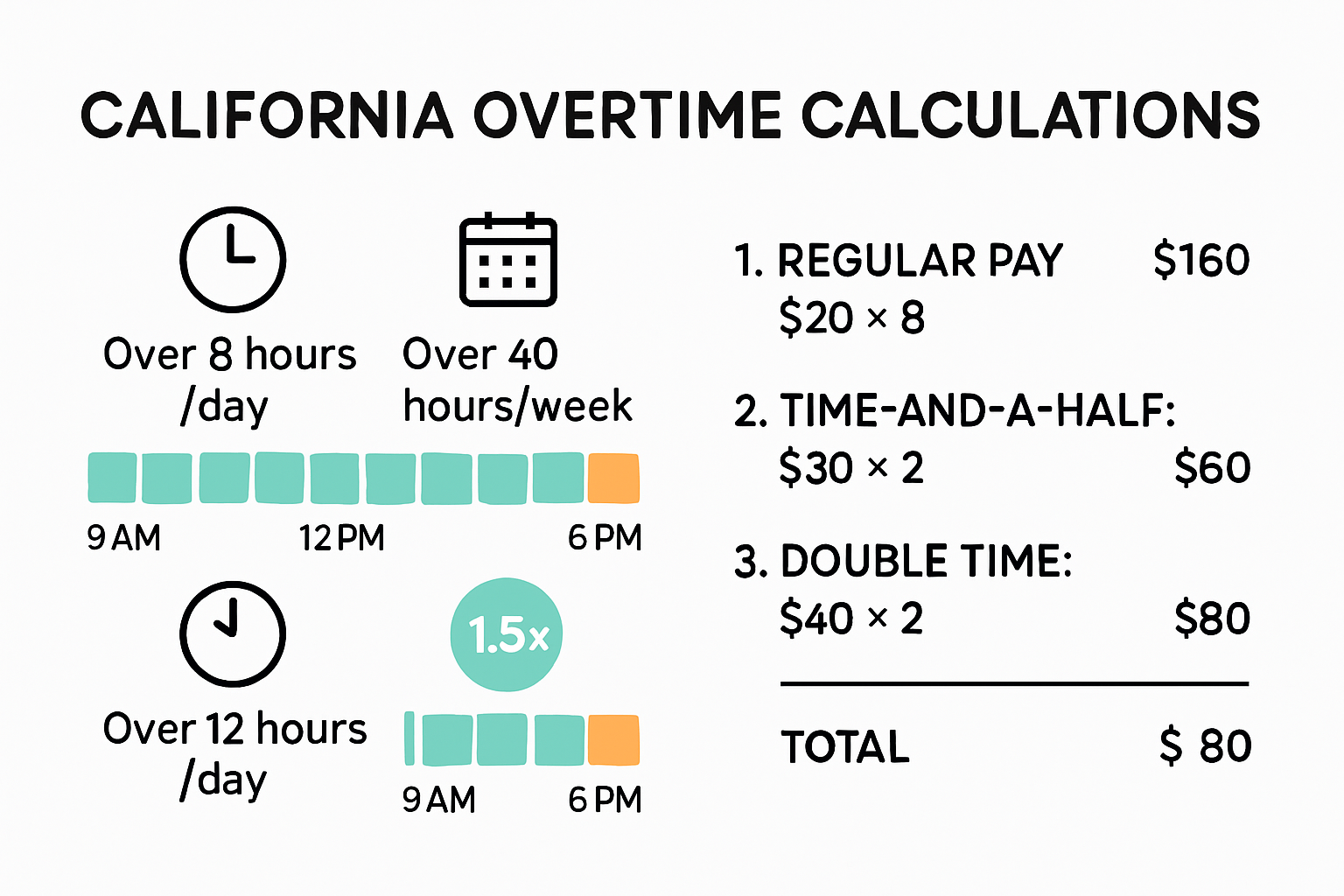
Employers who fail to comply with these overtime regulations may face significant legal consequences. Workers who believe their overtime rights have been violated should document their hours carefully and consider consulting with an overtime lawyer to understand their potential recourse.
Ultimately, California’s overtime pay rules represent a critical worker protection mechanism. By mandating higher compensation for extended work hours, these regulations discourage excessive overtime and ensure employees are justly compensated for their additional time and effort. Understanding these rules empowers workers to recognize and assert their rights in the workplace.
Common Wage Violations and Employee Rights
Wage violations represent a significant challenge for workers in California, undermining employee rights and financial stability. Combatting employer wage theft requires understanding the most prevalent forms of compensation violations and knowing how to protect oneself.
Identifying Overtime and Compensation Violations
Employers frequently commit wage violations that directly impact worker earnings. According to the California Department of Industrial Relations, common violations include failing to pay proper overtime rates, misclassifying employees as independent contractors, and manipulating work hours to avoid overtime compensation.
Some prevalent wage violation tactics include:
- Unpaid Overtime: Employers refusing to compensate employees for hours worked beyond standard schedules
- Misclassification: Incorrectly categorizing workers as exempt to avoid paying overtime
- Off-the-Clock Work: Requiring employees to perform tasks before clocking in or after clocking out
Legal Protections and Reporting Mechanisms
California provides robust legal protections for workers experiencing wage violations. The Division of Labor Standards Enforcement offers workers multiple avenues for addressing compensation disputes. Employees can file wage claims to recover unpaid wages, with potential additional penalties for employers who willfully violate labor regulations.
Workers have specific rights when confronting wage violations. They can document hours worked, retain pay stubs and work records, and file formal complaints with state labor authorities. Filing a wage theft claim provides workers a critical mechanism for recovering stolen wages and holding employers accountable.
The consequences for employers can be significant. California law allows workers to recover unpaid wages, including potential additional damages and legal fees. Employers may face civil penalties, criminal charges for repeated violations, and mandatory compensation for affected employees.
Employees should remain vigilant about their compensation rights. Tracking work hours, understanding legal protections, and promptly addressing potential violations are essential strategies for protecting worker interests. When in doubt, consulting with a labor law professional can provide clarity and guidance in navigating complex wage dispute scenarios.
Legal Options for Unpaid Wages and Wrongful Termination
California workers facing wage disputes or wrongful termination have multiple legal pathways to seek justice and compensation. Understanding these options is crucial for protecting employee rights and holding employers accountable for labor law violations.
Wage Claim Procedures
The California Labor Commissioner’s Office provides a comprehensive mechanism for employees to recover unpaid wages. According to the California Department of Industrial Relations, workers can file formal wage claims to address various compensation issues, including unpaid overtime, minimum wage violations, and other wage-related disputes.
The wage claim process typically involves several critical steps:
If you need to file a wage claim for unpaid overtime or other compensation violations, here is a step-by-step overview of the process and what each stage involves.
| Step | Description |
|---|---|
| Initial Filing | Submit a detailed claim with documentation of hours worked and wages owed |
| Informal Conference | Attempt to resolve the issue with the employer in an informal setting |
| Administrative Hearing | Formal proceeding before a deputy labor commissioner to examine evidence |
| Final Decision | Labor commissioner issues a decision; may include payment of owed wages and penalties |
Employees must act quickly, as there are strict time limitations for filing wage claims. Most wage claims must be filed within three years of the violation, making timely documentation and action essential.
Wrongful Termination Legal Recourse
Employees who have been terminated for reporting wage violations or asserting their legal rights have powerful protections under California law. Wrongful termination cases can provide significant remedies for workers who have been illegally dismissed.
The Division of Labor Standards Enforcement recognizes several types of illegal termination, including:
- Retaliation for filing wage claims
- Discrimination based on protected characteristics
- Termination for refusing to perform illegal activities
- Dismissal in violation of employment contracts
Workers considering legal action should carefully document all interactions, preserve evidence of workplace communications, and be prepared to demonstrate the connection between their protected activities and subsequent termination.
Seeking Professional Legal Representation
Navigating wage and termination disputes can be complex, making professional legal guidance critical. Employment attorneys specializing in labor law can provide invaluable assistance in evaluating and pursuing legal claims.
Legal representation can help workers:
- Assess the strength of their potential case
- Gather and organize necessary evidence
- Negotiate with employers
- Pursue litigation if settlement cannot be reached
Many employment lawyers offer free initial consultations and work on contingency, meaning they only get paid if the case is successful. This approach makes legal representation accessible to workers who might otherwise be unable to afford representation.
Ultimately, California’s robust worker protection laws provide multiple avenues for addressing wage violations and wrongful termination. By understanding their rights and taking prompt, strategic action, employees can effectively challenge workplace injustices and seek the compensation they deserve.
Steps to Protect Yourself from Wage Theft
Wage theft remains a pervasive issue for California workers, requiring proactive strategies to safeguard their hard-earned compensation. Combatting employer wage theft demands vigilance, documentation, and a clear understanding of worker rights.
Documenting Your Work Hours
Maintaining accurate and comprehensive records is the first line of defense against wage theft. According to the California Department of Industrial Relations, employees should create a detailed log of all hours worked, including:
- Start and end times for each work shift
- Meal and rest break times
- Overtime hours
- Any off-the-clock work performed
Employees should keep independent records that corroborate employer-provided time sheets. This documentation can prove critical if wage disputes arise, providing concrete evidence of hours worked and potential violations.
Understanding Your Pay Statements
Careful examination of pay statements can reveal potential wage theft attempts. Workers should scrutinize each pay stub for:
- Accurate hourly rates
- Correct overtime calculations
- Proper classification of work hours
- Inclusion of all compensation, including bonuses and commissions
Discrepancies between actual hours worked and compensation should be immediately addressed with employers. Filing a wage theft claim becomes essential when employers refuse to correct identified issues.
Taking Formal Action
Protecting yourself from wage theft requires knowing when and how to escalate concerns. Workers should follow a strategic approach:
- Communicate concerns in writing with employers
- Gather and preserve all relevant documentation
- Contact the Labor Commissioner’s Office for guidance
- Consider consulting with an employment law attorney
California law provides robust protections against retaliation for reporting wage violations. Employees who face negative consequences for asserting their rights can file additional claims for workplace discrimination.
Ultimately, preventing wage theft requires a combination of knowledge, documentation, and proactive communication. By understanding their rights, maintaining detailed records, and being willing to challenge improper compensation practices, California workers can effectively protect themselves from financial exploitation in the workplace.

Take Control of Your Overtime Rights Today
Are you frustrated by missed wages or uncertainty about your overtime pay? Many California workers unknowingly lose hundreds or even thousands of dollars each year due to misunderstandings or wage violations.
If you are unsure whether your overtime calculations are correct or if your employer has failed to pay what you are owed, you deserve clarity and protection.
Call 1-866-355-9991 to schedule a free overtime rights consultation or use our California overtime calculator to find out how much you may be owed.
Unlock support from real legal advocates who understand California labor law. Visit California Labor Law now for free tools or get immediate answers by exploring our guide on combatting employer wage theft. Do not wait until valuable evidence or deadlines slip away. Assert your rights today and move closer to the fair pay you have earned.
Frequently Asked Questions
What are the overtime pay rules for California employees?
In California, most non-exempt employees are entitled to overtime pay for hours worked beyond eight in a day or 40 in a week. Overtime is paid at 1.5 times the regular rate after eight hours and at 2 times the regular rate for hours worked beyond 12 hours in a single day.
How can I calculate my overtime pay in California?
To calculate overtime pay in California, multiply your regular hourly rate by 1.5 for each hour worked over eight in a day or 40 in a week. For hours worked beyond 12 in a single day, multiply your regular rate by 2.
What should I do if my employer doesn’t pay me overtime?
If your employer fails to pay you overtime, it’s crucial to document your hours worked and wages earned, then consider filing a wage claim with the California Labor Commissioner’s Office. You may also want to consult with an employment attorney for legal advice.
What is considered as non-exempt employee status in California?
Non-exempt employees in California include most hourly workers and some salaried employees who do not meet the criteria for executive, administrative, or professional exemptions. These employees are entitled to overtime pay under California law.