




California Workplace Harassment Laws
Workplace harassment laws in California go far beyond HR paperwork and office posters. Nearly 40 percent of workers face violations at some point, yet only 1 in 10 feel empowered to speak up. That number is shocking, but the real surprise is how these laws are rewriting what power looks like between employees and employers. The system now favors action over silence and challenges old workplace norms in ways few expect.
What Are Workplace Harassment Laws?
Workplace harassment laws represent a critical legal framework designed to protect employees from discriminatory and harmful behaviors in professional environments. These laws establish clear standards for acceptable workplace conduct and provide legal recourse for workers who experience inappropriate treatment based on protected characteristics.
Defining Workplace Harassment
Workplace harassment encompasses a range of unwelcome behaviors targeting an individual’s personal characteristics. According to the U.S. Equal Employment Opportunity Commission, harassment becomes unlawful when it involves offensive conduct based on race, color, religion, sex, national origin, age, disability, or genetic information.
Key types of workplace harassment include:
- Verbal Harassment: Offensive comments, derogatory jokes, slurs, or inappropriate remarks
- Physical Harassment: Unwanted touching, intimidating gestures, or physical threats
- Visual Harassment: Displaying offensive images, drawings, or gestures
- Sexual Harassment: Unwanted sexual advances, inappropriate comments, or quid pro quo sexual demands
Below is a table summarizing the main types of workplace harassment defined in California law and their descriptions. This helps quickly identify and differentiate each category of harassment.
| Type of Harassment | Description |
|---|---|
| Verbal Harassment | Offensive comments, derogatory jokes, slurs, or inappropriate remarks |
| Physical Harassment | Unwanted touching, intimidating gestures, or physical threats |
| Visual Harassment | Displaying offensive images, drawings, or gestures |
| Sexual Harassment | Unwanted sexual advances, inappropriate comments, or quid pro quo sexual demands |
Legal Protections and Implications
California workplace harassment laws, primarily established through the Fair Employment and Housing Act (FEHA), provide robust protections for employees. These laws mandate that employers:
- Maintain a workplace free from harassment and discrimination
- Develop and enforce clear anti-harassment policies
- Investigate and address harassment complaints promptly and thoroughly
- Provide training to prevent and recognize workplace harassment
When harassment occurs, employees have the right to file complaints with state agencies like the California Civil Rights Department, which can lead to investigations, potential legal actions, and financial compensation for victims.
Understanding these laws empowers workers to recognize, report, and combat inappropriate workplace behaviors, creating safer and more respectful professional environments.
Why Workplace Harassment Laws Matter for Employees
Workplace harassment laws serve as a critical shield protecting employees from discriminatory and harmful professional environments. These legal protections are fundamental to maintaining dignity, respect, and equal opportunity in the workplace, ensuring workers can perform their jobs without fear of harassment or retaliation.
Protecting Personal and Professional Dignity
Workplace harassment laws matter because they establish clear boundaries for acceptable professional conduct. According to the California Department of Justice, these laws safeguard employees from inappropriate behaviors that can severely impact their mental health, job performance, and career trajectory.
Key personal protections include:
- Preventing emotional and psychological trauma
- Maintaining professional self-esteem and confidence
- Ensuring a safe and respectful work environment
- Protecting against career-damaging discriminatory practices
Legal Recourse and Professional Security
These laws provide employees with critical mechanisms to address workplace misconduct. They enable workers to challenge inappropriate behaviors without fear of professional repercussions. Importantly, workplace harassment laws prohibit employer retaliation, meaning employees can report violations knowing their job security is protected.
The legal framework empowers employees by:
- Establishing clear reporting mechanisms
- Providing financial compensation for harassment victims
- Creating accountability for employers
- Deterring potential future harassment
Moreover, these laws support workplace rights beyond harassment protections, reinforcing broader employee protections against workplace misconduct. By understanding and utilizing these legal safeguards, employees can actively contribute to creating more inclusive, respectful, and equitable professional environments.
Key Concepts of Workplace Harassment in California
Workplace harassment laws in California represent a comprehensive legal framework designed to protect employees from discriminatory and harmful behaviors. Understanding the key concepts helps workers recognize, prevent, and address inappropriate workplace conduct effectively.
Protected Characteristics and Scope
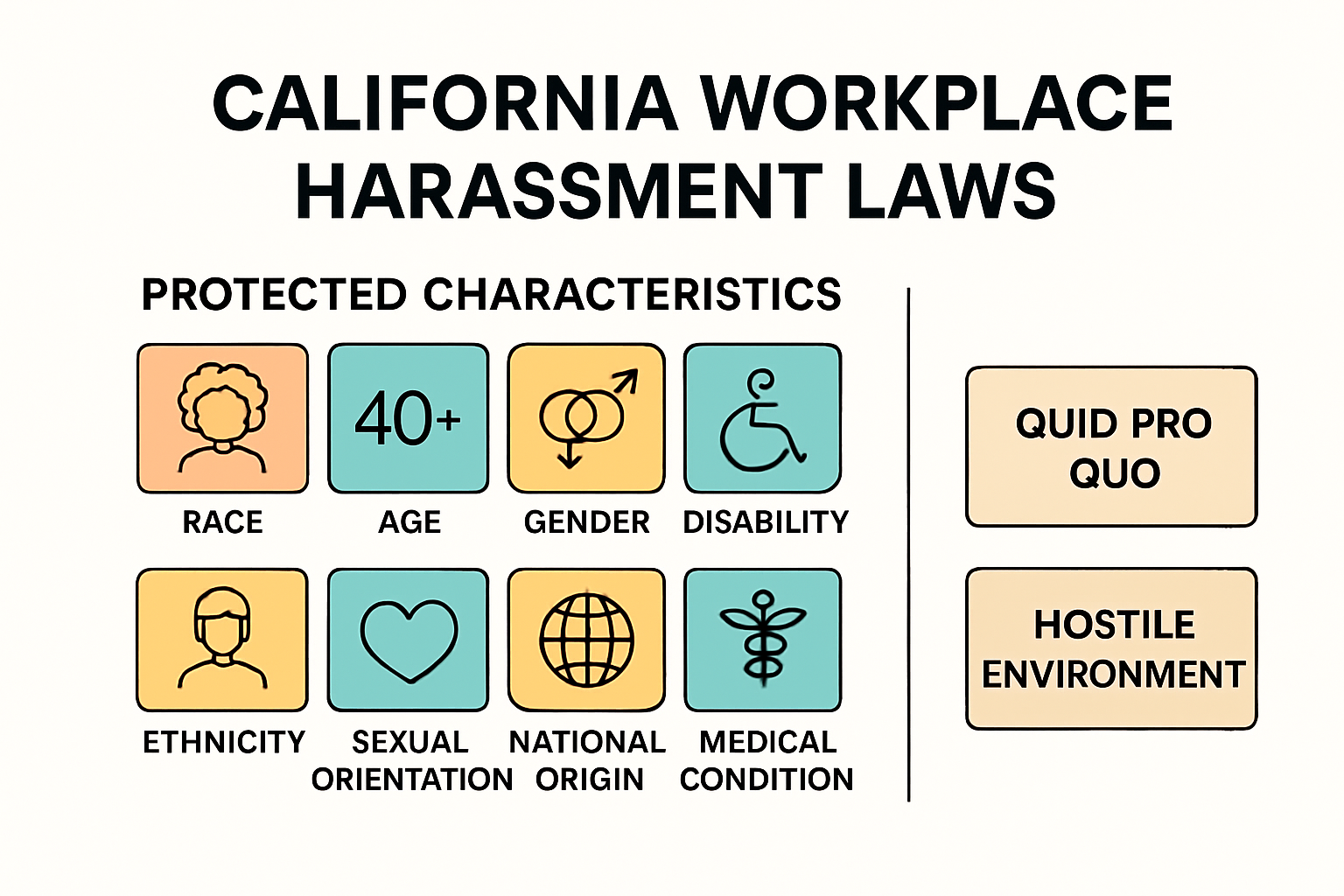
California workplace harassment laws cover a wide range of protected characteristics that make harassment illegal. According to the California Government Code, these protected categories include:
- Race and color
- Religious creed
- National origin
- Ancestry
- Physical or mental disability
- Medical condition
- Genetic information
- Marital status
- Sex and gender
- Sexual orientation
- Gender identity and expression
- Age (for individuals over 40)
- Veteran or military status
Determining Harassment Severity
Not all inappropriate workplace behaviors constitute legal harassment. California law recognizes two primary standards for evaluating harassment:
Quid Pro Quo Harassment: This occurs when employment benefits are directly tied to submitting to unwelcome sexual advances or other harassment. For example, a supervisor promising a promotion in exchange for sexual favors.
Hostile Work Environment: This happens when harassment is severe or pervasive enough to create an intimidating, hostile, or offensive work environment. The behavior must be so extreme that a reasonable person would find the workplace uncomfortable or threatening.
The following table compares the two main types of unlawful workplace harassment recognized by California law, helping readers distinguish their defining features and examples.
| Type of Harassment | Definition | Example |
|---|---|---|
| Quid Pro Quo | Employment benefits conditioned on submitting to unwelcome advances or harassment | Supervisor promises a promotion for sexual favors |
| Hostile Work Environment | Harassment so severe or pervasive it creates an intimidating, hostile, or offensive workplace | Repeated derogatory jokes making the workplace intolerable |
Employees seeking comprehensive information about protecting their workplace rights can explore additional legal resources. The nuanced understanding of these key concepts empowers workers to identify and challenge inappropriate workplace conduct, ensuring a safe and respectful professional environment.
How Workplace Harassment Laws Protect Employees
Workplace harassment laws provide a comprehensive shield for employees, establishing critical legal protections that safeguard individual rights and create accountability within professional environments. These laws function as a powerful mechanism to prevent discriminatory practices and ensure fair treatment for all workers.
Legal Safeguards Against Discriminatory Actions
According to the U.S. Equal Employment Opportunity Commission, workplace harassment laws protect employees by establishing clear boundaries and legal consequences for inappropriate workplace behaviors. These protections extend beyond simple prohibitions, creating robust mechanisms that empower workers to challenge misconduct.
Key legal protections include:
- Preventing employment discrimination based on protected characteristics
- Establishing clear standards for professional conduct
- Creating formal mechanisms for reporting harassment
- Ensuring confidential investigation processes
- Providing potential financial compensation for victims
Comprehensive Employee Empowerment
Workplace harassment laws offer multifaceted protections that go beyond immediate legal remedies. They fundamentally transform workplace dynamics by creating systemic accountability and establishing proactive prevention strategies.
The protective mechanisms include:
- Mandatory harassment prevention training for employers
- Legal prohibitions against retaliatory actions
- Requirement for employers to investigate harassment claims
- Development of clear organizational anti-harassment policies
Employees seeking additional insights into protecting their professional rights can explore comprehensive legal resources. By understanding these protective frameworks, workers can effectively assert their rights and contribute to creating safer, more respectful professional environments.
Real-World Impact of Workplace Harassment Laws
Workplace harassment laws transcend theoretical legal frameworks, creating tangible protections that fundamentally transform professional environments and individual employee experiences. These laws represent more than mere regulations they are critical mechanisms for ensuring workplace dignity and preventing systemic discrimination.
Measuring Practical Effectiveness
According to research from the National Employment Law Project, the real-world impact of workplace harassment laws is profound. Statistical evidence reveals significant challenges in workplace protections, with nearly 40% of workers experiencing workplace violations and only 10% feeling empowered to report them.
Key practical outcomes include:
- Increased workplace accountability
- Reduced instances of discriminatory behaviors
- Enhanced employee psychological safety
- Improved organizational culture
- Financial deterrence for problematic employers
Cultural and Organizational Transformation
Workplace harassment laws drive fundamental cultural shifts within professional settings. By establishing clear legal consequences, these regulations compel organizations to develop more inclusive, respectful environments. Employers must now proactively prevent harassment rather than merely reacting to complaints.
Transformative impacts encompass:
- Mandatory harassment prevention training
- Development of comprehensive anti-harassment policies
- Creation of confidential reporting mechanisms
- Institutional commitment to workplace equality
Employees interested in understanding comprehensive workplace protections can explore additional resources. The ongoing evolution of these laws demonstrates a commitment to creating safer, more equitable professional environments where every worker can thrive without fear of discrimination or harassment.

Take Control of Your Rights Against Workplace Harassment in California
Are you facing anxiety, confusion, or uncertainty because of workplace harassment? You have learned from the article that harassment comes in many forms, including discriminatory actions or a hostile work environment. If you are unsure what steps to take or fear retaliation for speaking up, you do not have to face this alone. California law gives you real power to fight back and protect your well-being.
You deserve to work in a place that is safe and respectful. Our team at California Labor Law is dedicated to helping you understand your exact protections and options. Visit our site for easy-to-follow resources, instant legal guides, and a direct line to legal support. If you are feeling overwhelmed by harassment or want a detailed look at your next steps, find fast help through our employee legal help center today. Take action now to protect yourself and stand up for what is right. If you have been the victim of workplace harassment in California we can help, we want to hear your story. Contact us for a free workplace harassment claim review by calling 1-866-355-9991 for more information.
Frequently Asked Questions
What constitutes workplace harassment in California?
Workplace harassment in California includes unwelcome behaviors aimed at an individual based on protected characteristics such as race, gender, sexual orientation, and disability. It can manifest as verbal, physical, visual, or sexual harassment.
What legal protections do employees have against workplace harassment?
Employees in California are protected under the Fair Employment and Housing Act (FEHA), which mandates a harassment-free workplace. Employers must investigate complaints, enforce anti-harassment policies, and provide training to employees.
How can employees report workplace harassment?
Employees can report workplace harassment by following their employer’s established complaint procedures, which should include filing a formal complaint. If internal avenues do not yield results, employees may reach out to the California Civil Rights Department or the Equal Employment Opportunity Commission (EEOC) for assistance.
What is the difference between quid pro quo harassment and hostile work environment harassment?
Quid pro quo harassment occurs when employment benefits are conditioned on submitting to harassment, usually of a sexual nature. In contrast, a hostile work environment is created when pervasive or severe harassment makes the workplace intimidating or offensive to a reasonable person.