




Recognizing discrimination requires awareness, documentation, and a commitment to maintaining professional environments that respect individual dignity and equal opportunity. Workplace discrimination is more common than most people realize, and it touches nearly every industry. Thousands of complaints are filed with the EEOC every year, resulting in millions paid out in settlements. Most expect discrimination to look obvious or loud. The real shock is how often it happens through quiet policies or subtle cues that many never spot until damage is done.
Defining Workplace Discrimination Types
Workplace discrimination represents a complex legal and ethical challenge that undermines professional environments and individual worker rights. Understanding the various workplace discrimination types is crucial for employees and employers alike to recognize, prevent, and address potential violations.
Legal Definition and Scope
Discrimination in the workplace occurs when an employee or job applicant receives unfair treatment based on protected characteristics. According to Equal Employment Opportunity Commission, discrimination involves treating someone differently or less favorably because of specific inherent or personal attributes.
Key Protected Characteristics Include:
- Race and ethnicity
- Gender and sexual orientation
- Age (40 and above)
- Disability status
- Religious beliefs
- National origin
Common Workplace Discrimination Categories
Workplace discrimination manifests through multiple complex mechanisms, each targeting specific aspects of employment and professional interactions. The primary discrimination types include:
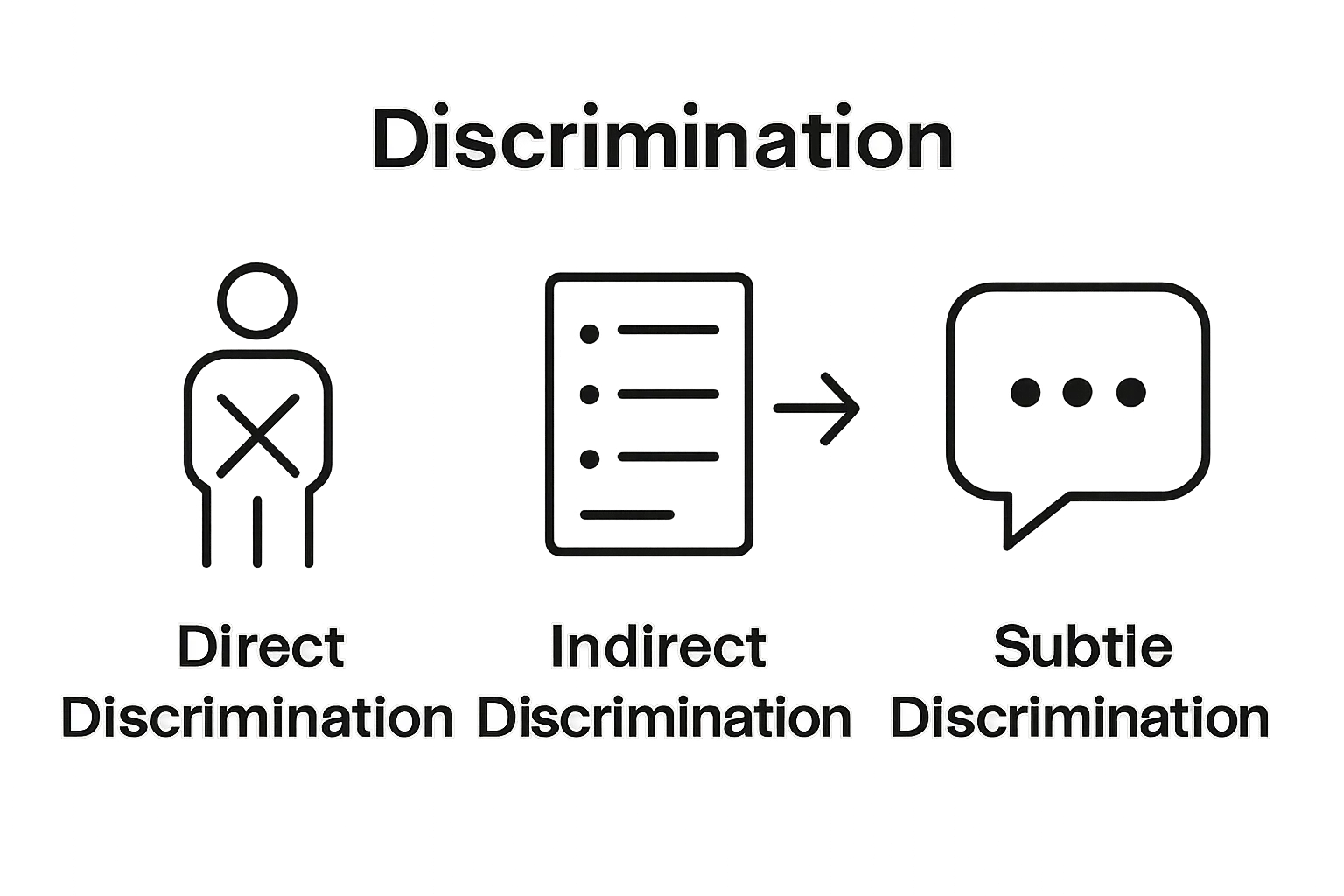
Direct Discrimination:
- Explicit negative actions targeting protected group characteristics
- Clear preferential treatment excluding certain individuals
- Direct statements or policies demonstrating bias
Indirect Discrimination:
- Seemingly neutral policies disproportionately impacting specific groups
- Unintentional practices creating systemic barriers
- Employment requirements unnecessarily excluding particular candidates
Recognizing Subtle Discrimination Patterns
Discrimination often operates through nuanced and sophisticated mechanisms beyond obvious mistreatment. American Psychological Association research highlights that discrimination can manifest through microaggressions, implicit biases, and structural workplace practices that create unequal opportunities.
Understanding these intricate workplace discrimination types empowers employees to identify potential violations and seek appropriate legal recourse.
To clarify how different types of discrimination operate in the workplace, the following table compares direct and indirect discrimination based on their characteristics and effects.
| Type of Discrimination | Description | Common Examples | Impact on Employees |
|---|---|---|---|
| Direct Discrimination | Explicit unfavorable treatment based on protected characteristics | Biased hiring, unequal pay, exclusionary policies | Immediate and obvious exclusion |
| Indirect Discrimination | Neutral actions or policies that disproportionately impact specific groups | Attendance policies, physical requirements, dress codes | Hidden barriers, reduced opportunities |
Recognizing discrimination requires awareness, documentation, and a commitment to maintaining professional environments that respect individual dignity and equal opportunity.
The Importance of Recognizing Discrimination
Recognizing workplace discrimination represents a critical strategy for protecting employee rights, maintaining organizational integrity, and creating inclusive professional environments. Understanding the deeper implications of discrimination goes beyond legal compliance and touches fundamental human dignity and professional respect.
Psychological and Professional Impact
Discrimination creates profound psychological consequences for targeted individuals. American Psychological Association research demonstrates that persistent workplace discrimination can lead to significant mental health challenges, including:
- Increased stress and anxiety
- Reduced job satisfaction
- Diminished professional confidence
- Higher risk of depression
- Lower workplace productivity
Psychological Trauma: Repeated discriminatory experiences can create long lasting emotional scars that extend far beyond the immediate workplace context, potentially affecting an individual’s career trajectory and personal well being.
Legal and Organizational Consequences
Beyond individual impact, discrimination carries substantial legal and organizational risks. Companies that fail to recognize and address discriminatory practices expose themselves to significant financial and reputational damage. According to U.S. Equal Employment Opportunity Commission, thousands of discrimination charges are filed annually, resulting in substantial monetary settlements.
Potential Organizational Risks Include:
- Expensive legal litigation
- Substantial financial penalties
- Damaged organizational reputation
- Decreased employee morale
- Potential loss of talented workforce members
Building Inclusive Work Environments
Recognizing discrimination is not merely about avoiding legal challenges but actively constructing supportive, respectful professional spaces. Successful organizations understand that diversity and inclusion are strategic advantages that drive innovation, creativity, and overall organizational performance.
Effective recognition requires ongoing education, transparent communication, and a genuine commitment to understanding different employee experiences. By proactively identifying and addressing discriminatory patterns, organizations can create environments where every individual feels valued, respected, and empowered to contribute their full potential.

Legal Framework Surrounding Discrimination in California
California maintains one of the most comprehensive legal frameworks in the United States designed to protect employees from workplace discrimination. These robust protections go beyond federal standards, offering workers extensive safeguards and clear pathways for addressing discriminatory practices.
State and Federal Protection Mechanisms
The legal landscape of workplace discrimination in California combines both state and federal regulations to create multilayered protections. California Department of Fair Employment and Housing provides critical guidance on these comprehensive anti-discrimination statutes.
Key Protective Legislation Includes:
- California Fair Employment and Housing Act (FEHA)
- Title VII of the Civil Rights Act
- Americans with Disabilities Act
- Age Discrimination in Employment Act
- Equal Pay Act
Distinctive California Anti Discrimination Standards
Unlike many states, California offers broader and more expansive discrimination protections. The state recognizes a wider range of protected characteristics and provides stronger legal remedies for workers experiencing unfair treatment. California Labor Code establishes stringent requirements that employers must follow to ensure workplace equality.
Unique California Protections:
- Protection for additional categories beyond federal law
- Lower thresholds for proving discrimination
- More substantial monetary damages
- Stronger retaliation protections
Reporting and Legal Recourse
Employees facing discrimination have multiple avenues for seeking justice. The legal framework provides clear mechanisms for filing complaints, pursuing administrative remedies, and initiating civil litigation. For workers seeking guidance on navigating these complex processes, our comprehensive guide on employment retaliation offers detailed insights into protecting workplace rights.
California’s legal approach demonstrates a commitment to creating equitable work environments by establishing strong, proactive protections that empower employees and hold employers accountable for maintaining fair and respectful professional spaces.
The table below summarizes major legal protections against workplace discrimination in California and how they differ from general federal standards, helping employees and employers understand their coverage.
| Legal Protection | Scope | Unique to California |
|---|---|---|
| California Fair Employment and Housing Act (FEHA) | Broad state protections for many characteristics | Yes |
| Title VII Civil Rights Act | Federal protection for race, color, religion, sex | No |
| Americans with Disabilities Act | Federal protection for disability | No |
| Age Discrimination in Employment Act | Federal protection for age (40+) | No |
| California Labor Code Standards | Stricter requirements and extra categories protected | Yes |
Impact of Discrimination on Employees and Work Environment
Workplace discrimination creates profound negative consequences that extend far beyond individual experiences, fundamentally disrupting organizational dynamics and employee well being. The ripple effects of discriminatory practices can undermine entire workplace cultures and professional ecosystems.
Psychological and Personal Consequences
National Institutes of Health research demonstrates that persistent workplace discrimination significantly impacts mental and physical health. Employees experiencing discrimination often encounter extensive psychological challenges that compromise their professional and personal functioning.
Critical Psychological Effects Include:
- Chronic stress and anxiety
- Reduced self esteem
- Emotional exhaustion
- Increased risk of depression
- Potential development of post traumatic stress symptoms

Organizational Performance Implications
Discrimination does not merely affect individual workers but substantially compromises organizational effectiveness. Companies experiencing systemic discriminatory practices face significant productivity challenges and potential talent loss. The undermined workplace environment creates barriers to innovation, collaboration, and employee engagement.
Organizational Performance Disruptions:
- Decreased team productivity
- Higher employee turnover rates
- Reduced overall workplace morale
- Compromised creative problem solving
- Potential reputation damage
Long Term Professional Consequences
The impact of workplace discrimination extends beyond immediate workplace interactions, potentially derailing career trajectories and professional development. California ADA Violations Guide highlights how discriminatory experiences can create systemic barriers that limit professional advancement and economic opportunities.
Addressing workplace discrimination requires a holistic approach that recognizes its multifaceted impacts.
Organizations must develop proactive strategies that not only prevent discriminatory practices but actively cultivate inclusive environments where every employee can thrive professionally and personally.
Strategies for Addressing Workplace Discrimination
Addressing workplace discrimination requires a comprehensive, proactive approach that involves individual awareness, organizational commitment, and strategic implementation of inclusive practices. Effective strategies must simultaneously prevent discriminatory behaviors and create supportive professional environments.
Individual Empowerment and Documentation
Employees play a critical role in combating workplace discrimination by understanding their rights and maintaining meticulous documentation. Equal Employment Opportunity Commission recommends specific steps for individuals facing potential discriminatory treatment.
Key Documentation Strategies:
- Record specific dates and details of discriminatory incidents
- Collect supporting evidence like emails or witness statements
- Maintain a chronological log of interactions
- Preserve communication records
- Note potential witnesses or corroborating individuals
Organizational Policy and Training
Successful discrimination prevention begins with robust organizational policies and continuous educational initiatives. Companies must develop clear, comprehensive guidelines that explicitly define unacceptable behaviors and establish consequences for violations.
Essential Policy Components:
- Clear anti discrimination statement
- Explicit reporting mechanisms
- Transparent investigation procedures
- Consistent enforcement protocols
- Regular policy review and updates
Legal and Administrative Recourse
When internal resolution proves insufficient, employees have multiple legal pathways for addressing workplace discrimination. Employment Lawyers in California offer guidance on navigating complex administrative and judicial processes.
Addressing workplace discrimination demands a multifaceted approach that balances individual empowerment, organizational accountability, and systemic change. By implementing comprehensive strategies, workplaces can transform potential conflict into opportunities for growth, understanding, and genuine inclusivity.
Ready to Take Control After Facing Workplace Discrimination?
If you are feeling the stress and uncertainty that comes with workplace discrimination from subtle microaggressions to clearly unfair treatment you are not alone. Many California employees experience decreased job satisfaction and emotional distress when their rights are violated. Understanding the legal framework and the different types of discrimination is the first step, but knowing how to act is the key to real change.
You deserve a fair and respectful workplace. Contact California Labor Law for a free consultation or call us at toll free at 1-866-355-9991 for a free workplace discrimination consultation.
Frequently Asked Questions
What is workplace discrimination?
Workplace discrimination occurs when employees or job applicants receive unfair treatment based on protected characteristics, such as race, gender, age, or disability.
What are the main types of workplace discrimination?
The main types of workplace discrimination include direct discrimination, which involves explicit negative actions towards certain groups, and indirect discrimination, which refers to neutral policies that disproportionately impact specific groups.
How can workplace discrimination affect employees?
Workplace discrimination can lead to significant psychological effects, including increased stress, anxiety, reduced job satisfaction, and lower productivity. It can also impact an individual’s professional trajectory and overall well-being.
What steps should I take if I experience discrimination at work?
If you experience discrimination, it’s important to document specific incidents, gather evidence, and report the behavior through your organization’s established channels. You may also seek legal guidance if needed.