




Workplace safety rights are more than just legal rules. In California, these rights protect over 19 million workers across every industry, covering everything from physical hazards to mental well-being. Most people expect safety rules to be about handling chemicals or avoiding slips and falls. Yet the real surprise is that these protections also shield workers from harassment, discrimination, and even retaliation for speaking up. This wider net changes what it really means to feel safe at work.
What are Workplace Safety Rights?
Workplace safety rights represent a fundamental legal protection designed to ensure employees can perform their jobs without risking their physical health, mental well-being, or personal security. In California, these rights are comprehensive and robust, providing workers with critical safeguards against hazardous working conditions.
The Legal Foundation of Worker Protection
Workplace safety rights stem from a combination of federal and state regulations that mandate employers maintain a safe and healthy work environment. According to the Occupational Safety and Health Administration (OSHA), employees are guaranteed specific protections that shield them from potential workplace dangers.
Key components of workplace safety rights include:
- The right to receive training about potential workplace hazards
- Access to necessary safety equipment at no personal cost
- Protection from retaliation when reporting unsafe working conditions
- Ability to request workplace inspections without fear of punishment
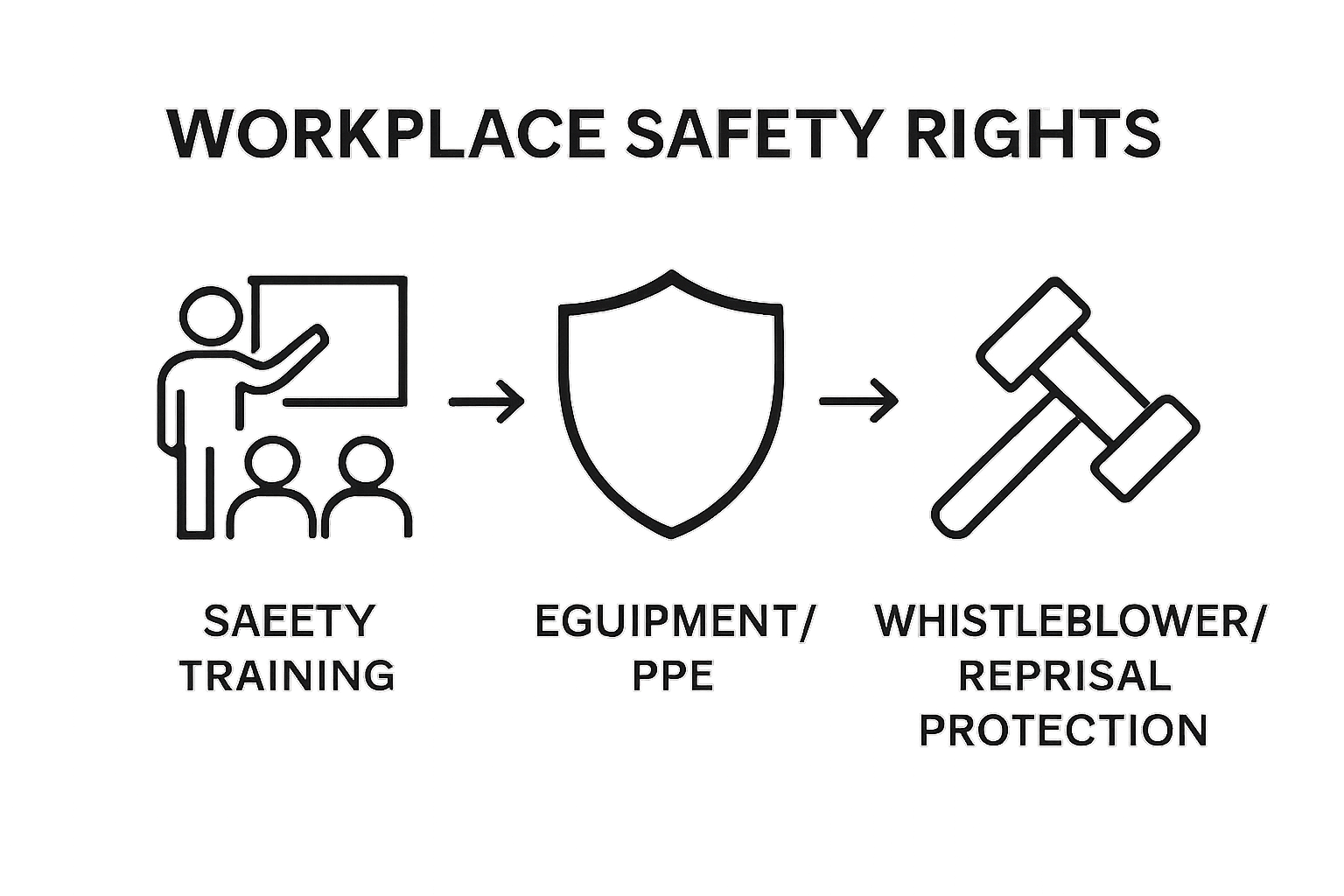
Understanding Your Fundamental Safety Protections
Employers in California must proactively identify and mitigate potential workplace risks. This means conducting regular safety assessments, providing appropriate protective gear, maintaining equipment, and creating clear protocols for emergency situations. Workers are not just passive recipients of these protections but active participants in maintaining a safe work environment.
Moreover, California extends additional protections beyond federal standards. The state recognizes that workplace safety is not just about physical hazards but also encompasses psychological well-being. This includes protection from harassment, discrimination, and creating an environment that respects worker dignity.
If you want to learn more about your rights in case of workplace violations, check out our comprehensive guide on protecting yourself from potential legal challenges.
Workplace safety rights are not optional privileges but fundamental legal requirements designed to protect workers across all industries. By understanding these rights, employees can confidently advocate for their own safety and contribute to creating healthier, more secure work environments.
Why Workplace Safety Rights Matter for Employees
Workplace safety rights are not merely legal technicalities but critical protections that directly impact an employee’s health, financial security, and professional dignity. These rights serve as a fundamental shield against potential workplace hazards that could compromise worker well-being and professional opportunities.
Personal and Professional Consequences of Workplace Safety
According to workplace safety regulations, employers bear direct responsibility for creating environments where workers can perform their duties without risking physical harm or psychological distress. The implications of workplace safety extend far beyond immediate physical protection.
Key consequences of inadequate workplace safety include:
- Long-term health complications from exposure to hazardous conditions
- Potential loss of income due to work-related injuries
- Psychological trauma and reduced workplace morale
- Potential permanent disability or career interruption

Economic and Psychological Impact of Safety Rights
Workplace safety rights represent more than protective measures they are economic safeguards that prevent workers from bearing unnecessary financial risks. When employees are protected, they can focus on job performance without constant anxiety about potential workplace dangers. This psychological security translates into improved productivity, reduced stress, and a more positive work environment.
Moreover, these rights create accountability mechanisms that compel employers to maintain high safety standards. By establishing clear expectations and consequences for workplace safety violations, employees gain significant leverage in protecting their professional interests.
Explore our comprehensive guide on protecting yourself from workplace violations to understand the full spectrum of employee protections.
Ultimately, workplace safety rights are a critical social contract between employers and employees. They acknowledge that workers are not expendable resources but valuable human beings deserving respect, protection, and the opportunity to earn a living without compromising their fundamental health and well-being.
This table outlines common consequences and impacts related to workplace safety, distinguishing personal/professional outcomes from economic and psychological effects for clearer understanding.
| Type of Impact | Description |
|---|---|
| Health Complications | Long-term health issues from hazardous conditions |
| Financial Loss | Loss of income or medical expenses due to work-related injuries |
| Psychological Distress | Trauma, stress, and reduced workplace morale |
| Professional Disruption | Career interruption or permanent disability |
| Increased Productivity | Better focus and job performance when safety rights are protected |
| Reduced Stress | Psychological security from knowing protections exist |
| Enhanced Accountability | Clear employer obligations incent higher standards and prevent exploitation |
Key Concepts in Workplace Safety Laws
Workplace safety laws constitute a complex framework of regulations designed to protect employees from potential hazards, ensuring comprehensive protection across diverse work environments. These laws establish critical standards that define employer responsibilities and worker protections.
Fundamental Legal Protections and Standards
According to California workplace safety regulations, employers must implement systematic approaches to identifying, preventing, and addressing workplace risks. These legal frameworks are not static but evolve continuously to address emerging workplace challenges and technological advancements.
Key legal standards encompass multiple critical dimensions:
- Mandatory safety training and education programs
- Comprehensive hazard identification and mitigation protocols
- Regular workplace safety assessments
- Clear reporting mechanisms for potential safety violations
Employer Responsibilities and Worker Rights
Workplace safety laws delineate precise obligations for employers while simultaneously establishing robust protections for workers. Employers are legally required to create environments that minimize potential risks, which extends beyond mere physical safety to include psychological well-being and protection from potential harassment or discriminatory practices.
These laws recognize that workplace safety is multifaceted, addressing not just immediate physical dangers but also long-term health implications. For instance, regulations cover everything from proper equipment maintenance to ensuring adequate ventilation, noise protection, and ergonomic workplace design.
Learn more about protecting yourself from potential workplace violations and understanding the full scope of your legal rights.
Ultimately, workplace safety laws represent a critical social mechanism that balances employer operational needs with fundamental worker protections. By establishing clear standards and accountability measures, these regulations create a framework that promotes mutual respect, professional dignity, and collective well-being across diverse work environments.
The following table summarizes key employer responsibilities and corresponding worker rights under California workplace safety laws, helping readers quickly identify each party’s obligations and protections.
| Employer Responsibilities | Worker Rights |
|---|---|
| Provide regular safety training and education | Receive training about workplace hazards |
| Supply necessary safety equipment at no personal cost | Access safety equipment without cost |
| Conduct regular workplace safety assessments | Work in an environment free of physical and psychological hazards |
| Maintain equipment and implement preventive protocols | Request inspections of the workplace without fear of punishment |
| Establish clear reporting mechanisms for safety concerns | Report unsafe conditions confidentially without retaliation |
| Address psychological well-being and protect from harassment | Be protected from harassment, discrimination, and retaliation |
| Mitigate hazards proactively and update standards as needed | Participate actively in workplace safety advocacy |

How Workplace Safety Rights Benefit Workers
Workplace safety rights extend far beyond legal compliance, offering workers comprehensive protections that safeguard their physical, mental, and professional well-being. These rights create a protective ecosystem that empowers employees and promotes a culture of respect and dignity in professional environments.
Financial and Health Protection Mechanisms
According to occupational health research, workplace safety rights provide critical financial buffers that prevent workers from bearing the economic burden of workplace injuries or health complications. These protections ensure that employees are not financially devastated by incidents occurring during their professional duties.
Key financial and health benefits include:
- Protection against medical expenses resulting from workplace injuries
- Guaranteed compensation for work-related health complications
- Legal recourse for unsafe working conditions
- Preservation of employment status during recovery periods
Psychological and Professional Empowerment
Workplace safety rights transcend physical protection by creating psychological security. When workers know their rights are legally protected, they experience reduced stress, increased job satisfaction, and greater confidence in challenging potentially dangerous workplace practices. This sense of security directly correlates with improved professional performance and workplace engagement.
Moreover, these rights establish clear accountability mechanisms that prevent employers from exploiting worker vulnerabilities. By mandating transparent safety standards, workers gain the power to challenge unsafe practices without fear of retaliation.
Discover comprehensive strategies for protecting your workplace rights and understanding the full scope of legal protections available to you.
Ultimately, workplace safety rights represent a fundamental social contract that recognizes workers as valuable human beings deserving respect, protection, and the opportunity to earn a living in a safe, supportive environment.
These rights are not just legal technicalities but powerful tools for creating more equitable, humane professional landscapes.
Navigating Workplace Safety Rights in California
Navigating workplace safety rights in California requires a strategic understanding of state-specific regulations, legal protections, and proactive approaches to addressing potential workplace hazards. Workers must be equipped with knowledge and confidence to effectively assert their safety rights within professional environments.
Understanding Your Legal Reporting Mechanisms
According to California labor regulations, employees have multiple confidential channels to report workplace safety violations without fear of retaliation. These reporting mechanisms are designed to empower workers and hold employers accountable for maintaining safe working conditions.
Key reporting strategies include:
- Filing confidential complaints with Cal/OSHA
- Documenting specific safety concerns with detailed written records
- Requesting anonymous workplace inspections
- Communicating safety issues through designated workplace safety representatives
Strategic Approaches to Workplace Safety Advocacy
Effective navigation of workplace safety rights demands a proactive and informed approach. Employees must understand that their safety is a legal right, not a privilege. This means being prepared to document potential violations, understand the specific protections afforded by California labor laws, and know the appropriate steps to challenge unsafe working conditions.
Additionally, workers should familiarize themselves with their industry-specific safety standards, as different sectors may have unique regulatory requirements. Continuous education and awareness are crucial in maintaining a safe work environment.
Learn more about protecting yourself from potential workplace retaliation and understanding your comprehensive legal rights.
Successfully navigating workplace safety rights requires a combination of knowledge, documentation, and strategic communication. By understanding the intricate legal landscape, workers can transform safety regulations from theoretical protections into practical, enforceable standards that genuinely safeguard their professional and personal well-being.
Protect Your Safety Rights—Get Immediate Help from California Labor Experts
Do you feel uncertain about your workplace safety or wonder if your employer is truly following California’s strict safety laws? Many workers find themselves worried about on-the-job hazards or unsure where to turn when their workplace rights are at risk. Your right to a safe environment—including proper safety training, access to equipment, and freedom from retaliation, is not optional. It is a legal promise under state law.
If you recognize any sign your safety may be compromised, do not wait until the situation gets worse. Visit California Labor Law right now to find out what immediate steps you can take. Our free guides and legal tools empower you to protect yourself from potential workplace retaliation and answer your questions quickly. Call us at 1-866-355-9991 for a free workplace safety rights consultation.
Frequently Asked Questions
What are my rights regarding workplace safety in California?
In California, employees have the right to a safe and healthy work environment, which includes the right to receive training about hazards, access to safety equipment at no cost, and protection from retaliation for reporting unsafe conditions.
How can I report unsafe working conditions?
Employees can report unsafe working conditions by filing confidential complaints with Cal/OSHA, documenting specific safety concerns, requesting anonymous inspections, or communicating issues through designated safety representatives at their workplace.
What should I do if I face retaliation for reporting safety violations?
If you experience retaliation for reporting unsafe conditions, it’s important to document all incidents and consult with a legal expert or labor rights advocate. You can also report the retaliation to Cal/OSHA.
What are the employer’s responsibilities for workplace safety?
Employers are required to conduct regular safety assessments, provide necessary safety training and equipment, maintain safe equipment, and create protocols for emergencies. They must ensure that the work environment is free from hazards that could affect workers’ health and well-being.