




Most Common Employer Violations in California (2026)
Getting shorted on your paycheck or missing out on earned overtime is all too common for retail workers across California. When basic rights like fair wages and mandated breaks are ignored, your ability to pay bills and support your family is put at risk.
Understanding what legally qualifies as an employer violation can help you reclaim what you are owed and put a stop to wage theft in the workplace.
Defining Employer Violations Under California Law
Employer violations in California represent systematic legal breaches that compromise employee rights and workplace standards. The California Labor Commissioner’s Office defines these violations as intentional or negligent actions that undermine fundamental worker protections established under state labor regulations.
These violations can manifest in multiple forms, including:
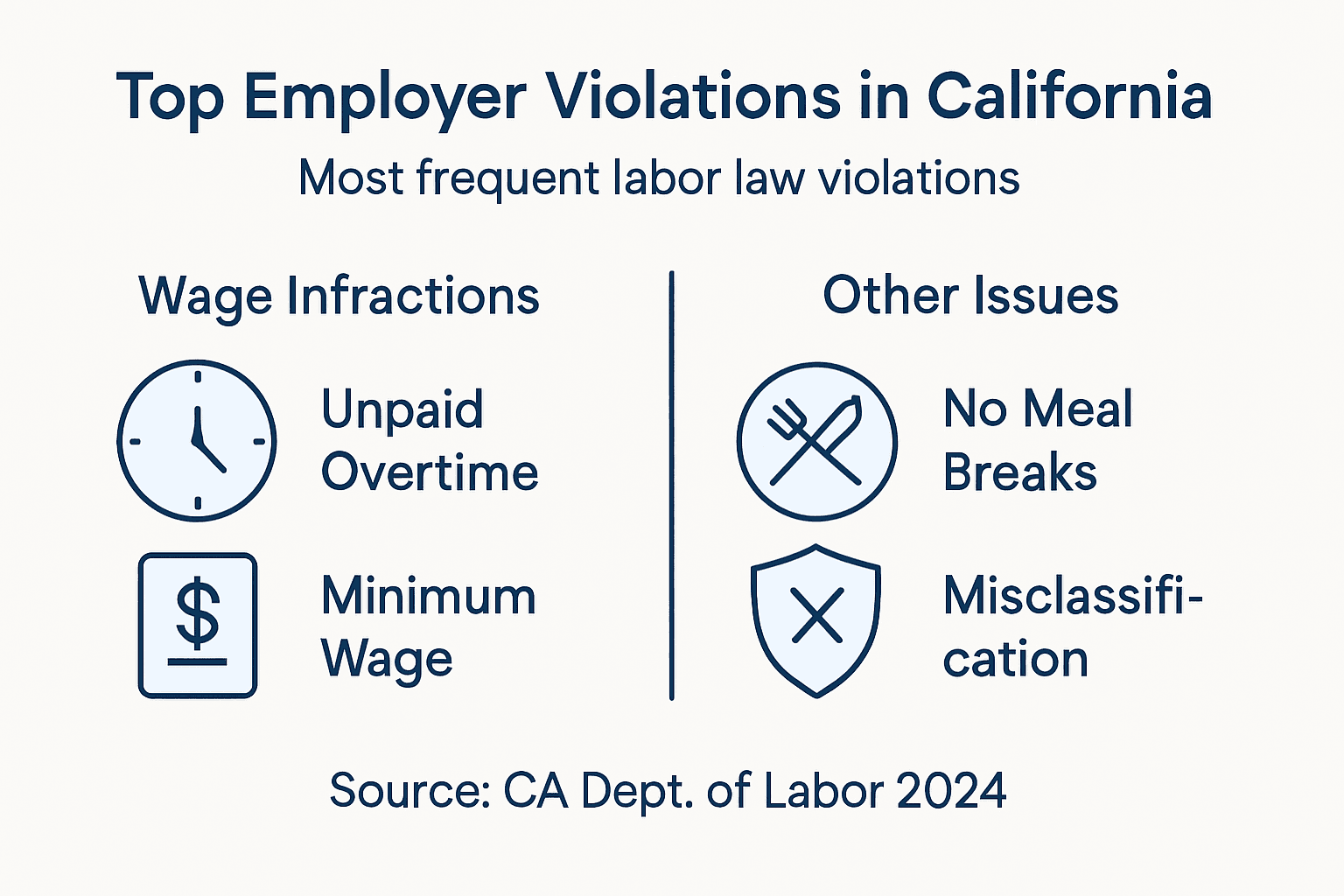
- Wage Theft: Failing to pay minimum wage or overtime compensation
- Misclassification: Incorrectly categorizing employees as independent contractors
- Break Violations: Denying mandatory meal and rest periods
- Retaliation: Punishing employees who report workplace misconduct
- Discrimination: Treating workers unfairly based on protected characteristics
Under California labor regulations, employers are legally obligated to maintain specific workplace standards that protect employee rights. These standards encompass comprehensive requirements regarding compensation, working conditions, safety protocols, and fair treatment.
The legal framework surrounding employer violations is complex and multifaceted. Employers can face significant financial penalties, including back wages, penalties, and potential civil litigation when they fail to comply with established labor standards. State agencies like the Division of Labor Standards Enforcement actively investigate and prosecute these violations to ensure economic justice.
Pro tip: Document every workplace interaction and keep detailed records of hours worked, communications, and potential violations to strengthen your legal position if disputes arise.
Here is a summary comparing the main types of employer violations under California law:
| Violation Type | Typical Impact on Employees | Common Employer Penalty |
|---|---|---|
| Wage Theft | Loss of earnings, financial stress | Back pay, fines, civil damages |
| Misclassification | Denied benefits, tax issues | Reclassification, penalties |
| Break Violations | Health risks, unpaid overtime | Extra pay, penalties |
| Retaliation | Job loss, workplace hostility | Reinstatement, emotional damages |
| Discrimination | Unequal opportunities, distress | Fines, corrective action |
Wage Theft and Hourly Pay Infractions
Wage theft represents a pervasive problem in California’s labor landscape, where employers systematically deny workers their legally earned compensation. Wage theft practices encompass a range of illegal actions that directly impact worker earnings and financial stability.
The most common wage theft infractions include:
- Minimum Wage Violations: Paying less than the mandated hourly rate
- Overtime Compensation Denial: Refusing to pay required overtime wages
- Off-the-Clock Work: Compelling employees to work without compensation
- Illegal Wage Deductions: Improperly reducing employee paychecks
- Tip Theft: Illegally appropriating employee gratuities
In Los Angeles alone, workers lose millions weekly due to these unethical practices. Wage theft investigations reveal complex enforcement challenges, including prolonged legal processes and business closures that often prevent workers from recovering stolen wages.
California law provides robust protections for workers, enabling them to file wage claims through the Division of Labor Standards Enforcement (DLSE). Employees can seek reimbursement for unpaid wages, penalties, and potential additional compensation for repeated or intentional violations.
Pro tip: Maintain detailed employment records, including timesheets, pay stubs, and communication logs, to build a strong case if you suspect wage theft.
Meal and Rest Break Violations Explained
Meal and rest break violations represent significant legal issues for California employers, with strict regulations designed to protect worker rights and well-being. California labor regulations mandate specific requirements for meal and rest periods that employers must carefully follow to avoid penalties.
The key meal and rest break requirements include:
- Meal Break Mandate: 30-minute unpaid break for shifts exceeding 5 hours
- Rest Break Requirement: 10-minute paid break for every 4 hours worked
- Timing Restrictions: Breaks must be provided near the middle of work periods
- Waiver Conditions: Limited options for mutually agreed break waivers
- Penalty Provisions: One hour of additional pay for missed breaks
Break scheduling guidelines emphasize that employers must not only provide breaks but actively authorize and permit them. Workplace circumstances matter, but legal standards remain paramount. Violations can result in significant financial penalties and potential legal action.
Employers face substantial risks for non-compliance, including back pay, penalties, and potential wage claims. Workers have the right to report violations, and the Division of Labor Standards Enforcement actively investigates and enforces these critical worker protection standards.
Pro tip: Keep detailed records of all work shifts and break times, documenting any instances where mandated breaks were not provided or were interrupted.
Employee Misclassification and Its Impact
Employee misclassification represents a serious legal and economic challenge in California, with far-reaching consequences for workers and businesses alike.
Misclassification practices systematically deny workers critical legal protections and benefits they are legally entitled to receive.
The key aspects of employee misclassification include:
- Wage Protection Losses: Denial of minimum wage and overtime compensation
- Benefit Elimination: Removal of workers’ compensation and unemployment insurance
- Tax Revenue Reduction: Decreased government tax collection
- Legal Rights Erosion: Circumvention of fundamental labor standards
- Economic Inequity: Creating unfair competitive advantages for non-compliant businesses
Regulatory guidance emphasizes the importance of properly distinguishing between employees and independent contractors. The Dynamex ruling in California introduced the ABC test, which establishes stricter standards for worker classification and aims to prevent systematic worker exploitation.
Employers who misclassify workers face significant legal risks, including potential back wage payments, penalties, and civil litigation. Workers impacted by misclassification can file claims to recover lost wages and benefits, challenging employers’ incorrect classification practices.
Pro tip: Always request a clear, written classification agreement and consult with an employment lawyer if you suspect improper worker classification.
Retaliation and Wrongful Termination Risks
California workplace protections establish critical safeguards against employer retaliation, ensuring workers can report misconduct without fear of punishment. Retaliation represents a serious violation of employee rights, encompassing any adverse action taken against workers who exercise their legal protections.
Common forms of workplace retaliation include:
- Termination: Firing an employee for reporting illegal activities
- Demotion: Reducing job status after raising workplace concerns
- Harassment: Creating hostile work environments to intimidate workers
- Reduced Hours: Strategically cutting work schedules as punishment
- Performance Sabotage: Manipulating evaluations to justify adverse actions
Workplace retaliation investigations focus on proving intent and motivation behind adverse employment actions. The Fair Employment and Housing Act (FEHA) mandates that employers take reasonable steps to prevent and correct retaliatory practices, with significant legal consequences for violations.
Employees have robust legal protections when reporting workplace issues, including discrimination, safety violations, wage disputes, and organizational misconduct. Workers who experience retaliation can file claims with state agencies, seek legal representation, and potentially recover damages for lost wages and emotional distress.
Pro tip: Document every interaction and communication related to your workplace concern, including dates, witnesses, and specific details to strengthen potential legal claims.
How Workers Can Report Employer Violations
California workers have multiple channels for reporting employer violations, ensuring comprehensive protection of their workplace rights. The Labor Commissioner’s Office provides robust mechanisms for employees to address workplace misconduct and seek legal remedies.
Key reporting methods include:
- Online Wage Claims: Filing detailed complaints through official digital platforms
- In-Person Filing: Submitting documentation directly at DLSE offices
- Written Documentation: Preparing comprehensive violation reports
- Anonymous Hotlines: Reporting concerns without direct identification
- Legal Advocacy Channels: Seeking representation from employment attorneys
Wage claim procedures involve a structured process that protects workers regardless of immigration status. The process typically includes initial claim filing, a settlement conference, and potential administrative hearing if necessary.
Workers must carefully document all workplace interactions, including dates, specific violations, and supporting evidence. This documentation becomes critical during investigations, helping substantiate claims of minimum wage violations, overtime disputes, or improper workplace treatment.
Pro tip: Preserve all employment-related communications, including emails, text messages, and pay stubs, as these can serve as crucial evidence when reporting workplace violations.
Protect Your Rights Against Employer Violations in California
If you are facing challenges like wage theft, meal and rest break violations, or wrongful termination as highlighted in the article Most Common Employer Violations in California your rights as an employee must be protected.
Many workers suffer financial loss and stress from employer misclassification or retaliation without knowing the legal protections available under California law. Take control by understanding your rights to fair wages and lawful workplace treatment.
At California Labor Law we provide legal guides and wage claim calculators that empower you to identify the compensation you may be owed. Don’t let improper unpaid wages or denied breaks go unchallenged.
Access free legal resources today and connect directly with experienced legal advocates who can help you navigate claims for violations such as overtime denial, lost wages, or retaliation.
Act now to secure your rightful pay and protect your future by calling 1-866-355-9991 to schedule a free employer violations consultation and learn how to assert your rights with confidence.
Frequently Asked Questions
What are some examples of employer violations in California?
Employer violations in California include wage theft, misclassification of employees, break violations, retaliation against workers, and discrimination based on protected characteristics.
How can I report wage theft in California?
You can report wage theft by filing a claim with the Division of Labor Standards Enforcement (DLSE) either online or in person. Be sure to document all evidence related to wage violations, including pay stubs and time sheets.
What are the consequences for employers who violate labor laws in California?
Employers who violate labor laws can face significant penalties, including back wages owed to employees, fines, and potential civil litigation. The DLSE actively enforces these laws to ensure compliance.
What should I do if I experience retaliation after reporting an employer violation?
If you experience retaliation, document every interaction related to your concern and consider filing a claim with the appropriate state agency. You may also want to seek legal representation to protect your rights.