




Understanding Reasonable Accommodation Laws Under California FEHA and ADA
Over 70 million adults live with some form of disability in the United States, yet many still struggle to access fair opportunities on the job.
Finding the right balance between employee needs and business requirements can be confusing for both workers and managers.
Understanding how reasonable accommodation laws actually work helps every American create a more inclusive and supportive work environment.
What Are Reasonable Accommodation Laws?
Reasonable accommodation laws are critical legal protections designed to ensure workers with disabilities have equal opportunities in the workplace.
Under the California Fair Employment and Housing Act, employers with five or more employees must provide necessary modifications that enable qualified individuals with physical or mental disabilities to perform essential job functions.
These accommodations can take many forms, ranging from physical workspace adjustments to scheduling flexibility.
An employer might install a wheelchair ramp, provide specialized computer equipment, adjust work hours, modify job duties, or offer assistive technologies that help an employee with a disability perform their core job responsibilities.

The fundamental goal is creating an inclusive environment where talented workers are not prevented from contributing due to disability-related challenges.
The legal standard requires that accommodations be “reasonable” – meaning they do not create an undue hardship for the employer. This nuanced approach balances employee rights with business operational considerations.
Workplace accommodation modifications must be practical, effective, and implemented without causing significant difficulty or expense to the organization. Workers requesting accommodations typically need to provide documentation demonstrating their disability and proposed modifications, working collaboratively with their employer to find mutually acceptable solutions.
Key aspects of reasonable accommodation laws include protecting employees from discrimination, ensuring equal employment opportunities, and promoting workplace diversity.
These laws recognize that disabilities should not be barriers to professional success, and they empower workers to seek the support needed to fully utilize their skills and talents in their chosen careers.
Major Types of Reasonable Workplace Accommodations
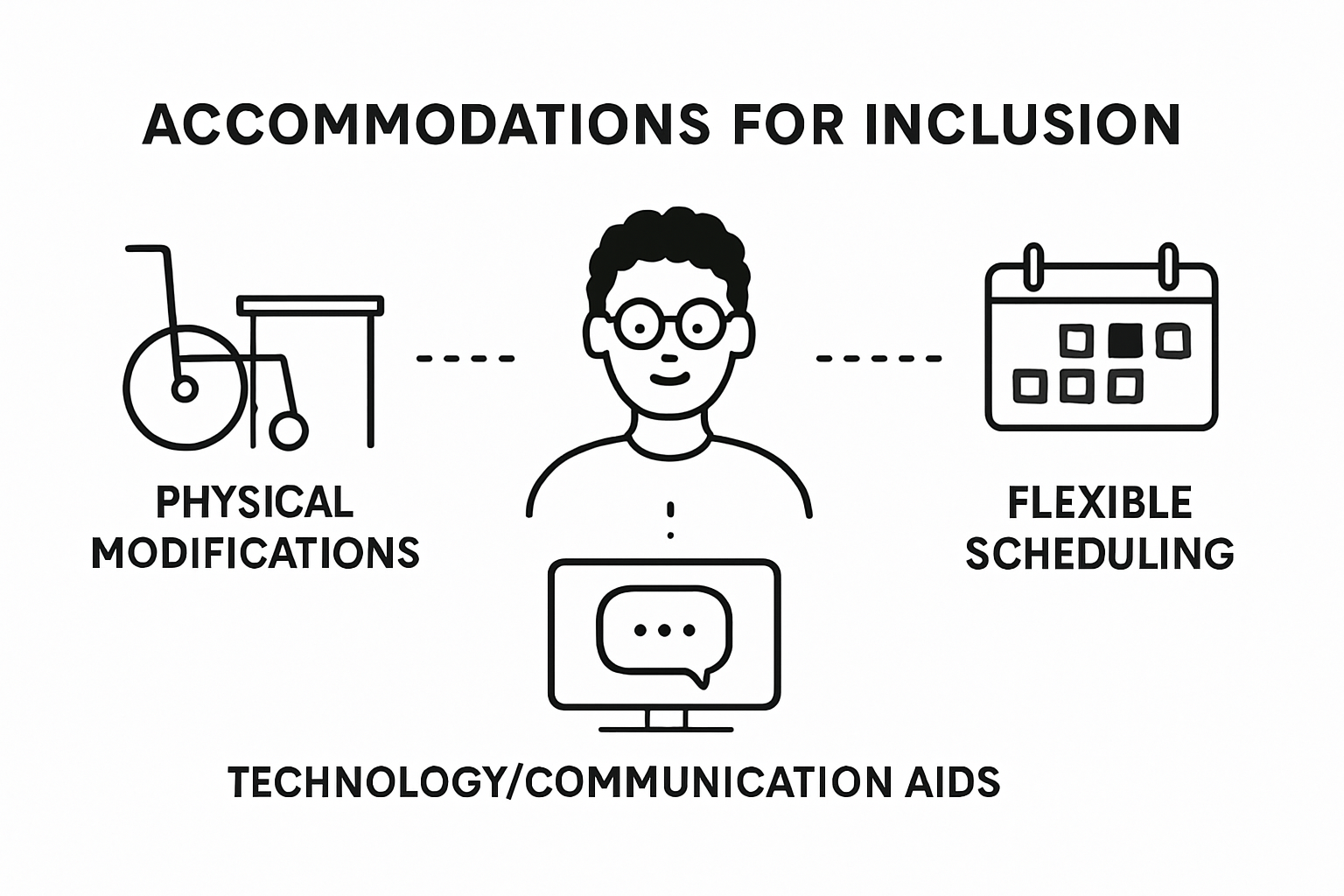
Reasonable workplace accommodations encompass a wide range of modifications designed to support employees with disabilities. Workplace modifications can be categorized into several key types, each addressing different aspects of job performance and workplace accessibility.
Physical environment adjustments represent one crucial category, which might include installing wheelchair ramps, modifying workstations, providing ergonomic furniture, or redesigning workspace layouts to enhance mobility and comfort.
Technology and communication accommodations form another critical category. Employers might provide specialized equipment like assistive listening devices, voice amplification systems, screen reading software, document enlargement tools, or sign-language interpreters.
These technological adaptations enable employees with sensory or communication disabilities to perform job functions effectively.
For instance, a visually impaired employee might receive screen magnification software, while a hearing-impaired worker could be provided with real-time captioning technology during meetings.
Scheduling and job duty accommodations represent a third important type of reasonable workplace modification. Adaptive workplace solutions in this category might include flexible work hours, part-time scheduling, periodic rest breaks, work-from-home options, or modified job responsibilities that align with an employee’s capabilities.
These adjustments recognize that disability management sometimes requires reimagining traditional work structures to support individual employee needs.
Ultimately, reasonable accommodations are about creating an inclusive workplace where talented individuals can contribute their skills regardless of physical or mental challenges.
By offering flexible, personalized support, employers not only comply with legal requirements but also cultivate a diverse, innovative work environment that values individual differences and potential.
Legal Rights and Employer Duties Under California Law
California law establishes robust legal protections for employees with disabilities, placing significant responsibilities on employers to ensure fair and inclusive workplace practices.
Legal requirements for workplace accommodations mandate that employers engage in a timely, good-faith interactive process when an employee requests reasonable modifications or when the employer recognizes a potential accommodation need.
This interactive process is not a passive obligation but an active responsibility to collaborate with employees to find suitable workplace adjustments.
The legal framework explicitly prohibits employer retaliation against workers seeking reasonable accommodations. Under California Government Code provisions, employers cannot penalize, demote, terminate, or discriminate against employees who request disability-related workplace modifications.
Confidentiality is another critical legal requirement, with employers obligated to maintain strict privacy regarding any medical documentation or disability-related information shared during the accommodation request process.
Employers must demonstrate a proactive approach to understanding and implementing reasonable accommodations. This involves training management and human resources personnel about legal obligations, developing clear accommodation request protocols, and maintaining documentation of the interactive process.
Workplace disability rights extend beyond mere compliance; they represent a commitment to creating an equitable work environment that respects individual differences and supports employees’ professional success.
Ultimately, California’s legal framework surrounding reasonable accommodations is designed to balance employee rights with business operational needs.
By establishing clear guidelines and expectations, the law ensures that workers with disabilities have meaningful opportunities to contribute their skills and talents, while providing employers with a structured approach to implementing workplace adaptations.
Requesting Accommodations: Processes and Documentation
Employees seeking reasonable accommodations must navigate a structured process that begins with open communication and careful documentation.
Workplace accommodation request procedures typically start with a direct conversation with the employer, where the employee clearly articulates their specific disability-related needs and how these modifications will enable them to perform essential job functions effectively.
Documentation plays a critical role in the accommodation request process. Employees should be prepared to provide relevant medical documentation that substantiates their disability and explains the specific accommodations required.
Reasonable accommodation documentation packages are available through the California Civil Rights Department, offering guidance on the type and scope of medical information employers can legally request.
These documents should focus on functional limitations and recommended workplace modifications, protecting the employee’s medical privacy while providing sufficient information to support the accommodation request.
The interactive process is a collaborative effort requiring good faith participation from both the employer and employee. This means engaging in meaningful dialogue, exploring multiple potential accommodations, and finding solutions that meet the employee’s needs without causing undue hardship to the employer.
Employees should be prepared to discuss alternative modifications if their initial request cannot be implemented exactly as proposed.
Maintaining detailed records of all communications, requests, and proposed accommodations is crucial for protecting the employee’s rights and documenting the interactive process.
Understanding the nuanced steps of accommodation requests can empower employees to effectively advocate for their workplace needs.
The process is designed to be flexible and individualized, recognizing that each disability and workplace environment presents unique challenges and opportunities for meaningful workplace adaptation.
Risks, Violations, and Seeking Legal Assistance
California employers face significant legal risks when they fail to properly handle reasonable accommodation requests. Disability accommodation legal violations can result in substantial financial penalties, potential discrimination lawsuits, and regulatory sanctions.
These violations occur when employers refuse to engage in the interactive process, deny reasonable accommodations without demonstrating undue hardship, retaliate against employees requesting modifications, or discriminate based on disability status.
Employees encountering workplace accommodation challenges have multiple legal pathways to address potential violations. They can file complaints with the California Civil Rights Department, submit claims through the Equal Employment Opportunity Commission, or pursue civil litigation against their employer.
Documentation becomes crucial in these scenarios, with employees needing to maintain detailed records of accommodation requests, employer communications, medical documentation, and any instances of discriminatory treatment or failure to accommodate.
Employment attorney support can be instrumental in navigating complex reasonable accommodation disputes. Legal professionals specializing in employment law can evaluate the strength of a potential claim, help gather necessary evidence, negotiate with employers, and represent employees in administrative hearings or court proceedings.
They understand the nuanced legal standards that define reasonable accommodations and can effectively challenge employers who fail to meet their legal obligations.
Ultimately, the legal framework surrounding reasonable accommodations is designed to protect employees’ rights while providing employers with clear guidelines for creating inclusive workplaces.
By understanding potential risks, documentation requirements, and available legal remedies, workers can effectively advocate for their rights and ensure they receive the workplace modifications necessary to perform their job functions successfully.
Understanding Your Rights and Taking Action on Reasonable Accommodation Laws in California Workplaces
Navigating reasonable accommodation laws can be overwhelming, especially when you face challenges like employer denial, retaliation, or unclear documentation requirements.
This article highlights crucial concepts such as the interactive process, undue hardship, and workers’ protections under the California Fair Employment and Housing Act. You deserve a workplace that respects your rights and supports your unique needs without fear of discrimination or penalty.

If you are struggling to secure the accommodations you need or believe your rights have been violated, it is vital to act now. Visit California Labor Law to access clear legal guides that simplify your path forward. Don’t wait until your situation worsens. Empower yourself today and call 1-866-355-9991 to get a free California work accommodations violation consultation.
Frequently Asked Questions
What are reasonable accommodation laws?
Reasonable accommodation laws require employers to make necessary modifications for workers with disabilities, ensuring they can perform essential job functions. This includes adjustments like physical changes to the workspace or flexible scheduling.
What types of accommodations can I request at work?
You can request various accommodations, including physical modifications (like ramps), technology aids (like screen readers), flexible work schedules, or job duty adjustments that align with your abilities.
How do I request a reasonable accommodation from my employer?
To request a reasonable accommodation, start by discussing your needs directly with your employer. Be prepared to provide documentation that outlines your disability and the specific accommodations needed to perform your job effectively.
What should I do if my employer denies my accommodation request?
If your employer denies your accommodation request, document the communications and your employer’s reasoning. You can file a complaint with the appropriate authorities, such as the California Civil Rights Department, or consult an employment attorney for legal guidance.