




Most workers over 40 are surprised to learn that nearly one in five discrimination complaints involves age bias. This issue threatens the financial security and dignity of experienced professionals across the United States every year. Understanding age discrimination at work means uncovering how unfair treatment, subtle or overt, can limit job opportunities and erode rights protected by both state and federal law.
What Is Age Discrimination at Work?
Age discrimination represents a serious workplace violation targeting workers aged 40 and older, involving unfair treatment based exclusively on an employee’s age. Understanding workplace discrimination types and impacts reveals how these practices systematically disadvantage experienced professionals.
Under California law, age discrimination occurs when employers make employment decisions that negatively impact workers over 40 simply because of their age. This can manifest through various harmful practices such as:
- Refusing to hire qualified older candidates
- Passing over experienced workers for promotions
- Creating hostile work environments that marginalize older employees
- Implementing policies that disproportionately affect workers based on age
The legal framework protecting workers is clear. The Age Discrimination in Employment Act (ADEA) explicitly prohibits employment discrimination against individuals 40 years and older, covering critical aspects like hiring, compensation, job assignments, training, and termination. Employers cannot use age as a determining factor in making workforce decisions that impact an employee’s professional opportunities and advancement.
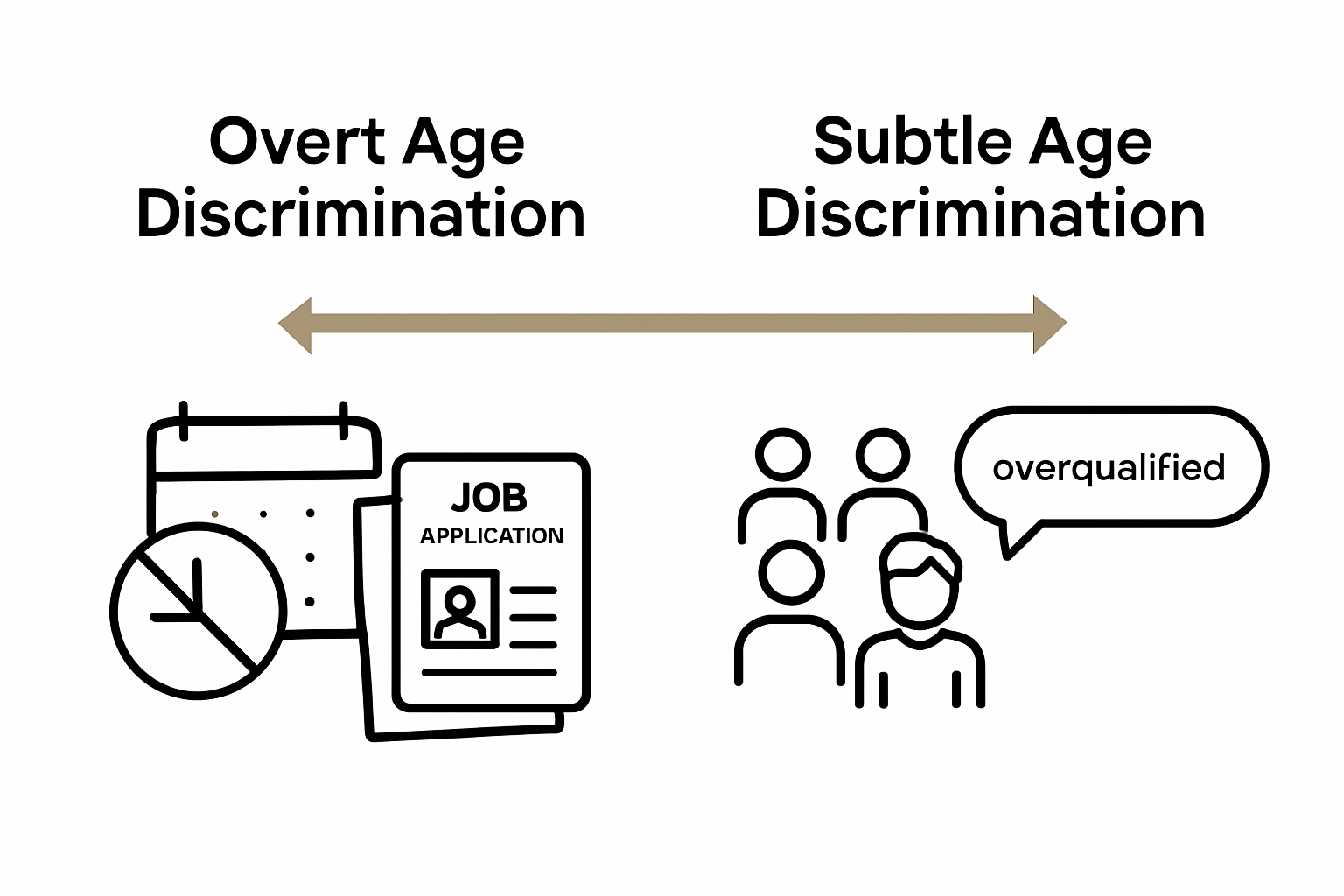
Recognizing age discrimination requires understanding its subtle and sometimes invisible manifestations. While some instances are overt, many discriminatory practices are more nuanced – involving implicit biases, stereotypes about older workers’ capabilities, or indirect policies that systematically disadvantage experienced professionals. Workers experiencing such treatment have legal protections and potential recourse through state and federal employment discrimination laws.
Types of Age Discrimination in Employment
Age discrimination in the workplace manifests through multiple complex and often subtle mechanisms that systematically disadvantage workers over 40. Understanding workplace discrimination types and impacts helps illuminate these nuanced yet harmful practices.
Hiring Discrimination represents one of the most pervasive forms of age-based workplace bias. This occurs when employers create recruitment processes that implicitly or explicitly filter out older candidates, such as:
- Using coded language in job descriptions targeting younger applicants
- Requiring unnecessary technological skills as barriers
- Conducting interview processes that subtly discourage older workers
- Implementing digital application systems difficult for experienced professionals to navigate
Another critical category involves Compensation and Advancement Discrimination, where older employees experience systematic professional marginalization. California civil rights documentation highlights specific discriminatory practices including unequal pay scales, reduced training opportunities, and strategic exclusion from promotions.

Workplace harassment and hostile environment creation constitute additional devastating forms of age discrimination. These include persistent negative comments about an employee’s age, intentional social isolation, assignment of less prestigious projects, or creating work conditions that pressure older workers into early retirement. Such practices not only violate legal standards but also represent profound breaches of professional respect and human dignity.
California Laws Governing Age Discrimination
Age discrimination laws in California provide comprehensive protections for workers over 40, establishing robust legal frameworks to prevent workplace bias. Understanding workplace harassment laws helps employees recognize their rights under these critical statutes.
The California Fair Employment and Housing Act represents the primary legal mechanism safeguarding workers from age-based discrimination. This landmark legislation applies to employers with five or more employees and explicitly prohibits discriminatory practices, including:
- Refusing to hire qualified candidates based on age
- Implementing policies that disproportionately impact older workers
- Denying promotions or professional development opportunities
- Creating hostile work environments targeting older employees
Under California’s comprehensive legal protections, age discrimination is prohibited across multiple employment domains. Employers cannot make workforce decisions based on an individual’s age, including:
- Recruitment and hiring processes
- Compensation and benefits
- Performance evaluations
- Training and professional development
- Termination or layoff procedures
Workers experiencing age discrimination have multiple legal avenues for recourse. The state’s robust legislative framework empowers employees to file complaints with the California Civil Rights Department, seek legal remedies, and challenge discriminatory workplace practices that compromise their professional opportunities and economic security.
Employee Rights and Employer Responsibilities
Employee rights in age discrimination cases represent a critical protection for workers over 40, ensuring fair treatment and professional opportunities. Wrongful termination resources can help workers understand their legal protections against discriminatory practices.
California law mandates clear responsibilities for employers regarding age-based workplace treatment. Labor regulations explicitly prohibit employers from making employment decisions based on age, which includes several key restrictions:
- Avoiding age preferences in job advertisements
- Eliminating biased recruitment practices
- Preventing discriminatory performance evaluations
- Ensuring equal training and promotion opportunities
- Maintaining age-neutral workplace policies
Employees aged 40 and over possess specific legal protections that guarantee their right to fair employment treatment. These rights encompass multiple aspects of professional engagement, including:
- Protection from discriminatory hiring practices
- Equal compensation opportunities3. Fair performance assessment
- Access to professional development
- Legal recourse for discriminatory actions
Should employers violate these standards, workers can pursue legal remedies through state and federal agencies. The California Civil Rights Department provides robust mechanisms for investigating and addressing age discrimination, potentially resulting in remedies such as back pay, policy modifications, and workplace interventions that restore professional dignity and opportunity.
Addressing Claims and Legal Remedies
Workers experiencing age discrimination have multiple legal pathways to seek justice and compensation. Wrongful termination settlement amounts offer insight into potential financial remedies available for victims of workplace discrimination.
Legal claims for age discrimination must be filed strategically and within specific timeframes. California civil rights regulations establish critical guidelines for addressing workplace discrimination, including:
- Filing complaints within three years of the discriminatory act
- Documenting specific instances of age-based mistreatment
- Gathering evidence of discriminatory practices
- Maintaining detailed employment records
- Consulting with employment law specialists
Potential remedies for age discrimination victims can be comprehensive and may include:
- Back pay and lost wage compensation
- Reinstatement to previous position
- Damages for emotional distress
- Punitive damages in severe cases
- Mandatory workplace policy changes
Recent legal developments have introduced additional protections for workers. Employers now face increased accountability, with new regulations encouraging prompt correction of discriminatory practices. Workers can pursue claims through multiple channels, including the California Civil Rights Department, federal Equal Employment Opportunity Commission, and civil litigation, ensuring multiple avenues for addressing workplace age discrimination and seeking meaningful workplace justice.
Protect Your Rights Against Age Discrimination Today
Age discrimination at work can severely impact your career and well-being if you are 40 or older. The challenges discussed in this article reveal how unfair hiring practices, biased promotions, and hostile workplaces undermine your professional opportunities. These experiences may leave you feeling powerless and uncertain about how to fight back. You deserve fair treatment and a respectful workplace no matter your age.
If age discrimination affects you, do not wait to assert your legal rights. Call California Labor Law at 1-866-355-9991 for a free California age discrimination consultation.
Frequently Asked Questions
What is age discrimination in the workplace?
Age discrimination in the workplace refers to unfair treatment of employees aged 40 and older based solely on their age. This can include practices such as refusing to hire or promote older workers, creating hostile work environments, or implementing policies that disproportionately affect them.
What laws protect workers from age discrimination?
Workers are protected from age discrimination by several laws, including the Age Discrimination in Employment Act (ADEA) and the California Fair Employment and Housing Act. These laws prohibit employers from making employment decisions based on age, including hiring, compensation, and promotions.
How can employees address age discrimination claims?
Employees can address age discrimination claims by filing complaints with relevant state and federal agencies, such as the California Civil Rights Department. They should document instances of discrimination, gather evidence, and consult with employment law specialists for guidance on their legal rights.
What types of practices constitute age discrimination?
Types of practices that constitute age discrimination include discriminatory hiring processes, unequal pay and training opportunities, hostile work environments, and policies that specifically disadvantage older workers. Employers must avoid biased recruitment and performance evaluations to ensure fair treatment for all employees.