




Retaliation Among Medical Provider Employers
More than one in five healthcare workers have reported experiencing some form of workplace retaliation after speaking up about unsafe conditions or unfair pay. Raising your voice should not put your future at risk, yet many face sudden schedule changes or negative reviews simply for doing what’s right. Understanding your legal protections empowers you to stand up for fairness and safety without fear.
What Constitutes Retaliation at Work
Retaliation in healthcare workplaces represents a serious legal violation where employers punish employees for engaging in legally protected activities. Workplace retaliation laws protect healthcare workers who report unsafe conditions, discrimination, wage issues, or participate in workplace investigations.
Specifically, retaliation occurs when an employer takes adverse actions against an employee because they exercised their legal rights. These adverse actions can include termination, demotion, reduced work hours, negative performance reviews, exclusion from professional opportunities, or creating a hostile work environment. In the healthcare sector, this might manifest as scheduling unfavorable shifts, denying training opportunities, cutting compensation, or strategically isolating an employee after they’ve raised legitimate workplace concerns.

Critical examples of legally protected activities in healthcare settings include reporting patient safety violations, documenting workplace harassment, filing wage complaints, participating in equal employment opportunity investigations, whistleblowing about fraudulent medical practices, or refusing to engage in unethical workplace behaviors. The law recognizes that employees should feel safe speaking up without fear of professional repercussions.
The legal standard requires demonstrating a clear connection between the protected activity and the subsequent adverse employment action. This means proving that the employer’s negative response was directly motivated by the employee’s legally protected conduct, rather than legitimate performance issues or business needs.
Pro tip: Document every interaction and communication related to your protected workplace activity to build a strong potential retaliation case if needed.
Common Types of Retaliation in Healthcare
Retaliation in healthcare takes multiple forms, ranging from overt actions to subtle professional sabotage. Physician retaliation strategies often involve systematic attempts to undermine an employee’s professional standing and career trajectory.
Professional retaliation can manifest through several strategic approaches. Direct methods include termination, demotion, or reducing work hours after an employee reports misconduct. More nuanced tactics involve professional isolation, such as excluding staff from critical meetings, training opportunities, or important communication channels.
In some cases, healthcare employers might manipulate performance evaluations, create impossible work conditions, or strategically assign unfavorable shifts to discourage future reporting of concerns.
Specific retaliation types in healthcare settings frequently target whistleblowers and advocates. These can include blocking promotions, spreading professional rumors, creating hostile work environments, denying continuing education opportunities, or implementing punitive scheduling practices. Long-term care retaliation tactics may even extend to psychological intimidation designed to prevent future reporting of safety or ethical violations.
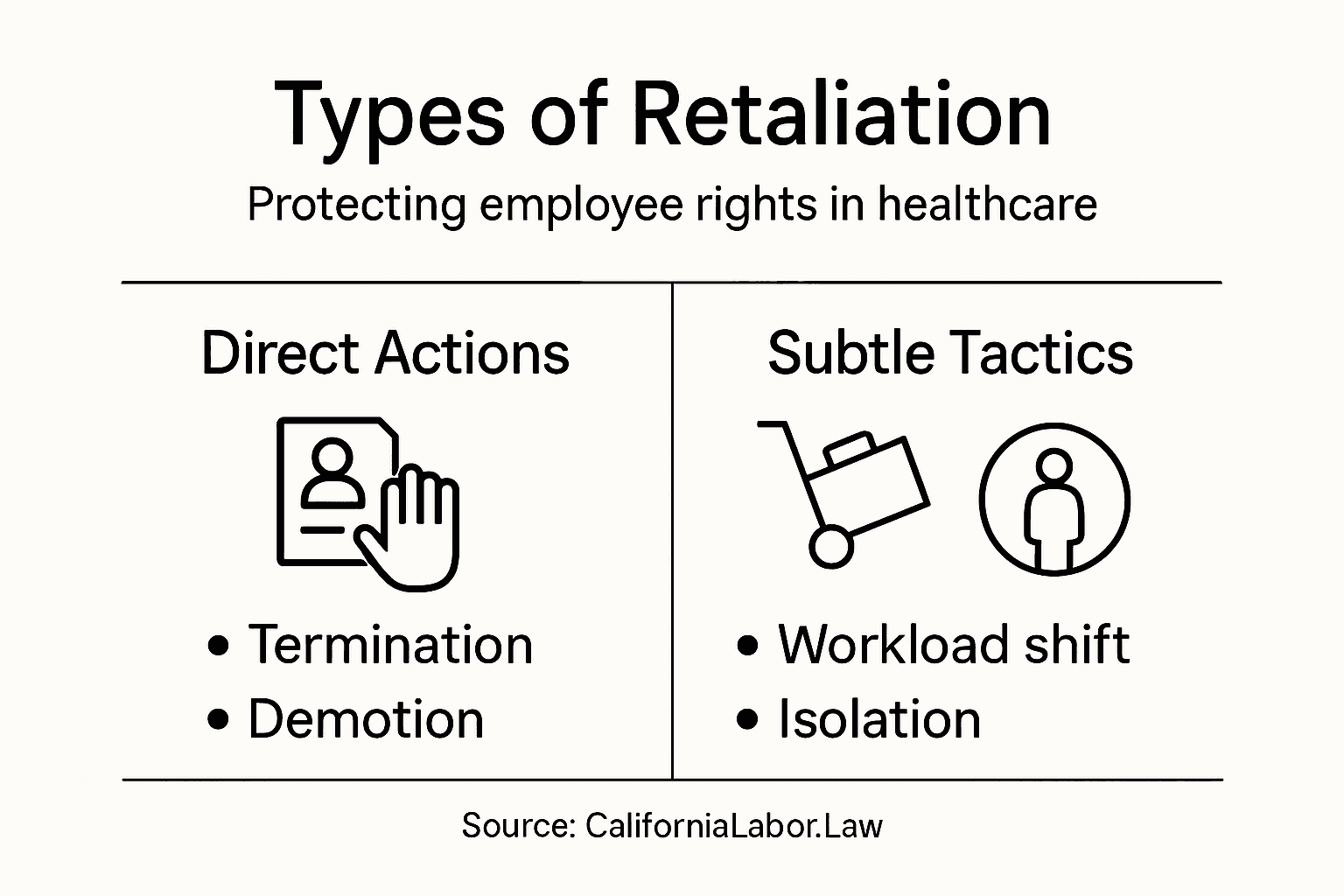
Here’s a summary of common employer retaliation tactics and their potential impact on healthcare professionals:
| Retaliation Tactic | Typical Impact on Employee | Examples in Healthcare |
|---|---|---|
| Professional Isolation | Limits access to resources | Exclusion from meetings |
| Manipulated Evaluations | Damaged career reputation | Negative performance reviews |
| Unfavorable Scheduling | Increased workplace stress | Night or weekend shifts |
| Denied Opportunities | Stalled professional growth | No training or promotion |
Independent contractors and temporary healthcare workers face unique vulnerabilities, often experiencing more subtle forms of professional retaliation that can significantly impact future employment opportunities. These might include negative recommendation letters, professional blacklisting, or strategic non-renewal of contracts after raising workplace concerns.
Pro tip: Maintain comprehensive, dated documentation of all workplace interactions and incidents to build a robust defense against potential retaliatory actions.
California’s 2026 Anti-Retaliation Laws
California continues to strengthen legal protections for healthcare workers through comprehensive anti-retaliation legislation. The Equal Pay & Anti-Retaliation Act represents a significant advancement in protecting employees from workplace discrimination and punitive actions.
The 2026 legal framework introduces robust presumptive protections for workers who report workplace misconduct. Under the new statute, if an employer takes adverse employment action within 90 days of an employee’s protected activity, the law presumes retaliation. The burden of proof shifts to the employer to demonstrate a legitimate, non-retaliatory reason for the action, effectively creating a stronger shield against potential workplace victimization.
Specifically, these laws expand protection for healthcare professionals across multiple dimensions. California health care laws aim to reduce administrative interference and reinforce independent professional judgment. This includes safeguarding physicians and healthcare workers who report safety concerns, ethical violations, or potential patient risks, ensuring they can speak up without fear of professional consequences.
The legislative changes also address unique vulnerabilities in healthcare settings, recognizing that retaliation can manifest through subtle professional sabotage. Independent contractors, temporary workers, and full-time employees now have enhanced legal recourse against tactics designed to suppress reporting of workplace issues, from blocking promotions to creating hostile work environments.
Pro tip: Familiarize yourself with the specific protected activities under the 2026 anti-retaliation laws to understand the full extent of your workplace rights.
Reporting Retaliation and Employer Duties
Healthcare employees facing workplace retaliation have specific legal pathways to protect their rights and hold employers accountable. Labor Standards Enforcement provides a critical mechanism for investigating and addressing workplace violations that compromise employee protections.
The reporting process involves multiple strategic steps designed to document and substantiate potential retaliation claims. Employees should first compile comprehensive evidence, including dated communications, performance reviews, witness statements, and a detailed chronology of events demonstrating the retaliatory actions.
Written documentation should explicitly outline the protected activity that triggered the potential retaliation and the subsequent adverse employment actions taken by the employer.
Employers in California have explicit legal duties when responding to potential retaliation claims. They must maintain transparent workplace policies, conduct impartial investigations, and provide clear explanations for any employment actions that could be perceived as retaliatory. The burden increasingly falls on employers to demonstrate that adverse actions were based on legitimate, non-discriminatory business reasons rather than punitive motivations against employees exercising their legal rights.
The reporting mechanism typically involves filing a formal complaint with the California Labor Commissioner’s office, which will initiate an investigation into the alleged retaliation. This process includes potential mediation, detailed fact-finding, and potential enforcement actions that can result in reinstatement, monetary compensation, and penalties against employers who violate anti-retaliation statutes.
Pro tip: Create a confidential, contemporaneous log of all workplace interactions and potential retaliatory actions, including dates, specific incidents, and any supporting documentation.
Common Pitfalls and How to Protect Rights
Healthcare workers frequently encounter complex challenges when navigating potential workplace retaliation, often misunderstanding the nuanced legal landscape. Workplace retaliation challenges require strategic understanding to effectively protect professional rights and prevent potential legal missteps.
One critical pitfall involves misinterpreting routine management actions as retaliatory conduct. Not every negative employment interaction constitutes illegal retaliation. Legitimate performance management, such as performance improvement plans or constructive feedback, is distinct from retaliatory actions. Employees must carefully distinguish between acceptable management practices and intentional punitive measures designed to discourage legally protected workplace activities.
The following table contrasts routine management actions with illegal retaliation, helping clarify when legal protections apply:
| Type of Action | Description | Legal Status |
|---|---|---|
| Performance Improvement Plan | Targeted at skill gaps | Generally lawful |
| Constructive Feedback | Aimed at employee development | Generally lawful |
| Adverse Action for Reporting | Punishes protected disclosures | Unlawful retaliation |
| Professional Sabotage | Undermines standing after the complaint | Unlawful retaliation |
Successful rights protection demands meticulous documentation and proactive communication. Healthcare workers should maintain comprehensive records of workplace interactions, including emails, performance reviews, and detailed incident reports. Contemporaneous documentation creates a robust evidentiary trail that can substantiate potential retaliation claims, demonstrating the direct connection between protected activities and subsequent adverse employment actions.
Navigating power dynamics requires strategic awareness and understanding of legal protections. Despite strong California labor laws, enforcement gaps and complex legal processes can create significant challenges for workers seeking justice. Employees should seek support from labor organizations, understand their workplace rights comprehensively, and utilize formal complaint mechanisms promptly to challenge potential retaliatory behaviors.
Pro tip: Create a secure, confidential digital and physical archive of all workplace communications and interactions to build a comprehensive evidence portfolio.
Protect Your Rights Against Retaliation in California Healthcare
Facing retaliation for speaking up about workplace concerns can be overwhelming and risky. This article highlights the challenges healthcare employees encounter, such as termination, demotion, and professional isolation, after reporting safety violations or unethical conduct. Understanding your rights under California’s evolving laws is crucial to safeguarding your career and well-being.
At California Labor Law, we empower healthcare workers with clear legal guidance and tools designed specifically for California employees dealing with retaliation and other labor issues.
Take control of your workplace situation today by calling California Labor Law at 1-866-355-9991. Your voice matters, and you deserve to work without fear. Get informed, document carefully, and explore how we can help you stand up for your rights.
Frequently Asked Questions
What constitutes retaliation in California healthcare workplaces?
Retaliation in California healthcare occurs when employers punish employees for legally protected activities, such as reporting unsafe conditions or engaging in workplace investigations. Adverse actions can include termination, demotion, or negative performance reviews.
How can healthcare employees document potential retaliation?
Employees should maintain comprehensive, dated documentation of all workplace interactions related to their protected activity. This includes emails, performance reviews, and witness statements that demonstrate a connection between the protected action and any adverse employment actions.
What should I do if I believe I am experiencing retaliation at work?
If you suspect retaliation, compile evidence and consider filing a formal complaint with the appropriate labor authority. It’s important to gather documentation of the retaliatory actions and the protected activities that triggered them.
What are the protections under California’s new anti-retaliation laws?
California’s 2026 anti-retaliation laws strengthen protections for employees by presuming retaliation if adverse actions occur within 90 days of reporting misconduct. Employers must prove that their actions were based on legitimate reasons, not retaliatory motives.