




Nearly one out of every three employees now works from home at least part of the week, making remote work a major topic for families and businesses across California. With complex labor rules that differ from other states, understanding your work from home rights in California could protect you from missed wages, equipment headaches, or workplace discrimination. This guide breaks down what every American worker in California should know to avoid legal pitfalls and claim their hard-earned protections.
Defining Work From Home Rights in California
Work from home rights in California represent a complex landscape of legal protections designed to safeguard employee interests in remote work environments. Unlike traditional workplace settings, remote work introduces unique challenges that require specific legal considerations. California has been at the forefront of establishing comprehensive guidelines that protect employees’ rights, compensation, and working conditions, even when they are not physically present in a traditional office.
The legal framework for work from home rights encompasses several critical areas, including compensation standards, equipment provisions, and workplace safety regulations. Employees working remotely are entitled to the same fundamental protections as in-office workers, which means employers must maintain California overtime pay standards regardless of work location. This includes ensuring accurate time tracking, proper wage calculations, and compliance with state labor regulations that apply to remote work scenarios.
Key aspects of California work from home rights include:
- Protection against wage discrimination
- Right to ergonomic workspace considerations
- Maintenance of meal and rest break entitlements
- Equal opportunity for professional development
- Protection from discriminatory remote work policies
Understanding these rights requires recognizing that remote work does not diminish an employee’s legal protections. Employers must adapt their policies to accommodate the evolving nature of work environments while maintaining compliance with California’s robust labor laws. Employees should proactively document their work hours, communicate with supervisors about expectations, and be aware of their legal rights in remote work settings.
Types of Remote Work and Employee Status
Remote work has evolved into a complex ecosystem of employment arrangements that significantly impact workers’ legal status and professional rights. Various remote work models have emerged, each presenting unique challenges and protections for California employees. These arrangements range from full-time remote positions to more flexible options that blur traditional employment boundaries.
The primary categories of remote work in California include full-time remote employees, part-time remote workers, freelance professionals, and contract-based digital workers. Each classification carries distinct implications for legal protections, tax obligations, and workplace rights. Fractional work arrangements have become increasingly prominent, where professionals provide specialized services to multiple organizations, challenging conventional employment paradigms and requiring nuanced understanding of worker classifications.
Key distinctions in remote work status involve:
- Employee classification (W-2 vs 1099)
- Benefits eligibility
- Tax reporting requirements
- Workers’ compensation coverage
- Overtime and wage protection standards
California law provides robust protections across these diverse work arrangements, ensuring that regardless of work location or employment model, workers retain fundamental rights. Employees must carefully understand their specific classification, as this directly impacts their legal protections, compensation structures, and potential recourse in workplace disputes. Employers are required to clearly define employment status, maintain transparent communication, and adhere to state labor regulations that protect remote workers’ interests.
California Labor Laws for Remote Workers
California’s labor laws for remote workers represent a comprehensive framework designed to protect employee rights in increasingly flexible work environments. These regulations ensure that workers maintain robust protections regardless of their physical work location, addressing the unique challenges presented by remote and distributed workforce models. Understanding employment contract basics becomes crucial in navigating these complex legal landscapes.

The state’s labor laws mandate several critical protections for remote workers, including wage requirements, workplace safety standards, and anti-discrimination provisions. Employers must maintain the same legal obligations for remote employees as they would for in-office workers, which means providing appropriate compensation, maintaining accurate time tracking, and ensuring equal opportunities for professional development. This includes compliance with minimum wage standards, overtime regulations, and providing necessary equipment or compensation for home office expenses.
Key labor law protections for remote workers include:
- Right to accurate wage documentation
- Protection against workplace discrimination
- Maintenance of meal and rest break entitlements
- Compensation for work-related expenses
- Equal access to professional growth opportunities
- Workers’ compensation coverage
Remote workers in California are entitled to the same comprehensive legal protections as traditional employees. This means employers cannot circumvent labor laws by simply changing work location, and workers retain their fundamental rights regardless of whether they work from home, a coffee shop, or a remote office. Understanding these protections empowers employees to advocate for fair treatment and ensure their rights are consistently respected in evolving work environments.
Employer Duties and Wage Compliance Risks
Employers in California face significant legal responsibilities when managing remote workers, with complex obligations that extend far beyond traditional workplace boundaries. Understanding wage theft protections becomes critical in navigating the intricate landscape of remote work compensation and compliance. The potential financial and legal risks of mismanaging remote worker wages can be substantial, creating a challenging environment for businesses.
The primary employer duties in remote work settings include accurate time tracking, proper wage documentation, and consistent compensation standards. Employers must implement robust systems that precisely record work hours, ensure appropriate overtime calculations, and maintain transparent payment practices. This includes providing clear compensation guidelines for remote employees, covering expenses related to home office setups, and maintaining equitable treatment across different work arrangements.
Key compliance risks for employers include:
- Potential penalties for wage misclassification
- Legal consequences of improper overtime calculations
- Risks associated with inconsistent wage reporting
- Potential litigation from wage and hour disputes
- Financial penalties for non-compliance with labor regulations
- Reputational damage from systematic wage violations
California’s stringent labor laws create a high-stakes environment where employers must be meticulously careful about remote worker compensation. Even unintentional violations can result in significant financial penalties, requiring companies to develop comprehensive compliance strategies that protect both employee rights and organizational interests. Proactive communication, transparent documentation, and consistent application of wage standards are essential in mitigating potential legal and financial risks associated with remote work arrangements.

Common Violations and Employee Legal Options
Remote workers in California frequently encounter complex workplace violations that can significantly impact their professional and financial well-being. Understanding workplace discrimination types becomes crucial in identifying and addressing potential legal infractions that may occur in remote work environments. These violations range from subtle forms of mistreatment to more overt legal transgressions that directly challenge employee rights.
The most prevalent workplace violations for remote workers include wage manipulation, discriminatory practices, wrongful termination, and harassment. Employers may attempt to exploit the less visible nature of remote work by implementing unfair policies, failing to compensate for all worked hours, or creating hostile work environments that are more challenging to document. These violations can manifest through unequal treatment, inconsistent performance evaluations, denied promotion opportunities, or systematic exclusion from important professional communications and development programs.
Key legal options for employees facing workplace violations include:
- Filing formal complaints with California Labor Commissioner
- Pursuing civil litigation for damages
- Submitting discrimination claims to state and federal agencies
- Requesting mediation or arbitration
- Documenting all instances of potential workplace misconduct
- Seeking legal consultation from employment law specialists
California provides robust legal protections that empower remote workers to challenge workplace violations effectively. Employees have multiple avenues for seeking justice, including administrative complaints, civil lawsuits, and specialized employment tribunals. Successful legal action not only provides potential financial compensation but also helps establish precedents that protect future workers from similar discriminatory or unethical practices. Proactive documentation, understanding of legal rights, and timely intervention are critical strategies for addressing workplace violations in remote work settings.
Know Your Work From Home Rights and Take Action Today
Navigating the complex landscape of California work from home rights can be overwhelming especially when facing issues like wage misclassification or unpaid overtime. The challenges detailed in this article highlight how crucial it is to understand your employee classification and wage protections under California labor laws. You deserve accurate wage payments, proper time tracking, and fair treatment even when working remotely.
Take control of your remote work situation with clear guidance and expert support from California Labor Law. We offer free legal resources, up-to-date information on wage and hour protections, and actionable steps to defend your rights. Whether you are dealing with wage theft, discriminatory practices, or unclear compensation policies we provide the tools to understand and assert your rights now.
If you are experiencing a California employment law issue please contact us at 1-866-355-9991 for a free employment law consultation with an experienced attorney.
Frequently Asked Questions
What are my work from home rights as a California employee?
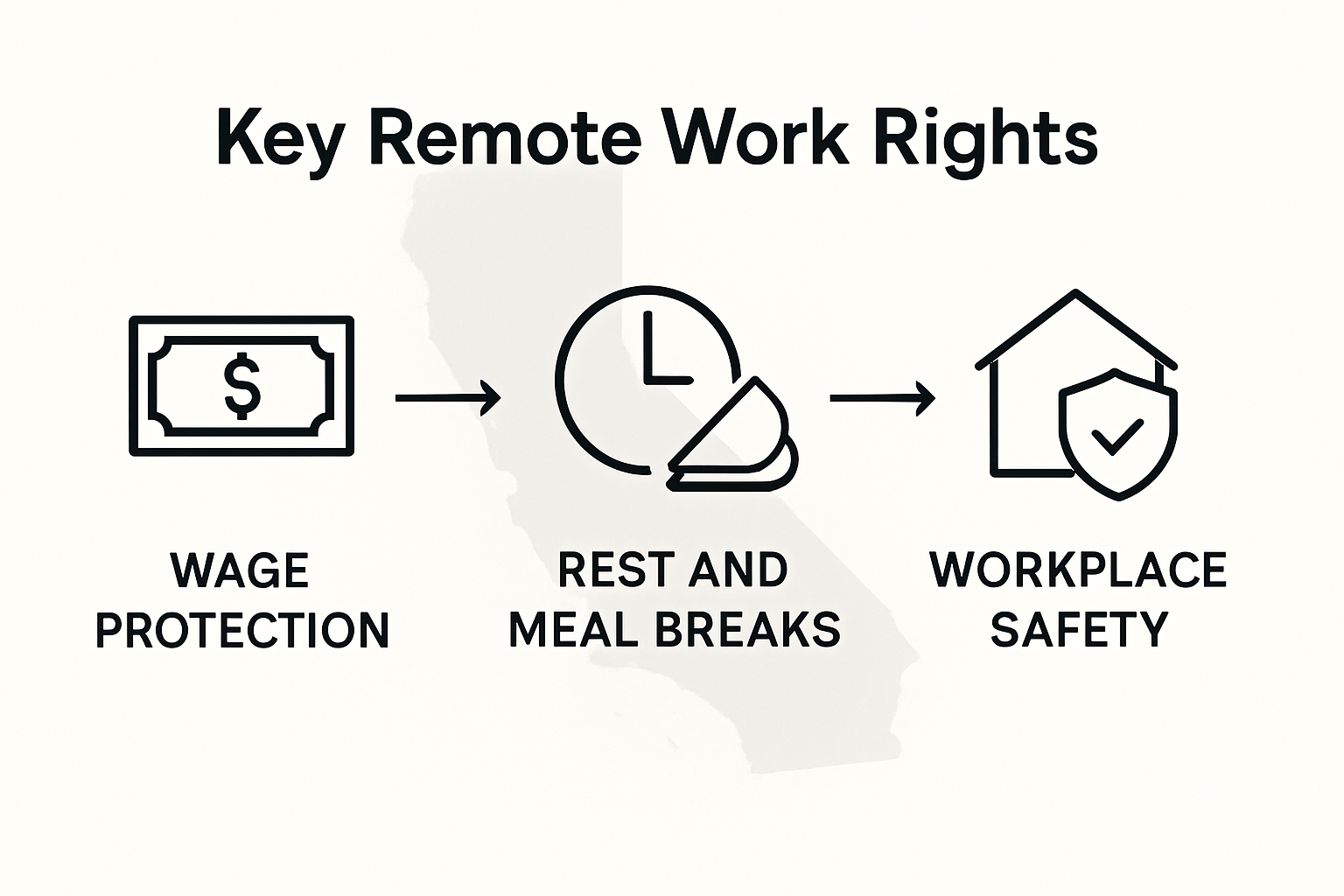
As a California employee working from home, you are entitled to protections regarding wage standards, workplace safety, meal and rest breaks, and protections against discrimination and wrongful termination, similar to those of in-office workers.
How does California labor law protect remote workers regarding compensation?
California labor law ensures that remote workers receive fair compensation by maintaining wage requirements, overtime pay standards, and requiring employers to cover expenses related to home office setups.
What should I do if I encounter workplace violations while working remotely?
If you encounter workplace violations, document all instances of misconduct, and consider filing formal complaints with the California Labor Commissioner, pursuing civil litigation, or reporting discrimination to relevant state and federal agencies.
Are my meal and rest breaks still protected when working from home?
Yes, as a remote worker in California, you maintain the right to meal and rest breaks as outlined in state labor laws, just like traditional office workers.