




How to File a California Wage Claim
Filing a wage claim sounds daunting and complex for most workers, but the payoff can be huge. Workers who file wage claims recover millions in unpaid wages each year, sometimes from employers who never expected to get caught. Many assume gathering paperwork and jumping through agency hoops is impossible without a law degree. But the real secret is that most successful wage claims come down to getting organized and being persistent—even if you have never done anything like this before.
Step 1: Gather Necessary Documentation and Evidence
Filing a wage claim requires careful preparation and strategic documentation collection. This initial step is crucial in building a compelling case that demonstrates the precise details of your wage dispute. Comprehensive evidence will significantly strengthen your claim and provide clear documentation of potential labor law violations.
Begin by systematically collecting all financial records related to your employment. Paychecks, pay stubs, time records, employment contracts, and any written communication with your employer become critical pieces of evidence. Focus on gathering documents that show your work hours, agreed compensation rates, actual payments received, and any discrepancies between promised and actual wages.
Track down every relevant document, even if it seems minor. Bank statements showing deposit amounts, work schedules, text messages discussing compensation, and email exchanges can provide essential context. Electronic records are particularly valuable, as they create a verifiable trail of communication and financial transactions. If you have kept a personal log of hours worked or overtime, include these detailed records as supplementary evidence.
Be meticulous in your documentation process. Organize your materials chronologically and create digital and physical copies. Scan paper documents and store them securely in multiple locations. Highlight or annotate sections that specifically demonstrate wage discrepancies or potential violations. This approach not only preserves your evidence but also makes it easier to reference during the wage claim process.
Key documents to collect include:
- Original job offer or employment contract
- Complete set of pay stubs from the period of dispute
- Bank statements showing wage deposits
- Written communication about wages or work hours
- Time sheets or work schedules
- Performance reviews or salary negotiation documents
By thoroughly gathering and organizing your documentation, you create a solid foundation for your wage claim. Each piece of evidence serves as a puzzle piece that helps reconstruct the full picture of your wage dispute. Taking time to be thorough and systematic in this initial step can significantly improve your chances of a successful resolution.
Here is a checklist table you can use to organize and verify key documents before filing your wage claim.
| Document Type | Purpose | Verified (Yes/No) |
|---|---|---|
| Employment contract/job offer | Confirms terms of employment and pay rate | |
| Complete set of pay stubs | Documents payments made and any discrepancies | |
| Bank statements (wage deposits) | Verifies actual receipt or non-receipt of wages | |
| Written communications (emails/texts) | Supports claims about wage agreements/disputes | |
| Time sheets/work schedules | Demonstrates hours worked and overtime | |
| Performance reviews/salary records | May show negotiated pay or job responsibilities | |
| Personal log of hours worked | Supplements other time records |
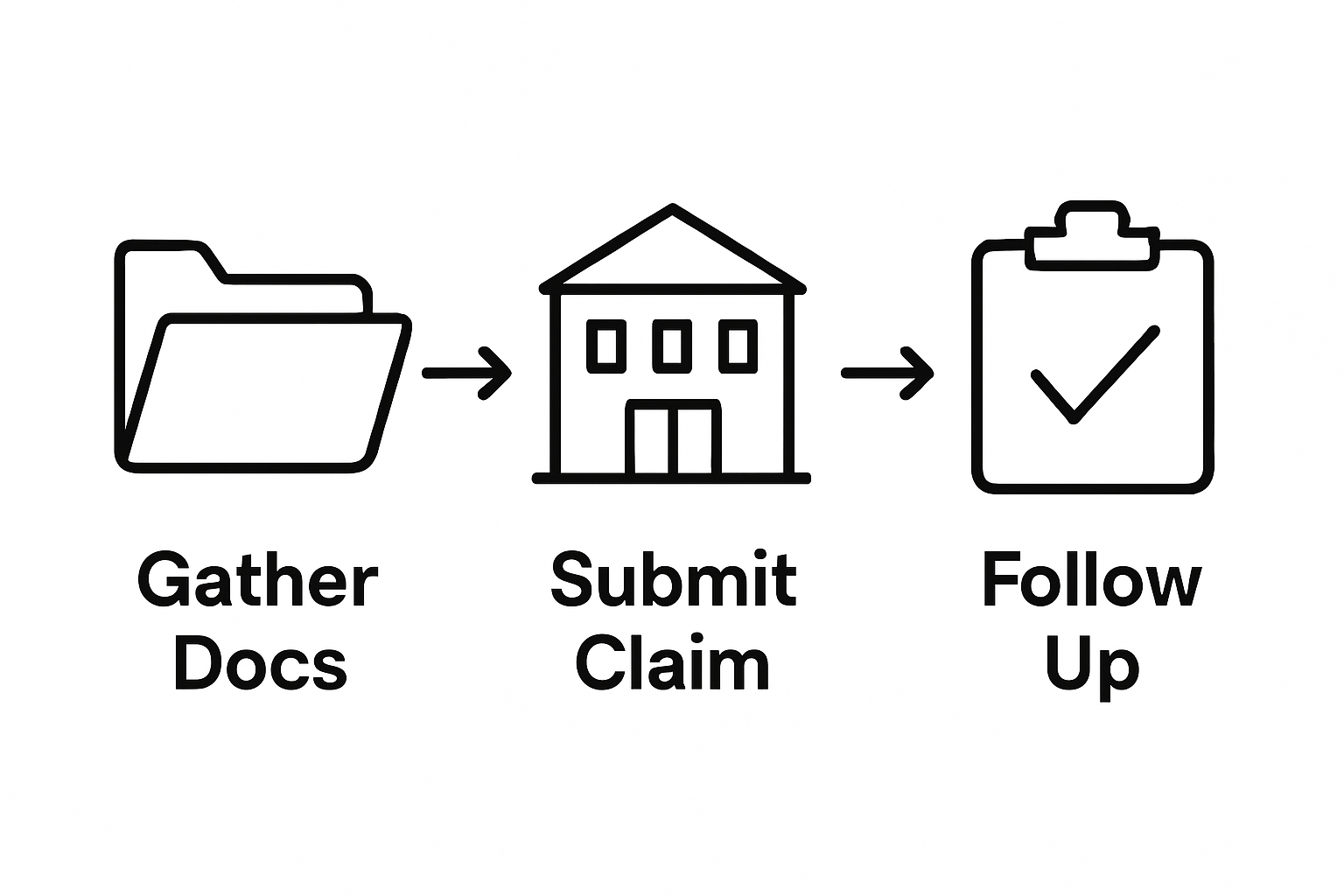
California Department of Industrial Relations recommends maintaining comprehensive records as the first critical step in pursuing a wage claim.
Step 2: Determine the Appropriate Filing Agency
Navigating the complex landscape of wage claim filing requires understanding which agency has jurisdiction over your specific employment situation. The right filing agency can make the difference between a successful resolution and a dismissed claim. Each type of wage dispute falls under different regulatory frameworks, making careful agency selection critical to your legal strategy.
In California, workers have multiple options for filing wage claims depending on the nature of their specific wage violation. The primary agencies handling wage disputes include the California Labor Commissioner’s Office (Division of Labor Standards Enforcement), federal Wage and Hour Division, and potentially local county labor enforcement offices. Your choice depends on several key factors: the type of wage violation, total amount of unpaid wages, and whether the issue involves state or federal labor regulations.
For most California workers experiencing state labor law violations, the California Labor Commissioner’s Office represents the primary avenue for wage claims. This agency handles disputes involving minimum wage violations, unpaid overtime, meal and rest break penalties, and other state-specific employment regulations. They provide a straightforward process for workers seeking to recover unpaid wages through administrative hearings.
Federal wage claims through the U.S. Department of Labor become more appropriate when your situation involves violations of national labor standards like the Fair Labor Standards Act. These claims typically address issues such as minimum wage violations across state lines, specific overtime calculations, or employment practices affecting interstate commerce.
Key considerations for selecting your filing agency include:
- Total amount of unpaid wages
- Type of wage violation (state vs. federal)
- Whether your employer operates across multiple states
- Specific labor law potentially violated
- Statute of limitations for your claim
Take time to research and understand the specific jurisdiction of each agency. Consulting with a local employment law attorney can provide personalized guidance on selecting the most appropriate filing mechanism for your unique situation. Some workers might even find they can file simultaneously with multiple agencies, maximizing their chances of wage recovery.
Below is a summary table comparing agencies you might file your wage claim with, highlighting jurisdiction, applicable violations, and special considerations.
| Agency | Jurisdiction Scope | Types of Violations Addressed | Special Considerations |
|---|---|---|---|
| California Labor Commissioner | State (California employees) | Minimum wage, unpaid overtime, state labor | Handles state-specific law violations |
| U.S. Department of Labor (WHD) | Federal (nationwide) | FLSA violations, minimum wage, overtime | Use for federal law or interstate issues |
| Local County Labor Office | County/local | May address local wage and hour rules | Only in certain regions or cities |
U.S. Department of Labor recommends carefully evaluating your specific wage dispute to determine the most effective filing route for your circumstances.
Step 3: Complete the Wage Claim Form Accurately
Filling out a wage claim form represents a critical moment in your pursuit of unpaid wages. Precision and thoroughness can make the difference between a successful claim and an immediate dismissal. This step demands careful attention to detail and a methodical approach to documenting your wage dispute.
Begin by obtaining the official wage claim form from the appropriate agency you identified in the previous step. Most state labor departments provide these forms online, allowing you to download and complete them electronically or print for manual completion. Carefully read every section of the form before you start filling it out, ensuring you understand exactly what information is required.
The wage claim form will typically request comprehensive details about your employment and wage dispute. You will need to provide personal information, employer details, specific wage violation information, and supporting documentation. Be prepared to outline the exact nature of your wage claim, including precise dates, amounts of unpaid wages, and a clear explanation of how your employer violated wage regulations. Learn more about identifying wage theft in your workplace.
Documentation is key in this process. Attach copies of all supporting evidence you collected in the first step. This includes pay stubs, time records, communication with your employer, and any other relevant financial documents. Ensure that every document is clear, legible, and directly supports the claims you are making. Avoid sending original documents unless specifically requested, as these may not be returned.
Important information to include on your wage claim form:
- Complete personal contact information
- Employer’s full legal business name and contact details
- Exact dates of employment
- Specific wage violations with precise monetary amounts
- Dates and amounts of unpaid wages
- Supporting documentation references
Double-check every section of the form before submission.
 Errors or incomplete information can significantly delay or potentially invalidate your claim. If you are uncertain about any part of the form, consider consulting with an employment law attorney who can provide guidance on completing the document accurately.
North Dakota Department of Labor and Human Rights emphasizes that thoroughly and accurately completed wage claim forms are essential for successful resolution of wage disputes.
Step 4: Submit Your Wage Claim and Keep Proof of Submission
Submitting your wage claim represents a pivotal moment in your pursuit of justice. This step transforms your carefully gathered documentation into an official legal process. The manner in which you submit your claim can significantly impact its processing and potential success.
Choose your submission method strategically. Most agencies offer multiple options including online submission, email, postal mail, or in-person filing. Certified mail with return receipt provides the most robust documentation of your claim submission. This method creates an official record that proves exactly when and how you submitted your wage claim, which can be crucial if disputes arise about the timeliness or receipt of your documentation.
Prepare a comprehensive submission package that includes your completed wage claim form, all supporting documentation, and any additional required materials. Understand more about protecting yourself from wage theft during this critical process. Make multiple copies of everything you submit. One copy should remain in your personal files, another should be sent to the agency, and a third can serve as a backup.
When submitting electronically, use a reliable email account and request a read receipt or confirmation of submission. If filing in person, request a time-stamped receipt that demonstrates the exact moment of submission. Digital submissions should be made in universally accepted formats like PDF to ensure readability and prevent potential technical issues.
Critical submission documentation to retain:
- Original completed wage claim form
- Copies of all supporting financial documents
- Submission confirmation or receipt
- Tracking information for mailed documents
- Agency contact information and reference numbers
Verify your submission thoroughly before sending. Check that all required fields are completed, documents are legible, and you have included every necessary piece of evidence. Follow up within a week of submission to confirm the agency has received your claim and initiated processing.
North Dakota Department of Labor and Human Rights recommends maintaining meticulous records throughout the wage claim submission process to protect your legal interests.
Step 5: Prepare for the Investigation Process
The investigation process transforms your wage claim from a personal complaint into an official legal proceeding. This critical stage determines whether your wage claim will result in financial recovery or potential resolution with your employer. Understanding and preparing for this process can significantly impact your claim’s success.
Expect the investigating agency to conduct a comprehensive review of your submitted documentation and potentially reach out for additional information. They will likely contact your employer to request their perspective and financial records related to your wage claim. This means you must remain accessible and responsive throughout the investigation. Provide prompt and clear responses to any communication from the investigating agency, and be prepared to offer additional context or documentation if requested.
Documenting every interaction becomes crucial during this phase. Keep detailed records of all communications, including dates, times, names of officials you speak with, and summaries of conversations. Learn more about protecting your rights during wage disputes to ensure you’re fully prepared. Create a dedicated file or digital folder where you can organize all correspondence and additional materials that might be requested during the investigation.
Prepare yourself mentally for potential negotiations or mediation. The investigation process might involve direct communication between the agency, you, and your employer to resolve the wage dispute. This could mean potential settlement discussions or opportunities to clarify misunderstandings about your wage claim. Maintain a professional and factual approach, focusing on the documented evidence rather than emotional arguments.
Key preparation steps for the investigation process:
- Remain readily available for agency communications
- Organize all supporting documentation
- Create a detailed timeline of wage violations
- Prepare concise, factual statements about your claim
- Understand your rights under labor laws
- Consider potential legal consultation
Maintain realistic expectations about the investigation timeline. These processes can take weeks or even months depending on the complexity of your claim and the agency’s current workload. Stay patient, continue to document everything, and be prepared to provide additional information if requested.
U.S. Department of Labor recommends maintaining clear, professional communication and being prepared to substantiate your wage claim throughout the investigation process.
Step 6: Follow Up and Verify the Status of Your Claim
Following up on your wage claim is not just a recommended step it is a critical component of ensuring your claim receives proper attention and resolution. Proactive communication can significantly impact the speed and outcome of your wage dispute. The investigation process can be complex and time-consuming, making your active involvement essential.
Establish a systematic approach to tracking your claim’s progress. Create a dedicated communication log where you record every interaction, including dates, names of officials contacted, and summaries of conversations. Most agencies provide multiple channels for status updates, including phone numbers, email addresses, and sometimes online tracking systems. Learn more about protecting your wage claim rights to understand the nuances of follow-up procedures.
Develop a strategic follow-up schedule that balances persistence with professionalism. Contact the assigned investigator or agency every two to three weeks to request a status update. When you reach out, be courteous, concise, and prepared with your claim reference number and specific questions. Email communications provide a written record, but phone calls can sometimes yield more immediate insights.
Be prepared for potential challenges during the follow-up process. Investigations can be delayed by various factors, including workload, complexity of the claim, or the need for additional documentation. Maintain patience while remaining vigilant. If you encounter significant delays or feel your claim is not progressing, consider seeking legal consultation to understand your options.
Key follow-up strategies to implement:
- Maintain a detailed communication log
- Set regular reminder dates for status inquiries
- Keep all original and copied documentation accessible
- Prepare a concise summary of your claim for quick reference
- Stay professional and persistent in your communications
- Be ready to provide additional information promptly
Document every interaction and communication attempt. Save email confirmations, note down phone call details, and keep copies of all correspondence. These records can be crucial if you need to escalate your claim or demonstrate your diligence in pursuing resolution.
U.S. Department of Labor recommends maintaining consistent and professional communication throughout the wage claim investigation process.
Struggling With a Wage Claim? Let Us Guide You
Facing unpaid wages, confusing paperwork, or employer retaliation can be overwhelming when all you want is a fair outcome. This article has walked you through each step of the claim process, but real-world wage disputes often create anxiety and leave you questioning if you have enough evidence or if your rights will actually be protected. That is where you can rely on us.
Do not let uncertainty, missed deadlines, or mistakes threaten your claim. Get accurate answers, wage calculators, and direct access to legal advocates by visiting our platform at California Labor Law. Take back control by exploring our free legal resources and know your rights about wage theft now. If you need help today, our team is ready to listen and offer immediate support. Call California Labor Law at 1-866-355-9991 for a free wage claim consultation.
Frequently Asked Questions
What documents do I need to gather for filing a wage claim?
To file a wage claim, you should collect all financial records related to your employment, including paychecks, pay stubs, time records, employment contracts, and written communication with your employer. Other evidence such as bank statements, work schedules, and any personal logs detailing hours worked are also helpful.
How do I determine which agency to file my wage claim with?
The agency to file your wage claim with depends on the type of wage violation and whether it falls under state or federal law. In California, the California Labor Commissioner’s Office generally handles state wage claims, while the federal Wage and Hour Division is appropriate for claims involving national labor standards like the Fair Labor Standards Act.
How do I fill out the wage claim form correctly?
When filling out the wage claim form, ensure that you provide all required information accurately, including detailed employment information, specific wage violation data, and supporting documentation. It is crucial to review the form thoroughly before submission to avoid errors that could lead to dismissal of your claim.
What should I do after submitting my wage claim?
After submitting your wage claim, keep a record of your submission, including any receipts or confirmations. Establish a follow-up schedule to check on the status of your claim, contacting the assigned investigator every few weeks to ensure timely progress and addressing any additional information requests promptly.