




What Does Right to Work Mean in California?
California’s approach to worker rights confuses a lot of people. The term right to work gets thrown around, but California actually operates outside the system used by most states. Here is the surprise. In California, workers cannot be forced to join a union or pay union dues as a condition of employment, yet this is not technically called a right to work law.
So while some assume they are missing out on protections, California employees are actually covered by one of the most robust sets of employment laws in the country with union membership at just 15.9 percent of the workforce and strong individual rights built in.
Defining Right to Work in California: What It Means for You
The term “right to work” often generates confusion among employees in California, especially regarding its legal implications and practical application. Contrary to common misconception, California does not function as a traditional right to work state, but instead offers robust employment protections that safeguard worker freedoms and rights.
Understanding the Legal Landscape
In California, labor laws are designed to balance employer and employee interests while preventing compulsory union membership. Learn more about the nuanced employment regulations that shape worker protections in the state. The key distinction lies in how California approaches worker representation and collective bargaining agreements.
Under California law, employees have specific rights that prevent discrimination based on union membership or non membership. Workers cannot be:
- Forced to join a labor union as a condition of employment
- Required to pay union dues if they choose not to be a member
- Penalized for declining union participation
Key Implications for Workers
While California is not a traditional right to work state, it provides comprehensive protections that ensure individual worker autonomy. The National Conference of State Legislatures confirms that California maintains a unique approach where employees can opt out of union membership while still benefiting from collective bargaining agreements.
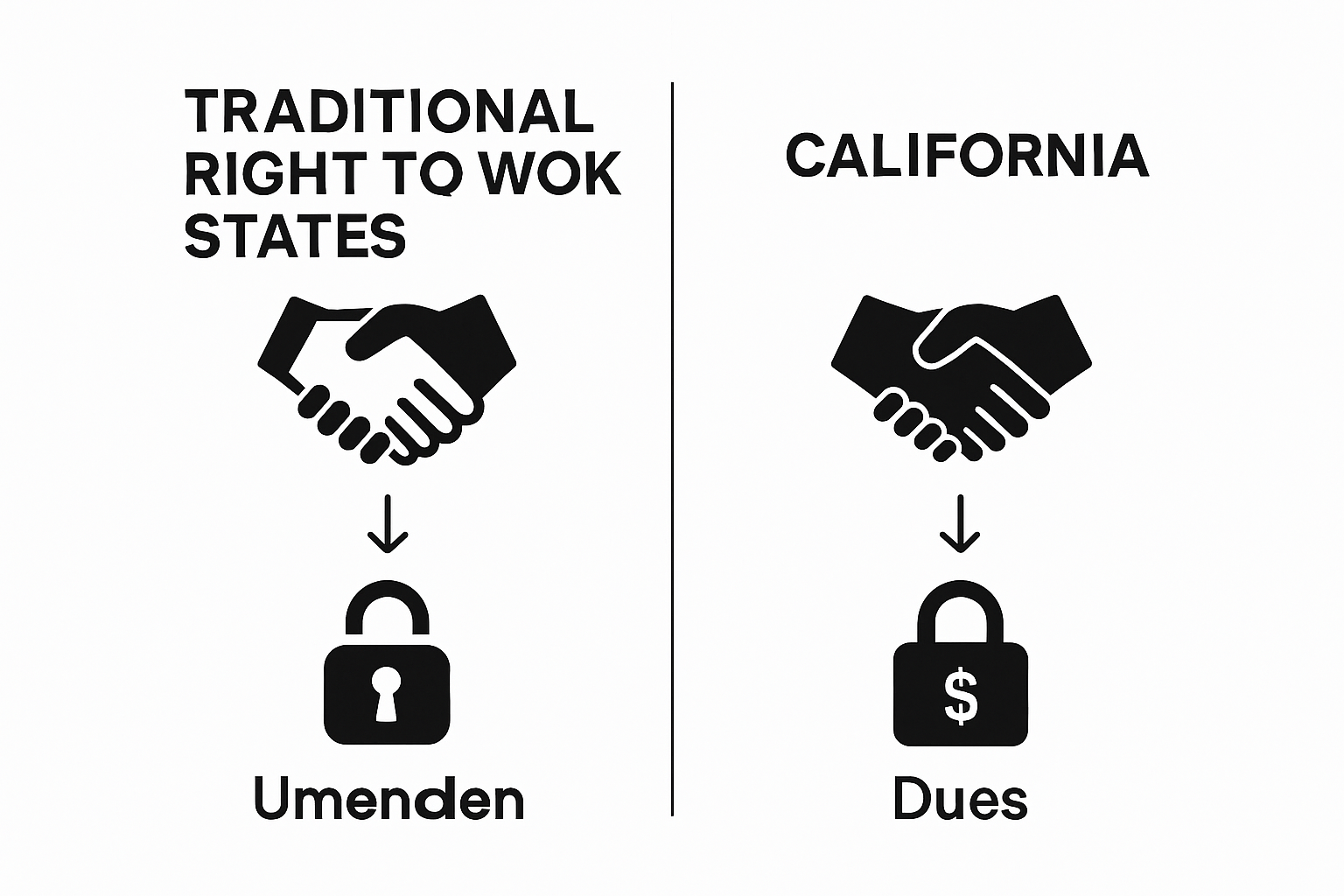
This means workers have the freedom to:
- Choose whether to join a union
- Receive workplace protections negotiated by unions
- Work without mandatory financial contributions to union activities
Employees should understand that while they can opt out of union membership, unions are still legally required to represent all workers in a bargaining unit, regardless of membership status. This approach ensures fairness and prevents discrimination while maintaining strong labor protections.
The complexity of labor laws underscores the importance of understanding your specific rights and the nuanced legal framework that governs employment relationships in California.
Below is a table comparing California’s labor law approach with traditional right to work states to help clarify their key differences and similarities.
| Feature | California | Traditional Right to Work States |
|---|---|---|
| Compulsory Union Membership | Not allowed | Not allowed |
| Union Dues Requirement | Optional (cannot be required) | Optional (cannot be required) |
| Official “Right to Work” Status | No | Yes |
| Union Representation of Nonmembers | Yes, unions must represent all employees | Yes, unions must represent all employees |
| Employee Protections | Robust, broader than federal requirements | Varies by state, usually less extensive |
| Union Membership (approximate %) | 15.9% | Typically lower than non-right to work |
The Importance of Right to Work Laws in Protecting Workers
Right to work laws represent a critical framework for safeguarding employee autonomy and preventing potential workplace discrimination. While California operates differently from traditional right to work states, the fundamental principles of worker protection remain paramount in ensuring fairness and individual choice in employment environments.
Protecting Individual Worker Autonomy
The core purpose of right to work principles is empowering employees to make independent decisions about union participation. Learn more about protecting worker rights without fear of retaliation or professional consequences. This approach ensures workers can choose their level of involvement in collective bargaining processes without compromising their employment status.
Key protections under these principles include:
- Freedom from mandatory union membership
- Protection against discriminatory employment practices
- Ability to negotiate individual employment terms
- Maintaining personal economic independence
Preventing Workplace Coercion
According to research from the National Conference of State Legislatures, right to work principles are fundamentally about preventing institutional coercion. Workers should never feel compelled to support organizational activities that contradict their personal beliefs or economic interests.
In practical terms, this means:
- Employers cannot mandate union participation
- Workers can opt out of financial contributions to union activities
- Individuals retain the right to pursue employment without external pressures
By maintaining these protections, right to work principles create a balanced environment where workers can make informed choices about their professional representation and economic contributions. The goal is not to undermine unions but to ensure that worker participation remains voluntary and genuinely consensual.
Understanding these nuanced protections helps employees navigate complex labor relationships and assert their individual rights within collective employment frameworks.
How Right to Work Laws Affect Employment and Employer Obligations
Employer obligations under right to work principles create a complex landscape of legal responsibilities and worker protections. While California does not operate as a traditional right to work state, employers must still navigate intricate requirements designed to maintain fairness and prevent discriminatory practices in the workplace.
Legal Boundaries for Employer Conduct
Understand the nuances of workplace legal protections that govern employer interactions with employees and unions. Employers must carefully balance their operational needs with workers’ fundamental rights to freedom of association and economic independence.
Key employer obligations include:
- Respecting an employee’s choice to join or decline union membership
- Avoiding retaliatory actions based on union participation status
- Providing equal employment opportunities regardless of union affiliation
- Maintaining transparent hiring and employment practices
Navigating Union and Non Union Environments
According to the National Conference of State Legislatures, employers must understand the delicate balance between collective bargaining rights and individual worker autonomy. This means creating workplace environments that:
- Permit voluntary union participation
- Prevent coercive membership practices
- Ensure non union workers receive equivalent workplace protections
- Maintain neutral stance on union organizing activities
The complexity of these requirements underscores the critical need for employers to develop comprehensive understanding of labor laws. Missteps can result in significant legal consequences, including potential litigation and substantial financial penalties.
Ultimately, right to work principles demand that employers view workers as individual professionals with distinct rights, rather than simply as collective units. This approach promotes a more dynamic, respectful, and legally compliant workplace environment.
Key Concepts of Employee Rights Under California Labor Law
California labor laws provide comprehensive protections designed to safeguard workers and ensure equitable treatment across diverse employment environments. Understanding these fundamental rights empowers employees to recognize potential violations and take appropriate action to defend their professional interests.
Core Employment Protections
Stay informed about recent changes in labor regulations that impact worker rights and employer obligations. California’s robust legal framework establishes critical protections that go beyond federal standards, creating a more comprehensive shield for employees.
Fundamental employee rights include:
- Protection against workplace discrimination
- Guaranteed minimum wage and overtime compensation
- Safe and healthy work environments
- Right to meal and rest breaks
- Protection from wrongful termination
Legal Safeguards Against Workplace Violations
According to the California Department of Industrial Relations, employees have multiple mechanisms to address potential labor law violations. These protections ensure workers can challenge unfair practices without fear of retaliation.
Key legal protections encompass:
- Filing wage claims for unpaid compensation
- Reporting safety violations without workplace repercussions
- Seeking remedies for discriminatory employment practices
- Accessing legal recourse for wrongful termination
- Maintaining confidentiality during complaint processes
The complexity of California labor law reflects a commitment to creating equitable workplace environments. By establishing clear boundaries and robust enforcement mechanisms, these regulations provide workers with essential tools to defend their professional rights and maintain dignified working conditions.
Employees should remain proactive in understanding their rights, documenting potential violations, and seeking appropriate legal guidance when confronting workplace challenges.

Navigating Challenges: Wage Theft and Wrongful Termination
Wage theft and wrongful termination represent significant challenges in California’s complex employment landscape. These issues fundamentally undermine worker rights and create substantial economic and professional risks for employees across various industries.
Understanding Wage Theft Mechanisms
Learn how to identify and combat wage violations that can dramatically impact your financial stability. Wage theft encompasses numerous fraudulent practices designed to deny workers their rightful compensation.
Common wage theft tactics include:
- Paying below minimum wage
- Refusing overtime compensation
- Manipulating work hour records
- Withholding final paycheck
- Misclassifying employees as independent contractors
Wrongful Termination Protections
According to California Labor Code Section 1102.5, employees have robust legal protections against retaliatory dismissal. Wrongful termination occurs when an employer fires an employee for illegal reasons that violate fundamental employment rights.
Significant wrongful termination scenarios include:
- Termination after reporting workplace harassment
- Firing an employee for requesting legally mandated accommodations
- Dismissal based on discriminatory practices
- Retaliation for whistleblowing illegal employer activities
- Violation of written or implied employment contracts
Navigating these complex legal challenges requires understanding your rights, documenting potential violations, and seeking appropriate legal guidance. Employees must remain vigilant and proactive in protecting their professional interests and economic well being.
The intersection of wage theft and wrongful termination demonstrates the critical importance of comprehensive legal protections for workers in California.
This table lists common types of wage theft and wrongful termination scenarios described in California employment law, summarizing violations employees should watch for.
| Issue Type | Example of Violation | Protection Under California Law |
|---|---|---|
| Wage Theft | Paying below minimum wage | Guaranteed minimum wage |
| Wage Theft | Refusing overtime compensation | Overtime pay required by law |
| Wage Theft | Manipulating work hour records | Laws require accurate recording of hours |
| Wage Theft | Withholding final paycheck | Employees entitled to prompt final pay |
| Wage Theft | Misclassifying employees as independent contractors | Misclassification strictly regulated |
| Wrongful Termination | Termination after reporting workplace harassment | Protected against retaliation |
| Wrongful Termination | Dismissal based on discriminatory practices | Protections under anti-discrimination laws |
Take Control of Your Rights in the California Workplace
Are you unsure about your union membership options or worried about facing wage theft or wrongful termination? Navigating right to work laws and employment protections in California can leave you feeling overwhelmed, especially when your job security and financial stability are at stake. When you do not know if your employer is violating your rights, you need clear answers fast.
At California Labor Law, you can instantly access practical guides and easy-to-use wage calculators to understand what to do if your employer crosses the line. Our resources explain vital concepts like wrongful termination and union participation in plain language. Do not wait if you suspect your rights are being violated. Call us at 1-866-355-9991 today for immediate legal information or to speak directly with an advocate ready to help you fight back. Your next step towards protection starts right now with a free employment rights consultation.
Frequently Asked Questions
What is the right to work law in California?
California does not have a traditional right to work law. Instead, it provides protections that prevent mandatory union membership and allow employees to opt out of paying union dues while still benefiting from collective bargaining agreements.
Can I be forced to join a union in California?
No, under California law, employees cannot be compelled to join a labor union as a condition of employment. Workers have the right to choose whether or not to participate in a union.
What protections do I have if I choose not to join a union in California?
If you opt out of union membership, you still have the right to workplace protections negotiated by the union and cannot be discriminated against for your choice not to participate.
How do California labor laws protect me against wrongful termination?
California labor laws protect employees from wrongful termination by prohibiting dismissal based on illegal reasons such as reporting workplace harassment, discrimination, or whistleblowing. Employees can seek legal recourse if they believe they have been wrongfully terminated.