




Smoke Breaks at Work in California
More than half of retail and hospitality employees in California have questions about their workplace smoke break rights. For those who work long shifts, unclear break policies and wage violations can have a direct impact on job satisfaction and pay. Understanding your legal entitlements about smoke breaks and authorized rest periods empowers you to protect your income and well-being while staying informed about what California law actually requires.
What Are Smoke Breaks at Work?
Smoke breaks represent short periods during the workday when employees temporarily step away from their work responsibilities to smoke tobacco products. Unlike standard rest breaks, smoke breaks are not legally guaranteed under federal regulations. In California and across the United States, employers maintain significant discretion regarding whether to permit these brief interruptions.
Typically, smoke breaks occur in designated outdoor areas away from workplace premises, allowing employees a few minutes to consume tobacco products. While some companies might informally permit these breaks, they are not mandated by law.
Workplace policies vary widely, with some organizations offering structured smoke break schedules while others strictly prohibit smoking during work hours. Factors like workplace safety, health considerations, and productivity often influence these policies.

The legal landscape surrounding smoke breaks is complex. Employee break entitlements depend on state regulations and individual employer guidelines. In California, while rest breaks are required, smoking during those breaks can be restricted. Employers can establish specific rules about smoking locations, duration, and frequency of breaks, prioritizing workplace health and operational efficiency.
Pro tip: If your workplace allows smoke breaks, always confirm the specific policies with your human resources department to understand exact guidelines and potential limitations.
Types of Work Breaks in California
California labor laws distinguish between several critical types of work breaks designed to protect employee health and workplace productivity. Federal regulations acknowledge different break categories, with state laws providing additional protections for workers. The primary types of work breaks in California include rest breaks, meal periods, and specific industry-specific break provisions.
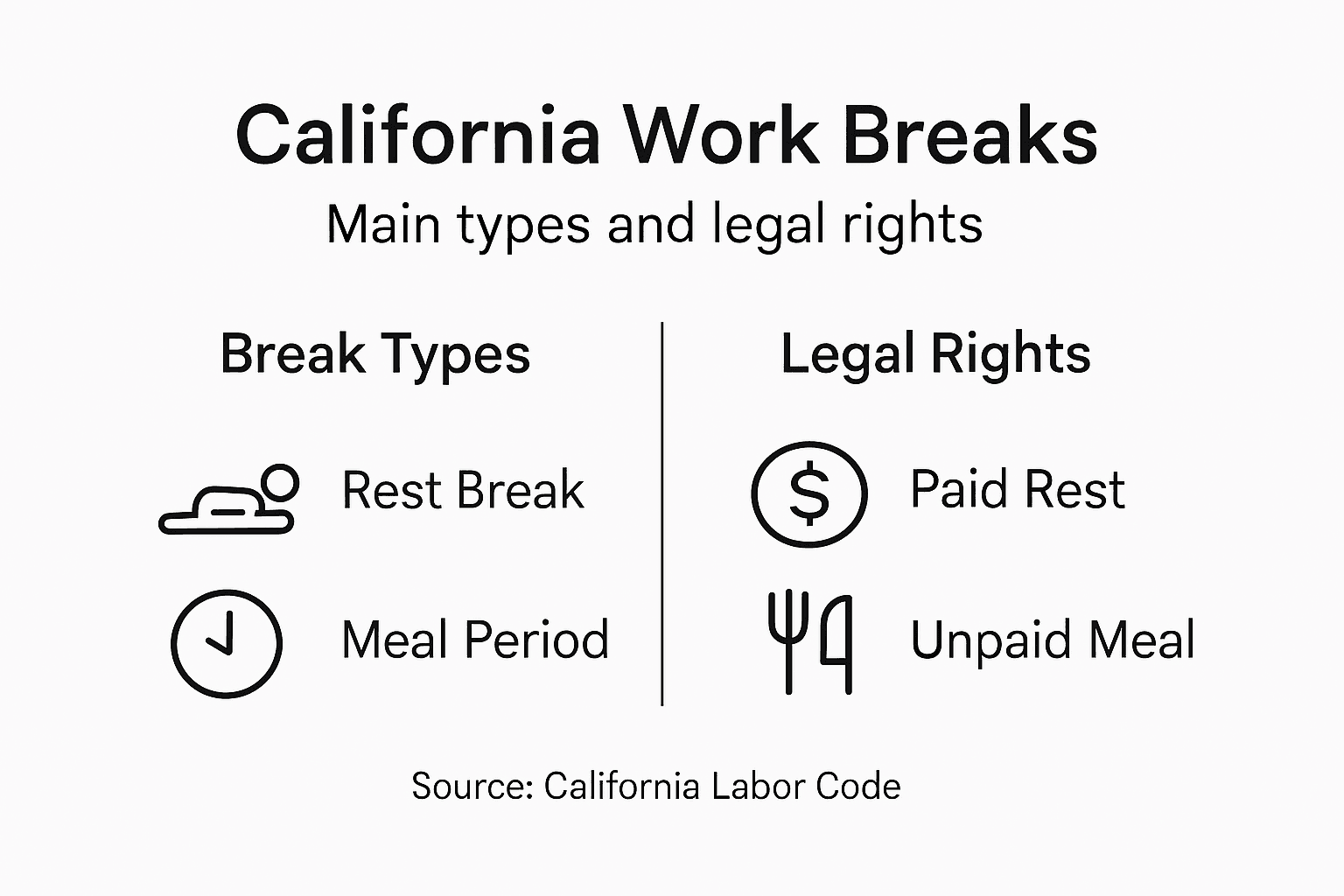
Rest Breaks are mandatory short breaks typically lasting 10 minutes for every four hours worked. These paid breaks allow employees to rest, use restroom facilities, or handle personal needs without wage loss. For non-exempt workers, employers must provide these breaks in the middle of each work period when possible. Employees cannot be required to remain on workplace premises during rest breaks, and these periods are considered compensable work time.
Meal Periods represent longer unpaid breaks lasting 30 minutes for shifts exceeding five hours. During meal periods, employees must be completely relieved of work duties and allowed to leave the workplace. For shifts longer than 10 hours, a second 30-minute meal break is required. Certain industries like healthcare, manufacturing, and retail have specific nuanced regulations regarding meal break timing and duration.
Industry-Specific Breaks recognize that different work environments have unique requirements. Sectors with physically demanding or high-stress jobs may have additional break provisions. For instance, warehouse workers, construction employees, and healthcare professionals often have specialized break guidelines that account for the physical and mental demands of their specific job roles.
Pro tip: Always document your work hours and breaks carefully, as accurate record-keeping can protect your rights if disputes arise about break entitlements.
Here’s a summary comparing California’s primary work break types:
| Break Type | Duration | Compensation | Typical Purpose |
|---|---|---|---|
| Rest Break | 10 minutes/4 hrs | Paid | Rest, personal needs |
| Meal Period | 30 minutes/5 hrs | Unpaid | Eating, off-duty rest |
| Industry-Specific | Varies by sector | Paid/Unpaid varies | Accommodate job-specific needs |
Workplace Smoking Restrictions Explained
Workplace smoking restrictions have become increasingly comprehensive, driven by health concerns and employee protection regulations. Smokefree workplace policies aim to create healthier work environments by limiting or eliminating tobacco use on company premises. These restrictions extend beyond traditional cigarettes to include e-cigarettes, vaping devices, and other tobacco-related products.
Indoor Smoking Prohibitions are now standard across most California workplaces. Employers are required to maintain completely smoke-free indoor environments, with no exceptions for designated smoking areas. This includes all enclosed workplace spaces, common areas, restrooms, hallways, and conference rooms. Outdoor areas may have specific restrictions, typically requiring smokers to maintain significant distances from building entrances, ventilation systems, and common gathering spaces.
Comprehensive Workplace Policies often go beyond legal minimums. Many employers adopt strict smokefree policies to protect employee health and reduce potential liability. These policies frequently include provisions that prohibit smoking during work hours, even in personal vehicles parked on company property. Some organizations have implemented complete tobacco-free campus policies, which ban all forms of tobacco use anywhere on workplace grounds.
Legal Consequences for violating workplace smoking restrictions can be significant. Employees who repeatedly ignore smoking policies may face disciplinary action, including verbal warnings, written reprimands, and potential termination. Employers have the legal right to enforce these policies consistently and can implement specific protocols for addressing tobacco use during work hours.
To help clarify the potential consequences of ignoring workplace smoking rules, see this summary:
| Violation Type | Typical Employer Response | Potential Legal Risk |
|---|---|---|
| Smoking in Prohibited Areas | Verbal or written warning | Disciplinary action, fines |
| Repeat Smoking Policy Violations | Probation or termination | Wrongful termination claims |
| Break Time Manipulation | HR investigation and compliance review | Penalties for break violations |
Pro tip: Always review your employer’s specific smoking policy in writing and ask for a copy if you’re uncertain about the exact restrictions in your workplace.
Employee Rights and Employer Policies
The relationship between employee rights and employer policies in California is a delicate balance of legal protections and workplace regulations. California labor laws protect specific employee rights while simultaneously granting employers significant discretion in establishing workplace guidelines. This nuanced framework ensures workers have fundamental protections while allowing businesses flexibility in managing their operational environments.
Break and Smoking Regulations represent a prime example of this balanced approach. Employers have the legal authority to create comprehensive policies regarding workplace smoking and break time usage. While employees are guaranteed rest and meal breaks, companies can restrict smoking locations, durations, and frequency. These policies must comply with state labor regulations while maintaining workplace health and safety standards.
Tobacco Use Restrictions extend beyond simple indoor smoking prohibitions. Workplace smoking rights are carefully defined to protect both employee interests and employer prerogatives. Employers can implement complete tobacco-free campus policies, prohibit smoking during work hours, and establish specific designated areas for tobacco use. These restrictions are particularly important in industries with heightened health and safety considerations, such as healthcare, food service, and childcare.
Legal Protections ensure that workplace policies cannot arbitrarily discriminate against employees. While employers have broad rights to establish workplace rules, these policies must remain consistent, non-discriminatory, and aligned with California labor regulations. Employees who believe their rights have been violated can seek recourse through state labor boards and legal channels, maintaining a critical accountability mechanism for workplace fairness.
Pro tip: Always document workplace policy interactions and keep copies of your employer’s written smoking and break policies to protect your professional rights.
Wage Violations and Legal Risks
Smoke breaks and workplace policies can expose employers to significant financial and legal risks when improperly managed. California’s Labor Commissioner’s Office rigorously enforces break regulations, scrutinizing how companies implement and compensate employee break times. Violations can result in substantial financial penalties, potentially costing businesses thousands of dollars in back wages and legal settlements.
Break Time Compensation represents a critical area of potential wage violations. Employers must carefully track and compensate employees for authorized rest breaks, including those potentially used for smoking. Non-exempt workers are entitled to paid 10-minute rest breaks for every four hours worked, and failing to provide these breaks or improperly restricting them can trigger legal claims. Employers who do not allow uninterrupted break times or attempt to limit legitimate break activities may face significant financial consequences.
Penalty Structures for break time violations can be extensive. California labor laws allow employees to recover one additional hour of regular pay for each day a proper rest break is denied. This means that consistent or systematic break violations can quickly escalate into substantial financial liabilities. Companies could face retroactive payment obligations, legal fees, and potential administrative penalties for repeated infractions related to break time regulations.
Documentation and Compliance are essential in mitigating legal risks. Employers must maintain precise records of break times, ensure breaks are genuinely provided and uninterrupted, and create clear policies that align with state labor regulations. Comprehensive documentation can serve as a critical defense against potential wage violation claims, demonstrating a good faith effort to comply with California labor standards.
Pro tip: Maintain detailed, timestamped records of employee break times and create transparent, written policies that clearly outline break entitlements and restrictions.
Protect Your Rights Around Smoke Breaks and Workplace Policies
Understanding your rights during smoke breaks and how your employer’s policies may affect you is essential to avoid wage violations and unfair treatment. This article highlights the complex balance between lawful rest breaks, smoking restrictions, and employer discretion under California labor laws. If you feel uncertain about whether your employer is respecting your legal break entitlements or suspect wage theft related to break times, you are not alone.
Do not let unclear smoke break policies or improper compensation steal your hard-earned pay. Call 1-866-355-9991 now and connect with California employment lawyers ready to support you. Call now and get your free rest break consultation today.
Frequently Asked Questions
What are smoke breaks at work?
Smoke breaks are short periods during the workday when employees temporarily step away from their responsibilities to smoke tobacco products. These breaks are not legally mandated and vary by employer policy.
Are employers required to allow smoke breaks?
No, employers are not required under federal regulations to permit smoke breaks. Each employer has discretion over whether to allow these breaks.
What are the types of breaks employees are entitled to in California?
In California, employees are entitled to rest breaks (10 minutes for every 4 hours worked) and meal periods (30 minutes for shifts over 5 hours), which are governed by state labor laws.
What are the legal consequences of violating workplace smoking policies?
Violating workplace smoking policies can lead to disciplinary actions from the employer, including warnings or termination, and may expose employers to legal risks if break time regulations are not followed.
Recommended
- Understanding Workplace Safety Rights in California
- Your California Rights: Termination While on Medical Leave
- Understanding Workplace Discrimination Types and Impacts
- Understanding Know Your Rights Posters in California